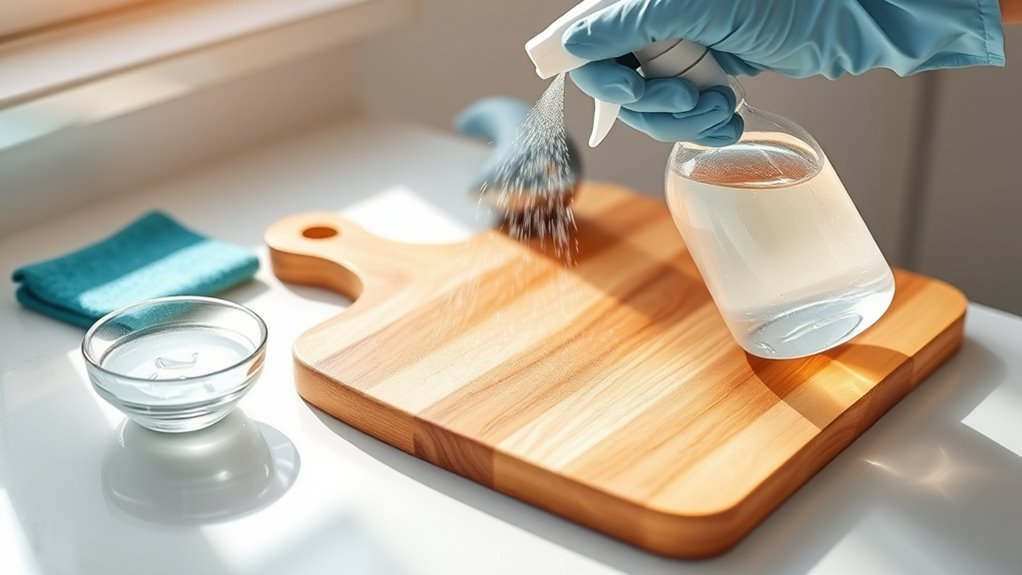

To sanitize your cutting boards at home, first rinse off any food debris with hot water, then scrub with a sponge or brush to remove residue from grooves. Disinfect by applying a solution of one tablespoon of unscented liquid bleach in a gallon of water or spray with white vinegar or lemon juice, letting it sit for a few minutes before rinsing thoroughly with hot water. To guarantee safety and cleanliness, follow these steps carefully—more tips are just a step away.
Key Takeaways
- Rinse the cutting board with hot water to remove loose debris before cleaning.
- Scrub with a brush or sponge using soap or natural cleaners like vinegar or lemon juice.
- Disinfect with a solution of 1 tablespoon unscented bleach in one gallon of water, then rinse thoroughly.
- Dry the board completely with a towel or air dry to prevent mold growth.
- Regularly inspect and replace heavily scored or warped boards to maintain sanitation.
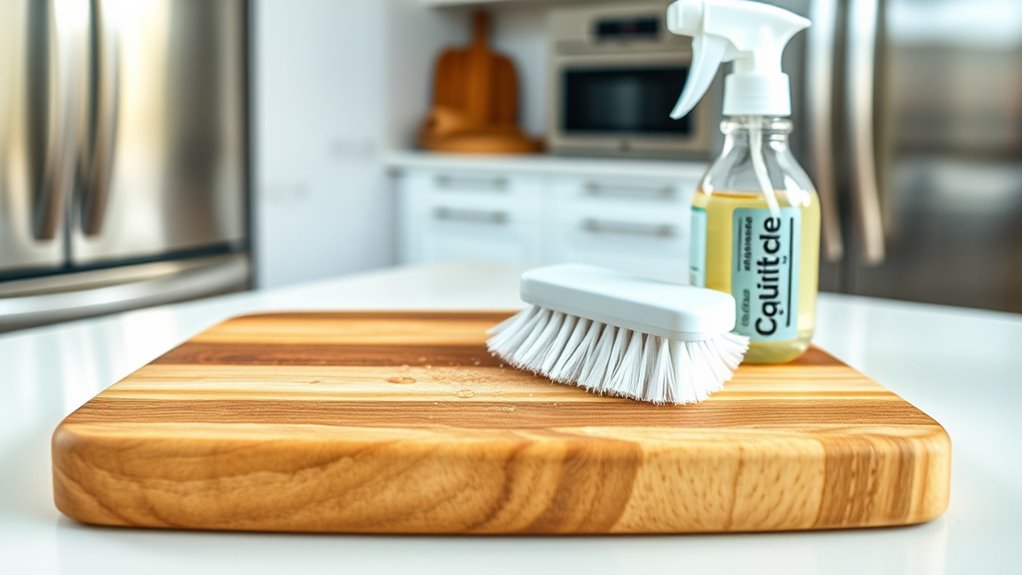
Cleaning your cutting boards is vital to prevent the spread of bacteria and foodborne illnesses. When it comes to maintaining a safe kitchen, proper sanitation is key, and that starts with understanding how to effectively sanitize your cutting boards. But before diving into the cleaning process, you should pay attention to knife maintenance. Sharp knives are safer and more effective because they cut cleanly through food, reducing the chances of tearing or scratching the board’s surface. Dull knives can cause more damage, creating nicks and grooves where bacteria can hide. Regularly honing and sharpening your knives not only improves your cutting efficiency but also helps keep your cutting surface intact, making sanitation easier.
Sharp knives prevent damage and bacteria hiding spots, making your cutting boards safer and easier to clean.
Food storage plays an indispensable role in keeping your cutting board clean and safe. Always store raw meats, poultry, and seafood separately from fruits and vegetables. This separation minimizes cross-contamination, and it’s one of the first steps in preventing bacteria buildup on your surfaces. When you do need to cut raw ingredients, use a dedicated board for those items, and switch to a clean, sanitized board when switching to produce or cooked foods. Proper food storage also involves wrapping and sealing items tightly, preventing leaks and spills that can contaminate your cutting area. By controlling what comes into contact with your cutting boards, you reduce the risk of spreading bacteria during sanitation.
To sanitize your cutting board, start by rinsing off any loose debris with hot water. Use a scrub brush or sponge to remove food particles, paying special attention to grooves or cuts. After cleaning, you can disinfect with a mixture of one tablespoon of unscented liquid bleach in one gallon of water. Let the solution sit on the surface for a few minutes, then rinse thoroughly with hot water. For natural alternatives, white vinegar or lemon juice work well; spray or wipe these on the surface, let sit for a few minutes, then rinse. These options are effective against many bacteria and are gentle on your board. Additionally, choosing quality cutting boards made from durable materials can reduce the accumulation of bacteria and make sanitation easier. Once sanitized, dry your cutting board thoroughly with a clean towel or air dry to prevent moisture buildup, which can promote mold growth.
Regular maintenance includes not just sanitation but also inspecting your board for deep cuts or cracks where bacteria can hide. Replace boards that are heavily scored or warped. Keeping your knives sharp and your food properly stored supports your efforts by reducing damage to the board and minimizing contamination risks. By following these steps consistently, you guarantee your cutting boards remain a safe, clean surface for meal preparation, protecting both your health and your family’s.
Frequently Asked Questions
How Often Should I Sanitize My Cutting Boards?
You should sanitize your cutting boards after each use, especially if you cut raw meat, poultry, or seafood. The sanitization frequency depends on the board material; plastic boards need more frequent cleaning than wood, which resists bacteria better. Always wash with hot, soapy water first, then disinfect. Regular sanitization prevents cross-contamination and keeps your kitchen safe, so make it part of your routine whenever you prepare different foods.
Can I Use Vinegar Instead of Bleach?
Imagine a bright, sunny kitchen where you’re choosing your cleaning allies. Vinegar cleaning works as a gentle bleach alternative, naturally fighting bacteria and odors. While vinegar is effective for many surfaces, it may not disinfect as thoroughly as bleach. If you prefer natural options, use vinegar for everyday cleaning, but reserve bleach for deep sanitizing. You can confidently use vinegar cleaning as a safe, eco-friendly bleach alternative on your cutting boards.
Are Plastic or Wooden Boards Easier to Sanitize?
Plastic cutting boards are generally easier to sanitize than wooden ones because they’re non-porous, allowing you to wash them thoroughly with hot water and soap or use sanitizing techniques like a bleach solution. Wooden boards are porous and absorb bacteria, making sanitizing more challenging. To sanitize effectively, clean both types well, but remember that plastic boards often require less effort and are more resistant to bacteria buildup.
What’s the Best Way to Prevent Cross-Contamination?
If you want to prevent cross-contamination, you must prioritize food safety and kitchen hygiene. Always use separate cutting boards for raw meat, poultry, and vegetables. Wash boards thoroughly with hot, soapy water after each use, and sanitize them regularly. Don’t forget to dry them properly. These simple steps can make a big difference, keeping your kitchen safe and your food free from harmful bacteria.
How Do I Sanitize a Cutting Board With Deep Cuts?
To sanitize a cutting board with deep cuts, start by washing it with hot, soapy water. Use a brush to scrub the cuts thoroughly, removing debris and bacteria. Rinse well, then sanitize with a diluted bleach solution—one tablespoon bleach per gallon of water. Rinse again, dry completely, and maintain your knife to prevent further damage. For stain removal, use a paste of baking soda and water, scrubbing gently.
Conclusion
Now that you know how to sanitize your cutting boards, you can keep your kitchen safe and bacteria-free. Think of sanitizing as giving your boards a fresh start, like a spring cleaning for your kitchen tools. Regularly cleaning them with the right methods guarantees your food stays healthy and your family stays protected. With these simple steps, you’ll maintain a clean, safe workspace—just like a chef preparing for their next masterpiece.