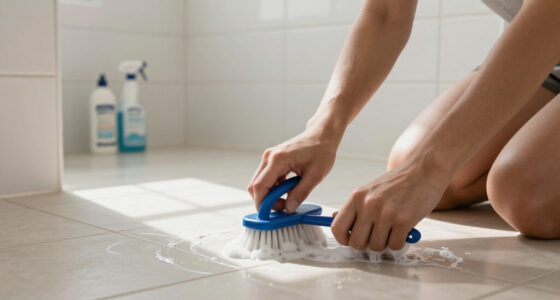
To remove mold and mildew from bathroom caulk, start by applying a mold-safe cleaner like bleach, hydrogen peroxide, or a commercial mold remover directly to the affected area. Let it sit for a few minutes, then gently scrub with a brush or sponge. Rinse thoroughly with water and dry completely. For stubborn mold, removing and replacing the caulk might be necessary. Keep your bathroom dry and ventilated to prevent future growth — learn more to keep your space mold-free.

Get furniture and decor delivered free with Prime
- Fast, free delivery on millions of items
- Prime Video, Amazon Music and more included
- Member-only deals all year
Key Takeaways
- Use mold-specific cleaners like bleach, hydrogen peroxide, or commercial mold removers and apply thoroughly to affected caulk.
- Scrub moldy areas gently with a brush or sponge after applying cleaner, then rinse completely with water.
- For severe mold or damaged caulk, remove and replace the affected sealant to prevent recurrence.
- Keep the bathroom dry by ventilating properly and wiping down surfaces regularly to inhibit mold growth.
- Inspect caulk periodically for signs of mold or deterioration and reseal with mold-resistant caulk as needed.
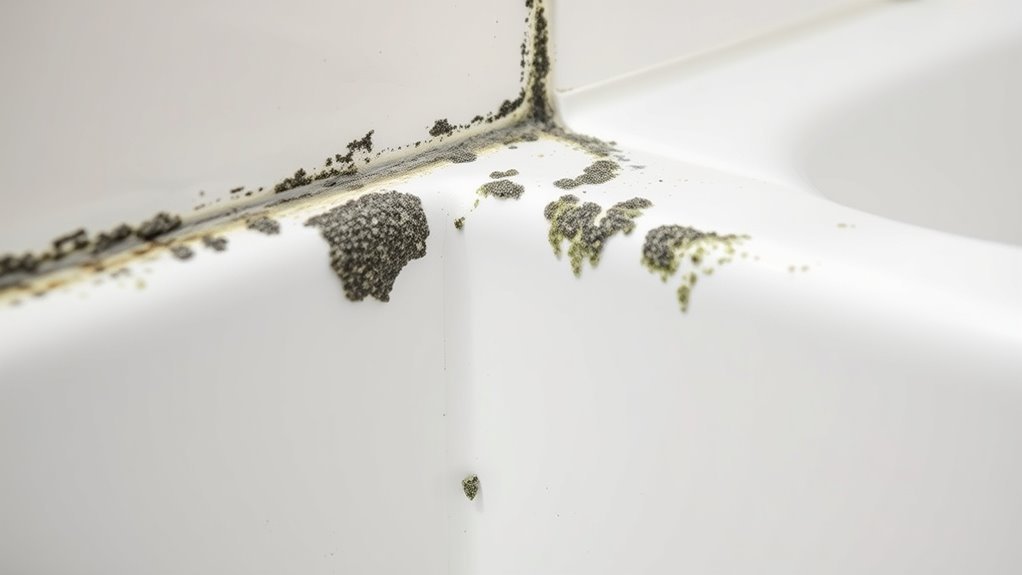
Mold and mildew often accumulate on bathroom caulk, especially in damp, poorly ventilated areas, making your space look dirty and potentially causing health issues. Once you notice discoloration or a musty smell, it’s time to tackle the problem. The first step is choosing the right cleaning agents. You’ll want to use products specifically designed to kill mold and mildew, such as bleach, hydrogen peroxide, or commercial mold removers. These cleaners are effective at breaking down the organic matter that mold feeds on and can restore your caulk’s appearance. When applying, make sure to wear gloves and ensure proper ventilation, as some cleaning agents can be harsh or produce fumes. Spray or apply the cleaner directly onto the affected areas, allow it to sit for a few minutes, and then scrub gently with a brush or sponge. Rinse thoroughly with water afterward to remove any residual cleaner and mold spores. If the mold has penetrated deeply or the caulk is severely damaged, consider removing and replacing the caulk entirely to prevent recurring issues.
Preventive measures are equally important to keep mold and mildew from returning. After cleaning, ensure your bathroom stays as dry as possible. Run the exhaust fan during and after showers, or open a window to improve airflow. Wipe down surfaces, especially the caulk, to remove excess moisture. Consider applying a mold-resistant sealant or caulk, which creates a protective barrier against moisture infiltration. Regularly inspecting your bathroom for signs of mold early on can prevent extensive damage. Keep your bathroom well-ventilated and avoid leaving damp towels or clothing lying around. Maintaining a consistent cleaning routine with appropriate cleaning agents will also help prevent mold buildup. In addition, fixing leaks promptly and sealing any cracks in the tiles or walls reduces the chances of mold developing behind the caulk.
As an affiliate, we earn on qualifying purchases.
Frequently Asked Questions
How Often Should I Inspect Bathroom Caulk for Mold?
You should inspect your bathroom caulk monthly for mold and mildew buildup. Regular checks help catch caulk deterioration early, preventing more extensive damage. Keep humidity control in mind, as high humidity promotes mold growth. Look for cracks, discoloration, or mold spots, and address issues promptly to maintain a clean, healthy bathroom environment. Consistent inspections guarantee your caulk stays intact and mold-free, reducing the need for extensive cleaning or replacement.
Are There Natural Remedies to Prevent Mold Growth?
You can keep mold at bay with natural remedies that work like magic! To prevent mold growth, regularly spray a mixture of vinegar and tea tree oil on your bathroom caulk—it’s a powerhouse combo for mold prevention. Keep the area dry and well-ventilated, and wipe down surfaces after showers. These simple steps turn your bathroom into a mold-free zone, saving you from future headaches.
Can Mold Damage Affect Indoor Air Quality?
Yes, mold damage can definitely influence indoor air quality. When mold growth occurs, spores get released into the air you breathe, which can cause allergies, asthma, and respiratory issues. To protect your indoor air, you should address mold promptly, fix leaks, improve ventilation, and clean affected areas thoroughly. Keeping mold under control helps ensure healthier air inside your home and reduces potential health risks.
Is It Safe to Use Bleach on Bathroom Caulk?
Using bleach on bathroom caulk isn’t always safe because it can damage the caulk and affect its preservation. Bleach safety depends on proper dilution and ventilation; otherwise, it can cause discoloration or deterioration. Instead, consider using milder cleaning solutions like vinegar or commercial mold removers designed for caulk. These options effectively remove mold and mildew while helping preserve the caulk’s integrity and maintaining a healthier bathroom environment.
How Can I Prevent Mold Recurrence After Cleaning?
To prevent mold from returning, you should improve ventilation by running the exhaust fan during and after showers. Keep the bathroom dry and well-ventilated, and consider applying mold-resistant caulk for added protection. Regularly clean the area with a mold-inhibiting solution, and fix any leaks promptly. These steps will help keep mold at bay and maintain a clean, healthy bathroom environment.
Conclusion
Now that you know how to banish mold and mildew from your bathroom caulk, your space can breathe easy again. Think of your bathroom as a fresh canvas, free from the dark stains that once marred its surface. With a little effort, you’ll restore its shine and keep those pesky spores at bay. So grab your supplies, and turn your bathroom into a sparkling sanctuary where cleanliness reigns supreme. Your fresh start is just a scrub away.
Halloween Picks
halloween
As an affiliate, we earn on qualifying purchases.