
To remove candle wax from fabric and furniture, first let the wax cool completely, then gently scrape off the excess with a dull edge like a credit card. Place a paper towel over the remaining wax and carefully use a low-temperature iron to melt it, allowing the paper to absorb the wax. Afterward, treat any stains with a mild cleaning solution, ensuring you follow manufacturer instructions. Want to protect your surfaces and get spotless results? Keep exploring for effective tips.
Key Takeaways
- Allow wax to cool completely, then gently scrape off excess with a dull edge like a credit card.
- Use a warm, low-heat iron over a paper towel or brown paper bag to melt and lift residual wax.
- Apply stain remover or dish soap to any remaining stains and blot gently without rubbing.
- For upholstery, gently brush or use a mixture of vinegar and water to dissolve leftover wax residues.
- Test cleaning methods on small areas first and consider professional help for delicate fabrics or stubborn stains.

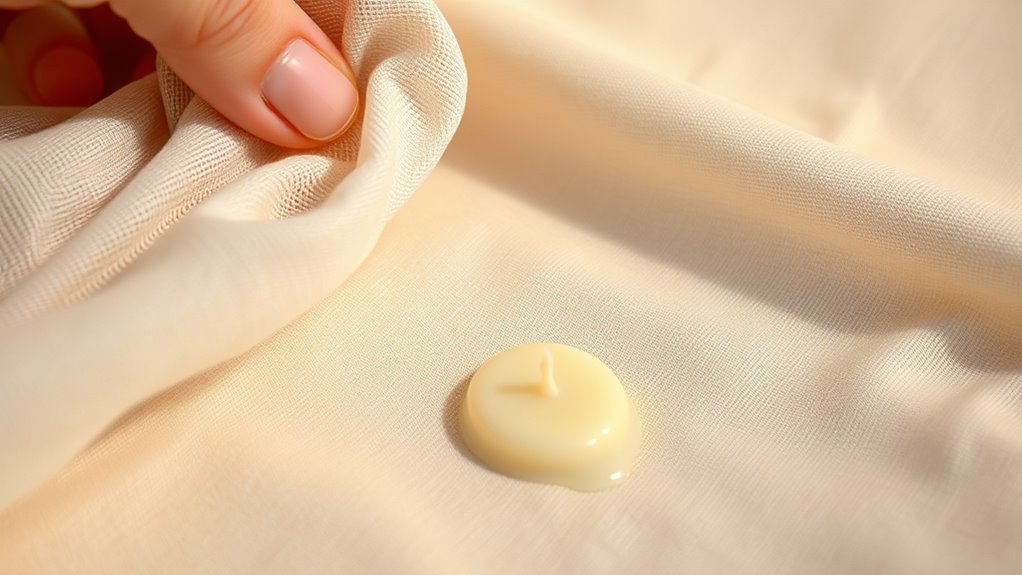
Candle wax can quickly become a stubborn stain on your fabric or furniture, but with the right approach, you can remove it easily. When tackling wax stains, it’s essential to follow some cleaning tips to avoid damaging your surfaces. First, make sure candle safety by letting the wax cool completely before attempting to clean. Hot wax can cause burns or spill further, so patience is key. Once cooled, gently scrape off as much wax as possible using a dull edge, like a plastic spatula or credit card, avoiding sharp tools that could scratch the fabric or furniture.
Next, place a paper towel or a brown paper bag over the remaining wax residue. Using a warm iron—set to low heat—press over the paper, which will melt the wax and absorb it into the paper. Keep the iron moving constantly to prevent overheating or burning the material. This method works well on hard surfaces and some fabrics, but always test a small, inconspicuous area first to avoid damage. If the wax leaves a stain or color, don’t worry; you can treat it with additional cleaning tips later.
Place paper over wax residue and gently iron on low heat to lift stain safely.
For fabrics, after removing the excess wax, apply a stain remover or a bit of dish soap directly onto the stain. Gently blot with a clean cloth, avoiding rubbing, which might push the wax further into the fibers. For upholstery, you might need to use a soft brush to loosen any remaining residue. In some cases, a mixture of equal parts white vinegar and water can help dissolve stains without harming the fabric. Always remember to check the manufacturer’s cleaning instructions before applying any solution.
When dealing with candle safety, always keep candles away from flammable objects and never leave them unattended. To prevent future wax spills, consider placing a candle holder or tray underneath your candles to catch drips. Using dripless candles or trimming the wick can also minimize messes. Additionally, pressure and heat are crucial factors when removing wax, as they help melt and lift the residue without damaging delicate fabrics or finishes.
Finally, if the stain persists, a professional cleaning might be necessary, especially for delicate fabrics or antique furniture. Remember, patience and proper cleaning tips are your best allies in removing candle wax successfully. By following these simple steps and prioritizing candle safety, you’ll keep your fabric and furniture looking pristine without risking damage or danger.
Frequently Asked Questions
Can Candle Wax Damage Delicate Fabrics?
Yes, candle wax can damage delicate fabrics. Different types of fabric vary in their sensitivity, and wax penetration can cause stains or weaken fibers. You should act quickly to remove wax from delicate materials like silk or lace to prevent permanent damage. Carefully scraping excess wax and using gentle heat helps lift the wax without harming the fabric, preserving its texture and appearance.
Is It Safe to Use Heat on All Furniture Types?
Using heat on all furniture types isn’t always safe. You need to contemplate heat safety and the specific furniture types you’re working with. For delicate materials like upholstery or antique wood, high heat can cause damage or warping. Always test a small, hidden area first and opt for lower heat settings when removing candle wax. When in doubt, consult manufacturer guidelines to protect your furniture’s integrity.
How Long Does the Wax Removal Process Typically Take?
In a blink of an eye, the wax removal process can vary, but typically, you’ll spend about 15 to 30 minutes on cleaning time. The duration estimate depends on factors like wax thickness and fabric type. You’ll need to patiently allow the wax to cool, scrape gently, and then clean the residue. Rushing might prolong the process, so take your time for the best results.
Are Commercial Wax Removers More Effective Than Home Remedies?
Commercial wax removers are generally more effective than DIY solutions because of their specialized chemical effectiveness. They’re designed to break down wax quickly and cleanly, saving you time and effort. However, if you prefer natural methods, DIY solutions like ice or vinegar can work, but they might require more patience and effort. Ultimately, the choice depends on how quickly and thoroughly you want to remove the wax.
Can I Prevent Candle Wax Stains in the Future?
To prevent candle wax stains, prioritize candle safety and practice wax prevention. Keep candles away from drafts that cause uneven drips, and always place them on stable, heat-resistant surfaces. Use dripless candles or consider LEDs to reduce mess. Regularly trim wicks to prevent excessive flickering and dripping. By practicing these precautions, you can confidently enjoy candles while keeping your fabrics and furniture free from wax woes.
Conclusion
Now that you’ve mastered removing candle wax, your fabric and furniture will shine like a well-kept secret. Think of the stubborn wax as a faded mural waiting to be revealed anew—your patience and care are the gentle brushstrokes restoring its beauty. With each successful removal, you’re turning back the clock, transforming chaos into calm. Keep this skill in your toolkit, and soon, no wax stain will be able to dim your space’s true sparkle.