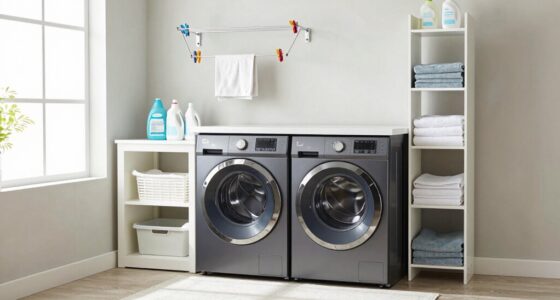
To organize your water filtration and softening systems at home, designate dedicated, labeled storage areas for spare filters, salt, and tools close to water sources but away from high-traffic zones. Keep systems accessible and well-maintained, inspecting filters regularly and tracking maintenance dates. Position units where they’re protected from damage yet easy to reach for repairs. Staying organized and proactive helps guarantee clean water and prolongs your equipment’s lifespan—if you want to learn more, keep exploring these tips.
Key Takeaways
- Designate dedicated, labeled storage areas for filters, salt, and tools near water sources for easy access.
- Install systems in accessible locations away from high traffic and moisture-prone areas for safety and maintenance ease.
- Use clear signage or labels to identify system components and maintenance schedules to streamline troubleshooting.
- Keep maintenance supplies and spare parts organized and close to the systems for quick repairs.
- Maintain detailed records of installation, maintenance, and repairs to monitor system performance and plan upgrades.

Organizing water filtration and softening systems at home is essential for guaranteeing clean, healthy water while maintaining a clutter-free space. When you set up your systems properly, it’s easier to keep track of their maintenance and troubleshoot any issues that come up. Starting with a clear plan to manage your equipment helps prevent leaks, contamination, and operational failures. One of the first steps is establishing a maintenance schedule. Regularly replacing filters and inspecting softening units ensures your water stays pure and your system functions efficiently. Mark your calendar or set reminders to check filters every few months, depending on your water usage and manufacturer recommendations. This proactive approach prevents buildup of impurities and extends the lifespan of your equipment.
Organize and maintain your water systems with a schedule to ensure clean, efficient, and trouble-free operation at home.
Next, organize your systems in a way that makes maintenance and troubleshooting straightforward. Use labeled storage or dedicated shelves to keep spare filters, salt, and tools close at hand. Keeping everything in sight and within reach reduces the chance of forgetting important tasks and saves time when replacements or repairs are needed. Guarantee your water filtration and softening units are installed in accessible locations—preferably near water sources but away from high-traffic or damp areas that could cause damage or make access difficult. Proper placement also minimizes pipe clutter and makes it easier to identify leaks or malfunctions. Implementing system organization techniques can further streamline your maintenance routine and help you stay on top of system needs. Additionally, maintaining a clean and organized workspace also contributes to safer and more efficient system management. Proper organization minimizes system downtime and ensures quick access to parts needed for repairs.
When a problem arises, system troubleshooting becomes more manageable if your setup is well-organized. Keep a detailed manual or digital record of your system’s model, installation date, and maintenance history. This information helps you quickly identify common issues, such as low water pressure, strange tastes, or leaks. Be sure to check for visible signs of wear, clogged filters, or salt buildups in the softener. If something seems off, follow the troubleshooting steps provided by the manufacturer, but don’t hesitate to contact a professional if needed. Having organized tools and spare parts nearby can save you time and frustration during repairs. Additionally, understanding the importance of water quality and filtration systems can help you make informed decisions about upgrades or replacements when necessary. Staying informed about your system’s condition and potential issues also helps in preventive maintenance, reducing the likelihood of unexpected failures. Regularly educating yourself about system components can further improve your ability to identify potential issues early on. This proactive knowledge allows for more efficient and effective maintenance routines.
water filtration system organizer
As an affiliate, we earn on qualifying purchases.
As an affiliate, we earn on qualifying purchases.
Frequently Asked Questions
How Often Should I Replace Water Filters?
You should replace your water filters every 6 to 12 months, depending on usage and water quality. Regular water filter maintenance guarantees your system functions efficiently, and it helps prevent buildup that can affect softener lifespan. Check your manufacturer’s guidelines, as some filters may need more frequent changes if your water is particularly hard or contains more contaminants. Staying consistent keeps your water clean and your system running smoothly.
Can I Install Water Softeners Myself?
You can attempt a DIY installation of water softeners, but don’t underestimate the complexity. While it’s tempting to save money and time, a professional assistance guarantees proper setup and avoids potential damage. Juxtapose your confidence with the expertise of a trained plumber, especially if your plumbing system has quirks. Ultimately, weighing your DIY skills against the benefits of professional help will guide you toward a safe, effective installation.
What Is the Ideal Location for Filtration Systems?
You should install filtration systems near the main water supply line, ideally close to where water enters your home. Focus on installation considerations like accessible space for maintenance and avoiding freezing temperatures. Space optimization is key—choose a location with enough room for future upgrades and easy access. This setup guarantees efficient filtration, simplifies maintenance, and keeps your water quality high without cluttering your living areas.
How Do I Troubleshoot Common System Issues?
To troubleshoot common system issues, start with a maintenance checklist, checking for leaks, clogs, or low pressure. Make certain filters are clean and replace them if necessary. If problems persist, explore system upgrade options, like installing a more efficient filter or softener. Regularly inspect your system, and consult the manufacturer’s guidelines for troubleshooting tips. Keeping your system well-maintained prevents issues and extends its lifespan.
Are There Eco-Friendly Water Softening Options?
Did you know traditional water softeners use about 30% of household salt annually? Eco-friendly solutions, like salt-free conditioners or using potassium chloride instead of sodium, are excellent sustainable alternatives. These systems soften water without wasting salt or generating brine waste, reducing environmental impact. By choosing sustainable options, you help conserve resources and protect the planet while enjoying softer water at home.
water softener salt storage container
As an affiliate, we earn on qualifying purchases.
As an affiliate, we earn on qualifying purchases.
Conclusion
Now that you’ve set up your water filtration and softening systems, you’re almost there. But what if there’s an unexpected issue lurking behind the scenes? Will you be prepared to troubleshoot and maintain your system? The secret lies in staying vigilant and knowing when to call in the experts. With your newfound knowledge, you’re ready to guarantee pure, soft water—yet, the real test begins when you face the unknown. Are you ready?
water filter replacement tools
As an affiliate, we earn on qualifying purchases.
As an affiliate, we earn on qualifying purchases.
labeling system for water filters
As an affiliate, we earn on qualifying purchases.
As an affiliate, we earn on qualifying purchases.