To clean painted walls without removing the finish, use a gentle approach. Dust surfaces regularly with a microfiber cloth, then prepare a mild cleaning solution of warm water and a few drops of dish soap. Dampen a soft sponge or cloth, wring out excess moisture, and gently wipe in circular motions. Rinse with clean water and dry thoroughly to prevent streaks. For stubborn stains, try a baking soda paste. Keep going to discover more tips for preserving your walls’ beauty.

Get furniture and decor delivered free — and shop member deals
- Fast, free delivery on millions of items
- Access to Prime Big Deal Days deals on October 6–7
- Prime Video, Amazon Music and more included
Key Takeaways
- Use a soft sponge or microfiber cloth dampened with mild, warm water and dish soap for gentle cleaning.
- Avoid harsh chemicals like bleach; test cleaning solutions on small, inconspicuous areas first.
- Clean walls with gentle, circular motions to remove dirt without damaging the paint finish.
- Rinse the sponge or cloth frequently and wipe walls with clean water to prevent residue buildup.
- Dry walls thoroughly with a soft towel or microfiber cloth to prevent streaks and water spots.
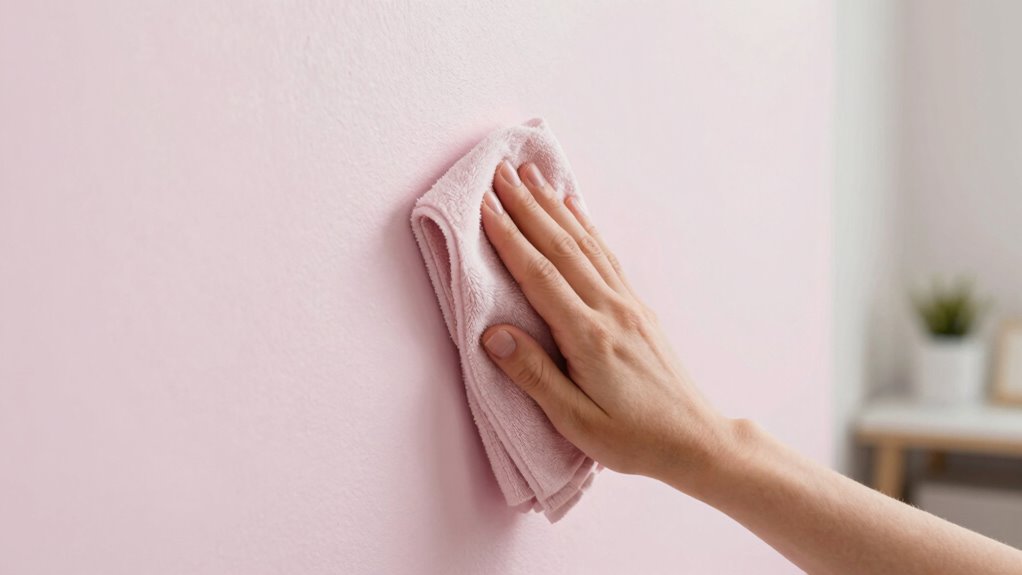
Keeping your painted walls clean doesn’t have to mean risking damage to the finish. With the right cleaning techniques and proper wall preparation, you can maintain your walls’ appearance without stripping away their fresh look. Start by evaluating the type of paint on your walls—whether it’s matte, eggshell, satin, or semi-gloss—as this influences the cleaning approach. Lightly dust the surfaces first using a soft microfiber cloth or a gentle brush to remove loose dirt and cobwebs, making the subsequent cleaning safer and more effective.
Proper wall preparation and gentle cleaning techniques protect your painted walls’ finish.
Before applying any cleaning solution, it’s essential to prepare the wall properly. You should spot-test a small, inconspicuous area to ensure the cleaning method won’t cause discoloration or damage. Next, mix a gentle cleaning solution—warm water combined with a few drops of mild dish soap is usually sufficient. Avoid harsh chemicals like bleach or abrasive cleaners, which can strip or dull the paint finish. When you’re ready, dampen a soft sponge or cloth in the solution, then wring it out thoroughly so it’s just damp, not soaked. Excess moisture can seep into seams or cracks, leading to peeling or bubbling over time.
Use gentle, circular motions to clean the walls, focusing on areas with visible stains or grime. Never scrub aggressively, as this can lift or scratch the paint. For stubborn spots, you can lightly apply a mixture of baking soda and water as a mild abrasive, but always test first. Additionally, understanding the paint type on your walls can guide you to the safest cleaning methods. It’s also helpful to keep in mind that proper cleaning techniques are essential to avoid unintended damage. To further protect the finish, consider using a soft cloth or sponge that won’t scratch the surface. After cleaning, rinse the sponge or cloth in clean water, wring it out well, and wipe down the walls again to remove any soap residue. This extra step helps prevent streaks or film buildup that can dull the finish.
Dry the walls thoroughly with a soft towel or microfiber cloth to prevent streaks or water spots. If you notice any streaking, gently buff the surface with a dry, clean cloth. When working on more delicate surfaces, it’s useful to be aware of paint durability and how it affects cleaning strategies. Remember, regular maintenance, such as dusting weekly and spot cleaning when needed, helps keep your painted walls looking fresh without the need for intensive scrubbing. Proper wall preparation—like ensuring the surface is dust-free and testing cleaning solutions—makes all the difference in preserving your paint’s finish. Additionally, understanding your specific wall conditions can help prolong the life of your painted surfaces. With patience and gentle techniques, you can enjoy clean, beautiful walls that last.
As an affiliate, we earn on qualifying purchases.
Frequently Asked Questions
Can I Use a Steam Cleaner on Painted Walls?
Yes, you can use a steam cleaner on painted walls, but you should do so carefully to guarantee paint safety. Use a low-temperature setting and keep the steam cleaner moving to avoid damaging the paint or causing it to peel. Always test a small, inconspicuous area first. Steam cleaning is effective for deep cleaning, but gentle techniques help preserve your painted walls and maintain their appearance.
How Often Should Painted Walls Be Cleaned?
You should clean your painted walls every 3 to 6 months to keep them looking fresh. Wall texture influences how often cleaning is needed; textured surfaces trap more dust and dirt. If your paint has high durability, you can extend cleaning intervals without worry. Regular gentle dusting and spot cleaning prevent buildup, preserving your wall’s finish and texture. This balance keeps your walls vibrant and well-maintained over time.
Are There Specific Cleaning Products to Avoid?
You should avoid harsh chemicals and abrasive scrubbers when cleaning painted walls. Harsh chemicals can damage the paint finish, causing discoloration or peeling, while abrasive scrubbers may scratch the surface. Instead, opt for gentle cleaning solutions like mild soap and water, and use soft cloths or sponges. This approach keeps your walls looking fresh without risking damage, ensuring their finish remains intact and beautiful over time.
How Do I Remove Stubborn Stains Without Damaging Paint?
Think of stubborn stains as unwelcome guests and your wall as a delicate dance partner. To remove them without damage, gently dab a mixture of warm water and a mild detergent onto the stain. Avoid harsh scrubbing, which can ruin your paint finish. After cleaning, consider doing a quick paint touch-up or wall prep to restore your wall’s flawless appearance, ensuring your walls stay vibrant and inviting.
Is It Safe to Use a Sponge or Cloth for Cleaning?
Yes, using a sponge or cloth is safe for cleaning painted walls if you choose gentle cleaning tools. Before you start, surface preparation is key; remove dust and loose dirt. Opt for a soft sponge or microfiber cloth to prevent damage, and avoid abrasive cleaning tools. Dampen your sponge or cloth with a mild cleaning solution, then gently wipe the wall. This method guarantees effective cleaning without harming the paint finish.
Conclusion
Now, with gentle cleaning techniques, you can keep your painted walls spotless without risking damage. It’s like giving your walls a spa day—refreshing and caring without stripping away their finish. Instead of harsh scrubbing or chemical cleaners, use soft cloths and mild solutions. This careful approach protects your walls’ beauty while keeping them clean. After all, a fresh coat of paint is lovely, but a clean wall makes your space truly shine.
Halloween Picks
halloween
As an affiliate, we earn on qualifying purchases.