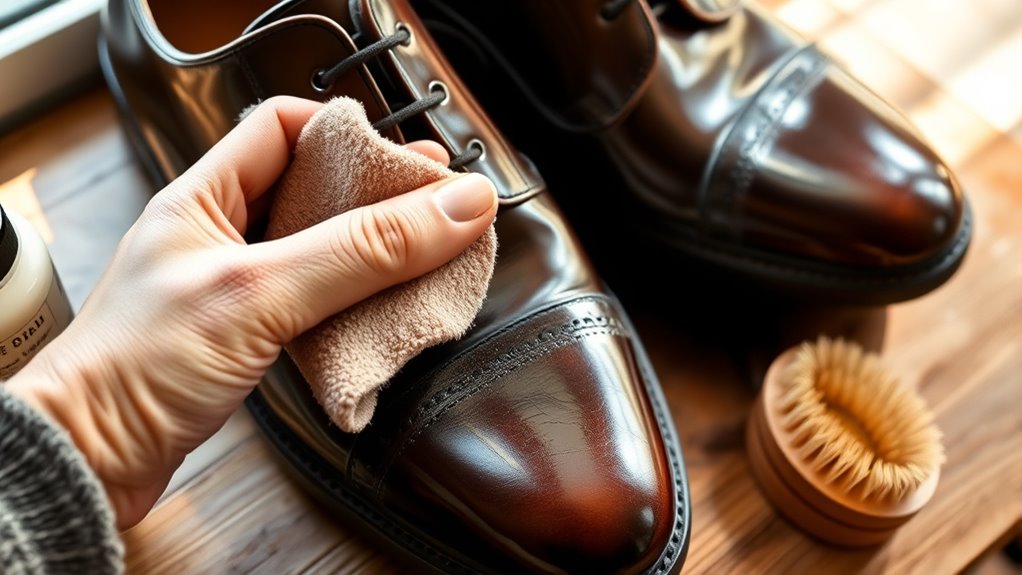
To clean and condition leather shoes at home, start by removing dirt with a soft cloth or brush. Apply a leather cleaner or conditioner to restore moisture and keep the leather supple. Once cleaned, allow the shoes to dry completely before polishing with a quality shoe polish using circular motions. Buff to a shine, paying attention to edges and seams. For more tips on maintaining your shoes’ durability, keep learning how to care for leather properly.
Key Takeaways
- Use a leather cleaner or conditioner to gently remove dirt and restore moisture before cleaning.
- Ensure shoes are completely dry before applying any polish or conditioner to prevent damage.
- Apply a small amount of leather conditioner with a soft cloth, working it into the leather in circular motions.
- Regularly buff shoes with a soft brush or cloth to enhance shine and evenly distribute conditioners.
- Protect leather shoes with appropriate conditioners and avoid excessive moisture to maintain durability.
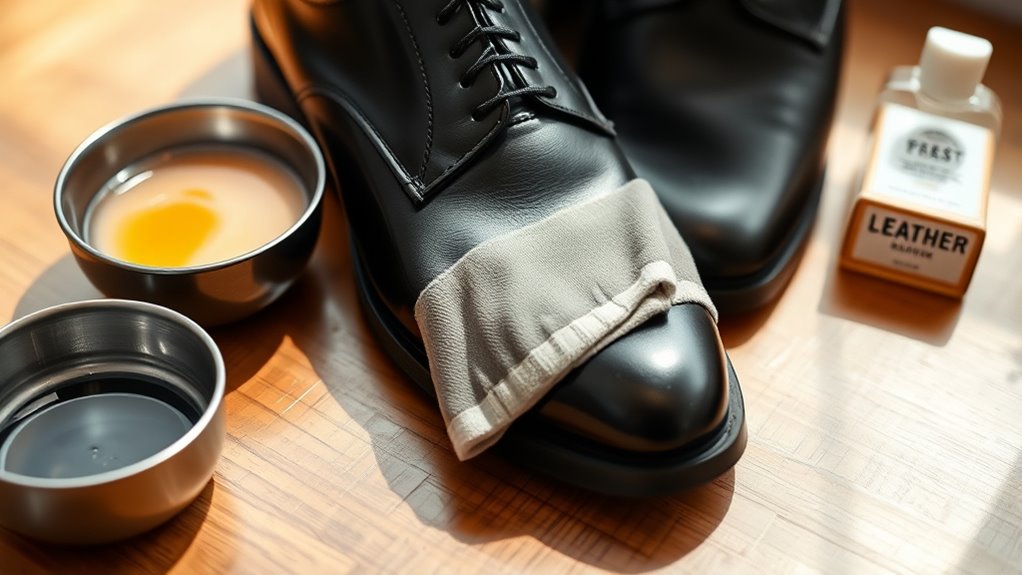
Keeping your leather shoes looking their best requires regular cleaning and proper care. When it comes to maintaining their shine and extending their lifespan, mastering shoe polish techniques is essential. The right methods can transform dull, scuffed shoes into polished, professional-looking footwear. Start by selecting quality leather care products, such as a good leather cleaner or conditioner, to prepare your shoes for polishing. These products help remove dirt and restore moisture, preventing cracks and preserving the leather’s suppleness.
Once your shoes are clean and dry, you’ll want to focus on applying shoe polish correctly. Using a soft cloth or a dedicated applicator brush, take a small amount of polish and work it into the leather in small, circular motions. This technique ensures even coverage and helps the polish penetrate the leather fibers more effectively. If you’re dealing with scuffs or scratches, apply a little extra polish to those areas, allowing it to sit for a few moments before buffing. Remember, the key to successful shoe polish techniques is patience and thoroughness—rushing through the process can lead to uneven shine or missed spots.
Apply polish with a soft cloth in small, circular motions for an even, professional shine.
After applying the polish, let it sit for a few minutes to absorb into the leather. Then, use a clean, soft cloth or a horsehair brush to buff your shoes to a high shine. The buffing process is essential because it not only enhances the appearance but also helps distribute the polish evenly across the surface. For a mirror-like finish, you might want to repeat the application and buffing process a couple of times. Be sure to pay attention to the edges and seams, as these areas tend to get neglected but are critical for a polished look. Proper buffing techniques can also help prevent damage and extend the life of your footwear.
In addition to polish, using leather care products like conditioners and protectants can considerably improve your shoes’ durability. These products help maintain the leather’s natural oils, preventing it from drying out and cracking over time. They also form a protective barrier against moisture and dirt, making future cleaning easier. When selecting leather care products, opt for those specifically formulated for shoes, and always follow the manufacturer’s instructions for best results.
Frequently Asked Questions
How Often Should I Clean My Leather Shoes?
You should clean your leather shoes every 1 to 2 weeks to keep them looking their best. Regular shoe polishing helps maintain shine and protects against dirt, while leather restoration keeps the material supple. If you wear your shoes daily or in harsh conditions, consider cleaning more often. Proper care prevents cracking and extends their lifespan, so stay consistent with your routine to preserve your footwear’s appearance and durability.
Can I Use Water to Clean Leather Shoes?
You shouldn’t use water directly to clean leather shoes, as it can cause water damage and leather discoloration. Instead, use a damp cloth to gently wipe away dirt, avoiding soaking the material. Water damage can weaken the leather and lead to cracks, while excessive moisture can cause discoloration. Always opt for a specialized leather cleaner or conditioner to keep your shoes in good shape without risking damage.
What Products Are Best for Conditioning Leather?
You should use a quality leather conditioner, like mink oil or a specialized leather balm, to keep your shoes supple and moisturized. Avoid leather cleaning myths that suggest harsh chemicals or water-based products, which can damage the material. Follow the best storage practices by keeping your shoes in a cool, dry place. Regular conditioning maintains their appearance and prolongs their lifespan, ensuring your shoes stay in great shape.
Is It Safe to Use Household Detergents on Leather?
Using household detergents on leather is like pouring harsh chemicals on a delicate canvas—you risk damaging it. Household detergent risks stripping away natural oils, causing the leather to crack and lose its luster. The leather damage potential is high because these cleaners aren’t designed for leather’s unique surface. Instead, opt for gentle leather-specific cleaners to keep your shoes looking their best and avoid unwanted deterioration.
How Do I Remove Salt Stains From Leather Shoes?
To remove salt stains from your leather shoes, start by wiping off excess salt with a damp cloth. Mix equal parts white vinegar and water, then gently dab the stain with a soft cloth soaked in this solution. Let it air dry, then apply a leather conditioner to keep your shoes supple. These cleaning tips help maintain your leather shoes’ appearance and extend their lifespan through proper shoe care and leather maintenance.
Conclusion
So, after all that effort, you’ve pampered your leather shoes at home—something you probably never expected to do yourself. Ironically, caring for something so simple can feel like a luxury, yet neglecting it leads to costly replacements. Now, with just a few easy steps, you’ve kept your shoes looking sharp and lasted longer. Who knew that a little TLC could make such a difference? Turns out, your shoes appreciate the effort more than you’d think.