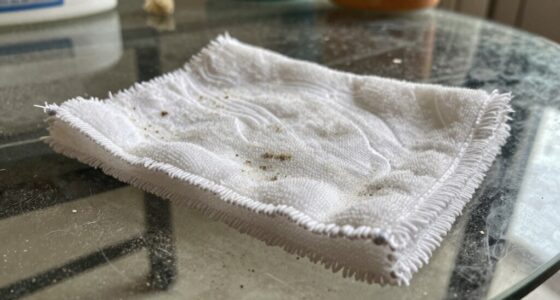
To clean ceiling fans without spreading dust, turn off the fan and let dust settle. Cover furniture and floors with drop cloths, then use a microfiber or damp anti-static cloth to wipe the blades from the center outward, preventing dust from flying. Use extendable tools for tricky spots and wipe underneath blades thoroughly. Proper ventilation helps control dust, and vacuum nearby surfaces afterward to catch residual particles. Keep your fan clean and dust-free with these tips—more simple techniques await if you continue.

Get furniture and decor delivered free with Prime
- Fast, free delivery on millions of items
- Prime Video, Amazon Music and more included
- Member-only deals all year
Key Takeaways
- Cover furniture and floors with drop cloths to catch falling dust and prevent spreading.
- Use damp microfiber or anti-static cloths to trap dust without dispersing it into the air.
- Wipe blades firmly from the center outward to minimize dust displacement.
- Clean hard-to-reach areas with extendable tools to avoid knocking dust into the environment.
- Ensure proper ventilation and vacuum nearby surfaces after cleaning to remove residual airborne dust.

Ever wonder how to keep your ceiling fans clean and functioning efficiently? The key is managing dust accumulation effectively while avoiding the spread of dust into the air. Ceiling fans tend to collect dust quickly, especially if they’re turned off for a while. Over time, dust settles on the blades, making them look dirty and reducing their efficiency. Regular fan blade maintenance helps keep your fan running smoothly, but cleaning without dispersing dust can be tricky. The last thing you want is to create a cloud of dust that settles on your furniture, floors, or even your belongings.
The best way to prevent dust from flying everywhere is to use the right cleaning tools and techniques. First, turn off the fan and let it sit for a few minutes to settle any loose dust. Cover the furniture and floors beneath with a drop cloth or old sheet to catch any dust that might fall. Before wiping, grab a microfiber cloth or a damp cloth—these are excellent for trapping dust instead of just pushing it around. Avoid dry dusting with a regular duster or feather duster, as this can send dust particles airborne.
When you start cleaning, hold the cloth firmly against each fan blade and wipe in a smooth, straight motion from the center outward. This helps lift dust without flicking it into the air. For stubborn dust buildup, lightly dampen the cloth with water or a gentle cleaning solution. Make sure not to use too much liquid, as excess moisture could damage the fan or cause streaks. For hard-to-reach areas or the underside of the blades, a microfiber cloth attached to a long-handled duster or an extendable tool works well. This allows you to clean thoroughly without spreading dust to other surfaces. Additionally, using an anti-static cloth can help reduce dust adhesion in the future. Incorporating proper ventilation during and after cleaning can also help remove airborne dust particles more efficiently.
To further minimize dust displacement, consider wearing a dust mask or covering your nose and mouth. After finishing, vacuum nearby surfaces or wipe down them with a clean, damp cloth to catch any residual dust particles. Maintaining a clean ceiling fan isn’t just about appearance; it also improves air quality and fan efficiency. Regular fan blade maintenance prevents dust buildup from becoming overwhelming and ensures your fan operates quietly and smoothly. Additionally, understanding the importance of biodiversity in indoor environments can help foster a healthier living space. With these simple steps, you can keep your ceiling fans looking spotless and working at their best—without the mess and dust clouds that often come with improper cleaning techniques.
microfiber ceiling fan cleaning cloth
As an affiliate, we earn on qualifying purchases.
As an affiliate, we earn on qualifying purchases.
Frequently Asked Questions
How Often Should I Clean My Ceiling Fan?
You should clean your ceiling fan every 1 to 2 months to maintain good fan maintenance and prevent dust buildup. Regular cleaning keeps the blades dust-free, improves air quality, and guarantees efficient operation. If you notice more dust or allergies, increase cleaning frequency. Consistent cleaning not only prolongs your fan’s lifespan but also keeps your room healthier and more comfortable. Stick to this schedule for peak fan performance.
Can I Use a Vacuum on Ceiling Fan Blades?
Yes, you can use a vacuum on ceiling fan blades. Attach a dust mop or a brush attachment to your vacuum to gently remove dust and debris without spreading it around. For extra filtration, run an air purifier nearby to catch airborne dust particles. This method keeps your fan blades clean and reduces dust circulation, making your room fresher and healthier. Just be gentle to avoid damaging the blades.
What Tools Are Best for Dusting Ceiling Fans?
You should use soft, microfiber cloths or extendable dusters for dusting ceiling fans. These cleaning tools effectively trap dust without spreading it around. For best dusting techniques, gently wipe each blade, working from the center outward. Avoid abrasive tools that could scratch surfaces. If blades are very dusty, lightly dampen your cloth to improve dust removal. Using the right cleaning tools guarantees a thorough, dust-free ceiling fan.
Is It Safe to Clean Ceiling Fans While They Are On?
Cleaning ceiling fans while they’re on isn’t safe because fan safety could be compromised, risking injury or damage. You should turn off the fan before cleaning to avoid accidents. Regularly maintaining and cleaning your fans ensures peak performance and reduces dust buildup. Stick to a consistent cleaning frequency—every few months—to keep your space fresh and safe. Always prioritize safety over convenience to prevent any mishaps or damage.
How Do I Remove Stubborn Grime From Fan Blades?
To remove stubborn grime from fan blades, start by turning off the fan and wearing gloves. Use a damp cloth with a mild detergent or a mixture of water and vinegar to wipe each blade thoroughly. For tough grime, gently scrub with a soft-bristled brush. Regular fan blade maintenance prevents dust accumulation, making cleaning easier. Keep up with routine cleaning to maintain a dust-free environment and prolong your fan’s lifespan.
Conclusion
Now that you know how to clean your ceiling fan without spreading dust, you’re equipped to keep it shining like new. Think of your fan as a dancer gracefully spinning—cleaning it properly keeps that dance smooth and dust-free. Regular upkeep not only improves air quality but also extends your fan’s life. So, roll up your sleeves and give it a gentle, thorough clean—you’ll be surprised at how much brighter and fresher your room feels afterward.
Halloween Picks
halloween
As an affiliate, we earn on qualifying purchases.