To clean your air vents and registers, turn off your HVAC system and remove the covers using a screwdriver. Wash the covers with warm, soapy water, then dry thoroughly before reinstalling. Use a flexible brush or long-handled duster to gently scrub inside the duct openings. Avoid soaking the ducts to prevent mold; instead, use a damp cloth or specialized brushes. For deeper cleaning, consider professional help—keep going to learn more tips for best results.
Key Takeaways
- Turn off the HVAC system and remove vent covers with a screwdriver for thorough access.
- Clean vent covers with warm, soapy water, rinse, dry completely, then reinstall.
- Use a flexible brush or long-handled duster to gently scrub inside duct openings.
- For deep cleaning, consider professional services with high-powered vacuums and negative pressure systems.
- Regularly schedule cleaning every few months to maintain air quality and HVAC efficiency.
Keeping your air vents and registers clean is vital for maintaining good indoor air quality and guaranteeing your HVAC system runs efficiently. When you regularly perform air duct maintenance, you help prevent the buildup of dust, dirt, and other debris that can clog your system and reduce airflow. Over time, these particles can also circulate through your home, aggravating allergies and causing respiratory issues. Regular cleaning not only improves air quality but also extends the lifespan of your HVAC system, saving you money on repairs and energy costs.
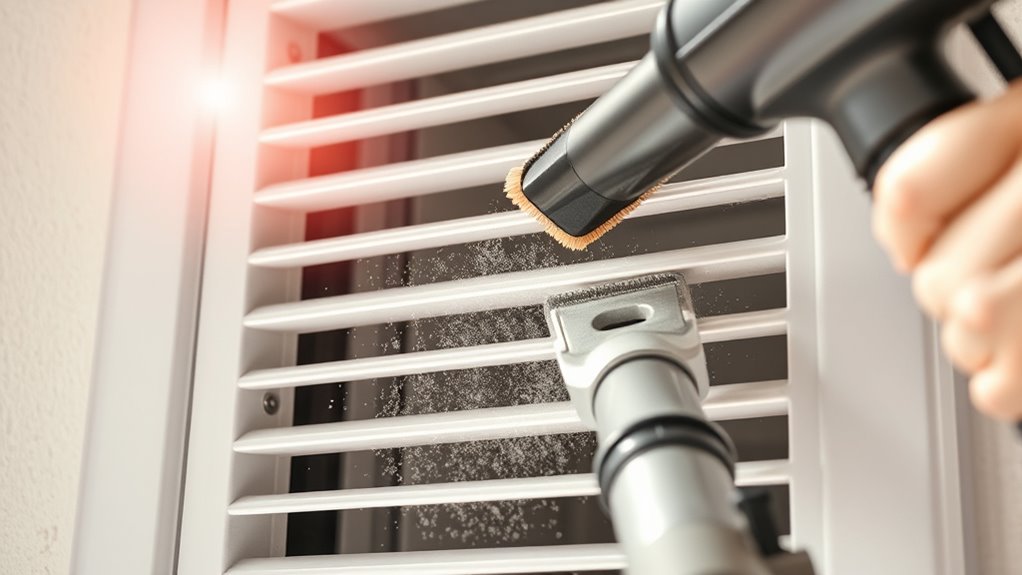
Start by turning off your HVAC system before you begin cleaning. Remove the vent covers or registers from the walls or floors. Most covers are held in place with screws, so you’ll need a screwdriver to take them off. Once removed, take a moment to inspect the vent openings and surrounding ductwork for dust, cobwebs, or mold. Using a vacuum with a brush attachment, thoroughly clean the vent covers and the visible parts of the duct openings. This step is vital for allergen removal because it eliminates the dust and allergens that can circulate when the system is running.
Next, wash the vent covers with warm, soapy water to remove any stubborn grime or grease. Rinse them well and let them dry completely before reinstalling. While the covers are drying, take a flexible brush or a long-handled duster to reach inside the duct openings. Gently scrub the interior walls of the vents to dislodge accumulated dust and debris. For deeper cleaning, consider using a damp cloth or a specialized vent cleaning brush to reach further into the ductwork, but avoid soaking the ducts, as excess moisture can lead to mold growth. Incorporating regular maintenance into your routine can further prevent dust buildup and ensure optimal airflow.
If you notice persistent dust or signs of mold, it may be time to call in a professional for more thorough air duct maintenance. They can use specialized tools like negative pressure systems and high-powered vacuums to deep-clean your ductwork. Regular maintenance like this greatly improves allergen removal, creating a healthier environment at home.
Finally, once everything is dry and reassembled, turn your HVAC system back on and check for proper airflow. Maintaining clean vents and registers isn’t a one-time task; schedule regular cleanings every few months, especially if you have pets or allergies. This routine helps guarantee your home stays fresh, reduces allergens in the air, and keeps your HVAC system running smoothly for years to come.
Frequently Asked Questions
How Often Should I Replace Air Filters in Vents?
You should replace your air filter every 1 to 3 months, depending on the air filter lifespan and your home’s needs. Check the replacement schedule regularly, especially if you have pets, allergies, or high indoor pollution. A dirty filter can reduce airflow and efficiency, so stay proactive. For peak performance, follow the manufacturer’s recommendations and inspect filters monthly to see if they need changing sooner.
Can I Use Vinegar to Clean Air Vents Effectively?
Yes, vinegar can be an effective natural cleaning solution for air vents. Its antibacterial properties help eliminate dust and grime without harsh chemicals. To use vinegar, mix equal parts vinegar and water in a spray bottle, then spray onto vents and registers. Let it sit for a few minutes, scrub with a brush or cloth, and wipe clean. Vinegar effectiveness makes it a safe, eco-friendly choice for maintaining your air vents.
Are There Eco-Friendly Cleaning Options for Air Vents?
Yes, there are eco-friendly solutions for cleaning air vents. You can use natural cleaning methods like baking soda and vinegar, which act as a gentle scrub brush for your vents. These natural cleaning options are safe for your home and the environment, helping you keep your air revitalized without harsh chemicals. Think of it as giving your vents a gust of fresh air, naturally and sustainably.
How Do I Prevent Mold Buildup in Air Registers?
To prevent mold buildup in air registers, you should regularly inspect and clean them to maintain good air quality. Keep the area around vents dry and ensure proper ventilation to reduce humidity, which fosters mold growth. Use mold-resistant filters and consider applying a mold inhibitor to the vents. Consistent maintenance and moisture control are key to mold prevention, helping you breathe cleaner, healthier air.
What Tools Are Best for Cleaning Hard-To-Reach Vents?
To clean hard-to-reach vents, you should use vacuum attachments like a crevice tool to reach tight spaces, and flexible brushes to loosen dust and debris. These tools help you access deep inside the vents without much effort. Attach the vacuum nozzle securely, then use the flexible brush to sweep away stubborn dirt. This combo makes cleaning easier and guarantees your vents stay free of dust, mold, and allergens.
Conclusion
Now that you’ve learned how to clean your air vents and registers, breathe easy knowing you’re clearing away the dust bunnies and opening the door to invigorating, clean air. Think of your vents as the lungs of your home—when kept tidy, they fill your space with essential energy and comfort. Embrace this simple task, and watch as your living environment transforms into a sanctuary of purity and peace. Your home’s air is now a breath of revitalizing life.