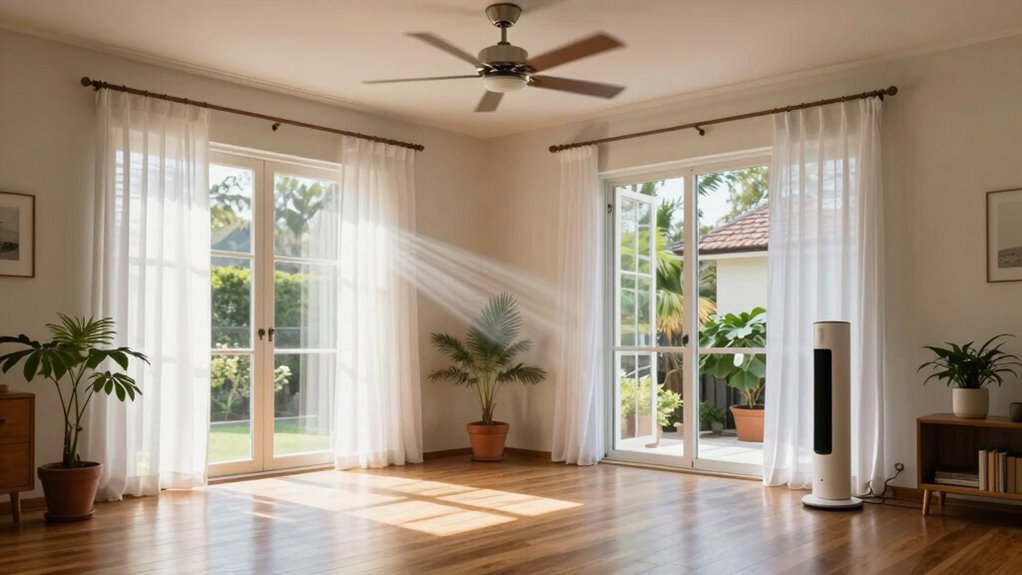

To maintain better air movement across your home, open windows on opposite sides to create cross-ventilation, and keep vents unblocked. Use fans, like ceiling fans, set to push air efficiently, and ensure they stay clean for maximum performance. Arrange furniture to avoid blocking airflow pathways and position plants near windows or corners to naturally promote circulation. Regularly maintain exhaust fans in kitchens and bathrooms. Keep these strategies in mind to improve airflow— further details will help you achieve the greatest results.

Get furniture and decor delivered free with Prime
- Fast, free delivery on millions of items
- Prime Video, Amazon Music and more included
- Member-only deals all year
Key Takeaways
- Use ceiling fans and portable fans to promote continuous air circulation throughout rooms.
- Keep windows and doors open to facilitate cross-ventilation and fresh air entry.
- Arrange furniture to avoid blocking vents and airflow pathways for unobstructed circulation.
- Install exhaust fans in kitchens and bathrooms to remove stale air efficiently.
- Regularly maintain and clean ventilation systems and fans for optimal airflow performance.
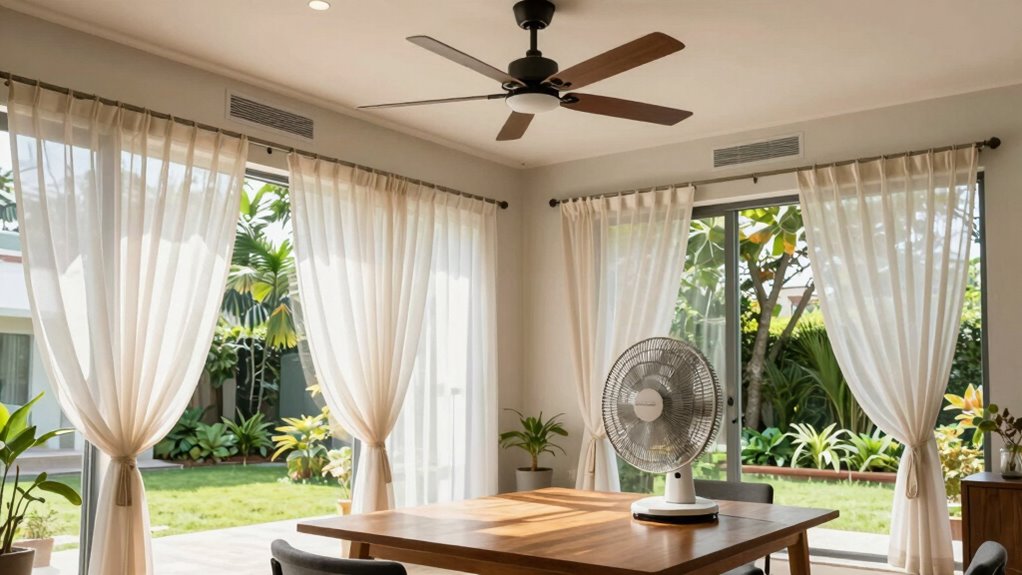
Good air movement is essential for a comfortable and healthy home, especially as it helps regulate temperature, reduce humidity, and improve indoor air quality. When the air circulates properly, you’ll notice a fresher atmosphere that feels inviting and reduces stuffiness. To achieve this, consider the strategic placement of indoor plants, which naturally promote air circulation and add a touch of greenery that filters toxins and boosts oxygen levels. By placing plants near windows or in corners, you encourage gentle airflow around them, helping to circulate air throughout the room. Not only do they improve the environment, but they also make your living space more appealing and calming. Ensuring that your ventilation systems are functioning correctly is also crucial for maintaining optimal airflow.
Indoor plants enhance air circulation, filter toxins, and create a calming, inviting atmosphere in your home.
Complementing indoor plants, ceiling fans are a practical and energy-efficient way to enhance air movement. Properly installed ceiling fans create a consistent breeze that pushes stale air out and pulls fresh air in, making your entire home feel more airy and comfortable. During warmer months, set the fan to rotate counterclockwise to produce a cooling effect, and in cooler months, switch it to clockwise to distribute warm air trapped near the ceiling. This simple adjustment can considerably impact your comfort without increasing your energy bills. Make sure the fan blades are clean and balanced, as dust and imbalance can reduce efficiency and cause noise. Additionally, understanding airflow patterns within your home can help you optimize the placement of fans and furniture for better circulation. Recognizing airflow dynamics is key to preventing stagnant air pockets and enhancing overall ventilation.
You should also pay attention to your home’s layout and furniture arrangement. Avoid blocking vents and airflow pathways with large furniture or clutter, which can hinder air circulation. Keep windows open whenever possible, especially in rooms with poor ventilation, to allow fresh air to enter and stale air to escape. Cross-ventilation is particularly effective—open windows on opposite sides of your home to create a natural flow that refreshes the air. If natural ventilation isn’t feasible, consider installing exhaust fans in kitchens and bathrooms to extract humid or contaminated air and promote better circulation throughout your home. Regularly checking and maintaining your ventilation systems ensures they continue to operate effectively and support healthy indoor air quality.
Products Worth Considering

Bose TV Speaker (2nd Gen) Compact Soundbar with Bluetooth and HDMI Connectivity, Black

LG 55-Inch QNED73B Mini LED 4K Smart TV (2026)

Bose TV Speaker Compact Soundbar with Bluetooth and HDMI-ARC, Black
As an affiliate, we earn on qualifying purchases.
Frequently Asked Questions
How Does Indoor Humidity Affect Air Circulation?
Indoor humidity affects air circulation by influencing moisture levels, which can either hinder or promote airflow. When humidity control is poor, excess moisture makes the air feel heavier, slowing down circulation and creating stuffiness. Conversely, low humidity can dry out the air, leading to discomfort and static. Maintaining balanced moisture levels encourages better air movement and improves overall comfort, making your home feel fresher and more breathable.
Can Furniture Placement Improve Airflow Naturally?
Strategic furniture arrangement can work wonders for room ventilation, subtly guiding airflow through your space. By avoiding clutter and placing larger pieces away from windows and vents, you allow fresh air to circulate more freely. Keep pathways clear and consider angling furniture to encourage gentle breezes. This natural approach optimizes air movement, making your home feel fresher and more inviting without relying solely on mechanical systems.
What Role Do Air Purifiers Play in Movement?
Air purifiers play a vital role in airflow optimization by enhancing air quality and promoting better circulation. Their efficiency determines how well they filter out pollutants, which directly impacts overall airflow. To maximize their benefits, position your air purifier in high-traffic or central areas and choose models with high air purifier efficiency. This guarantees cleaner air and smoother movement throughout your home, creating a healthier living environment.
How Often Should Vents and Filters Be Cleaned?
Think of your vents and filters as the lungs of your home. You should clean vents and perform filter replacement every 3 to 6 months, depending on usage and environment. Regular vent cleaning removes dust and debris, ensuring smooth airflow. Changing filters keeps indoor air fresh and prevents buildup. Staying consistent with these tasks helps maintain healthy air movement, making your home feel fresher and more comfortable every day.
Are There Specific Window Sizes for Optimal Airflow?
Yes, window sizes do matter for ideal airflow. Larger windows generally improve ventilation efficiency by allowing more air to enter and circulate, especially if they can be opened widely. Consider window design that promotes cross-ventilation, such as placing windows on opposite sides of a room. Properly sized windows help you achieve better air movement, reduce stuffiness, and maintain fresh indoor air, making your home more comfortable and energy-efficient.
Conclusion
By opening doors and windows, you’re inviting your home’s breath to dance freely, creating a symphony of fresh air that whispers through every corner. Think of your space as a living organism, where good airflow is the heartbeat that keeps liveliness alive. With simple shifts and mindful habits, you’ll nurture a breeze that weaves through your home like a gentle current, ensuring every room breathes easy and feels alive with renewed energy.