
To check your attic for moisture problems, start by inspecting vents, soffits, and ridge vents for obstructions or damage. Pull back small sections of insulation to look for dampness, mold, or odors. Look for wood rot, water stains on ceilings, or dark patches on walls, especially after heavy rain. Check flashing around vents and chimneys for leaks. Ensuring proper airflow and ventilation helps prevent moisture buildup. Keep exploring to learn more about maintaining a healthy attic.

Get furniture and decor delivered free — and shop member deals
- Fast, free delivery on millions of items
- Access to Prime Big Deal Days deals on October 6–7
- Prime Video, Amazon Music and more included
Key Takeaways
- Inspect vents and exhaust fans for obstructions or damage that hinder proper airflow.
- Look for water stains, dark patches, or mold growth on attic walls and ceiling surfaces.
- Check insulation for dampness, mold, or compressed areas indicating moisture intrusion.
- Examine roof flashing around vents and chimneys for leaks or signs of water penetration.
- Assess overall ventilation effectiveness by ensuring proper airflow and absence of stagnant or musty air.
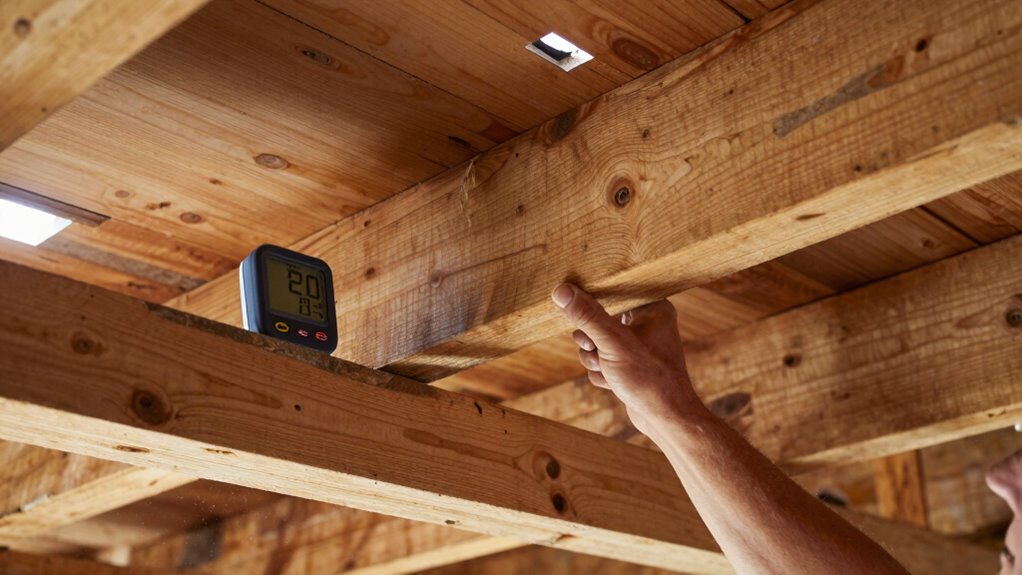
Moisture problems in your attic can lead to serious issues like mold, wood rot, and structural damage if left unchecked. To prevent these problems, you need to regularly inspect your attic for signs of excess moisture. Start by examining the ventilation system. Proper ventilation is vital because it helps regulate temperature and moisture levels. Look for signs that your attic isn’t ventilating well, such as excessive heat buildup, persistent humidity, or visible condensation on rafters and insulation. Check the vents—soffit vents, ridge vents, and attic fans—to ensure they’re unobstructed and functioning properly. If vents are blocked or damaged, moisture can become trapped, creating an ideal environment for mold and rot.
Regularly inspect your attic’s ventilation system to prevent moisture buildup and avoid mold, rot, and structural damage.
Next, focus on your insulation’s integrity. Insulation acts as a barrier against heat transfer, but it can also trap moisture if compromised. Pull back small sections to inspect the condition beneath. If insulation appears damp, moldy, or has a musty smell, that’s a clear sign of moisture intrusion. Wet insulation loses its insulating properties and can promote mold growth, which is harmful to both your health and your home’s structure. Be wary of insulation that appears uneven or has areas where it’s been compressed—these can indicate previous leaks or ventilation issues.
While inspecting, look for visible signs of water damage, such as water stains on the ceiling below or dark patches on attic walls. These are often signs that moisture has been seeping in over time. Check the attic’s framing and sheathing for any signs of wood rot, which looks like crumbling or soft wood. Wood rot is a clear indication that moisture levels are too high and haven’t been addressed. Additionally, listen for any strange sounds—dripping or the faint sound of water—especially after heavy rain, which can point to leaks or poor flashing around vents and chimneys.
Another key step is to assess the overall airflow in the attic. Proper circulation prevents moisture buildup, so ensure that your attic is not sealed off completely. Cross-ventilation allows moist air to escape and fresh air to enter, reducing humidity levels. If you notice stagnant air or moldy smells, it’s a sign that your ventilation issues need fixing. Ensuring proper airflow and ventilation practices can significantly reduce the risk of moisture accumulation. Regularly checking these areas and maintaining your attic’s ventilation and insulation integrity will go a long way in preventing moisture problems, protecting your home’s structure, and keeping your living space healthy. Proper ventilation and insulation are essential components of an effective moisture control strategy. Proper maintenance of ventilation systems is also key to preventing moisture buildup and should be part of your routine attic inspections. Additionally, understanding how moisture levels fluctuate with weather conditions can help you identify potential problem areas more quickly.
As an affiliate, we earn on qualifying purchases.
Frequently Asked Questions
How Often Should I Inspect My Attic for Moisture?
You should inspect your attic for moisture at least twice a year, following a regular inspections schedule. During each check, look for moisture indicators like damp insulation, mold, or a musty smell. It’s especially important after heavy rains or snow melts. Regular inspections help catch problems early, preventing structural damage and mold growth, ensuring your attic stays dry and safe year-round.
Can Mold in the Attic Affect Indoor Air Quality?
Ever wonder if mold in your attic affects your indoor air quality? It definitely can, especially if attic ventilation isn’t adequate or moisture barriers fail. Mold spores can circulate through your home’s air, causing allergies or respiratory issues. Regularly inspecting your attic for moisture and ensuring proper ventilation helps prevent mold growth, safeguarding your indoor air quality. Keep your attic dry to breathe easier and maintain a healthier home environment.
What Tools Are Best for Detecting Attic Moisture?
You should use moisture sensors and infrared thermometers to detect attic moisture effectively. Moisture sensors help identify damp areas by measuring humidity levels, while infrared thermometers reveal temperature differences indicating potential leaks or moisture buildup. By combining these tools, you can accurately pinpoint problem spots. Always wear protective gear and guarantee proper ventilation when inspecting your attic to stay safe during the process.
Are There DIY Methods to Fix Attic Moisture Issues?
Yes, you can try DIY fixes for attic moisture issues. Start by installing moisture barriers, like vapor barriers, on attic floors or walls to prevent humidity transfer. Improve ventilation by adding soffit or ridge vents, and seal any air leaks around pipes or wires. Regularly inspecting and maintaining these areas helps reduce moisture buildup. Remember, if problems persist or worsen, consulting a professional is always the safest choice.
When Should I Call a Professional for Attic Moisture Problems?
You should call a professional if you notice persistent dampness, mold, or a musty smell in your attic, especially if DIY efforts like inspecting insulation and ventilation maintenance haven’t resolved the issue. Did you know that 50% of attic moisture problems go unnoticed until significant damage occurs? Experts can evaluate your attic insulation, guarantee proper ventilation, and identify hidden leaks or insulation problems to prevent further damage.
Conclusion
By regularly inspecting your attic for signs of moisture, you can catch problems early and prevent costly damage. Some believe that dark, musty odors always signal moisture issues, but that’s not always true—sometimes ventilation or mold spores cause similar smells. Trust your observations and investigate thoroughly. Staying vigilant isn’t just about quick fixes; it’s about understanding that moisture problems often hide behind the scenes, waiting to cause bigger issues if left unchecked.
Fall Picks
fall essentials
As an affiliate, we earn on qualifying purchases.







![[Fact Check] Lee’s Claim Blaming Oh For Seoul Home Prices? - 최보식의언론](https://byretreat.com/wp-content/uploads/2026/09/fact-check-lee-s-claim-blaming-oh-for-seoul-home-prices-featured-260x140.jpg)