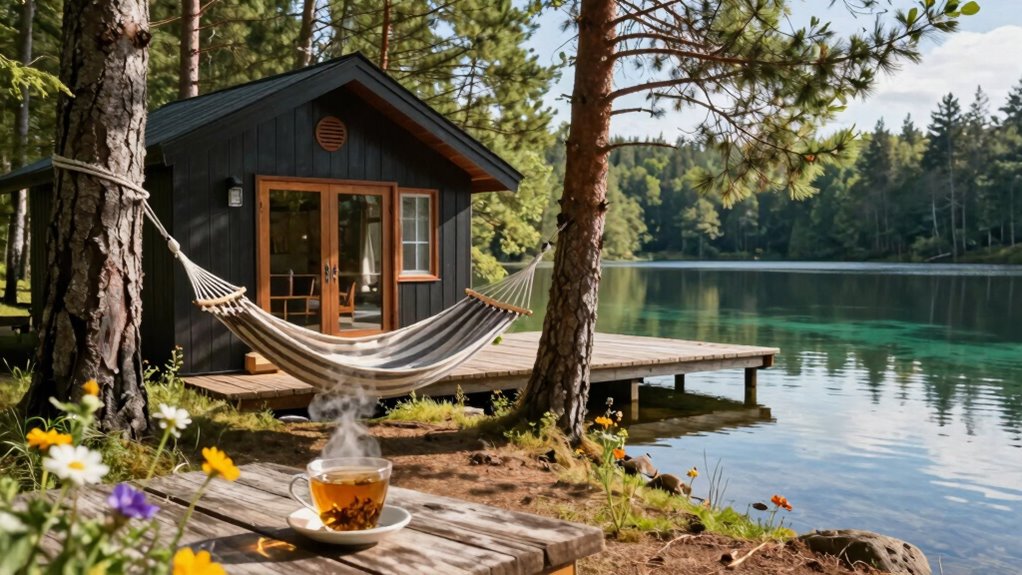
To make a long weekend truly restful, disconnect from digital distractions by turning off notifications and leaving devices in another room. Practice mindfulness during activities like walks, meals, or quiet moments to stay present and deepen relaxation. Create a routine that includes gentle outdoor time, leisurely meals, and mindful pauses, slowing down to savor each experience. Incorporate deep breathing or meditation to amplify calm, and discover simple ways to cultivate lasting peace throughout your weekend.
Key Takeaways
- Incorporate mindful relaxation practices like deep breathing or meditation to fully engage in each moment.
- Establish a digital detox by turning off notifications and leaving devices aside to reduce mental clutter.
- Create a calming routine with quiet mornings, leisurely meals, and outdoor activities to foster a sense of peace.
- Focus on slow, intentional activities such as walking, sipping tea, or sitting in silence to promote deep relaxation.
- Schedule regular breaks for self-reflection and connection with nature to rejuvenate physically and emotionally.

Long weekends can be a perfect chance to recharge, but they often leave you feeling more exhausted if you don’t plan ahead. Instead of falling into the trap of overscheduling or mindless scrolling, focus on mindful relaxation. This means truly being present in the moment, whether you’re enjoying a walk in nature, sipping your favorite tea, or simply sitting in silence. Mindful relaxation helps you disconnect from daily stresses and reconnect with yourself. It’s about slowing down and appreciating small pleasures without feeling guilty or hurried. When you consciously choose to be present, your mind can unwind, and your body can relax more deeply.
A digital detox should be a key part of your plan. Constant notifications, social media updates, and emails pull you away from real rest and often increase your stress levels. During your long weekend, set boundaries around your device use. Turn off notifications, or better yet, leave your phone in another room for a few hours each day. Engage in activities that don’t involve screens—reading a physical book, doing a puzzle, or practicing a hobby that requires your hands. This digital detox isn’t about completely disconnecting forever; it’s about giving your mind a break from the digital noise that can make you feel more drained. When you step away from screens, you give your brain a chance to reset, which is essential for genuine relaxation. Incorporating intentional digital detoxing into your routine can significantly enhance your overall sense of well-being. Additionally, focusing on security by disconnecting from constant online activity can help reinforce a sense of control and peace during your break.
To make your long weekend deeply restful, combine mindful relaxation with intentional digital detoxing. Create a schedule that includes quiet mornings, leisurely meals, and outdoor time, all without the constant buzz of your devices. Practice deep breathing exercises or meditation during these moments to deepen your sense of calm. Allow yourself to slow down and savor each experience, rather than rushing from one activity to another. Research shows that mindfulness can reduce stress and improve overall mental health, making it an essential component of a restorative break. When you’re fully present in what you’re doing, your body releases tension, and your mind clears. This kind of intentional downtime helps you feel truly rejuvenated, not just physically but emotionally and mentally as well. Incorporating mindful practices into your routine can enhance your overall well-being and make the long weekend a truly restorative experience.
meditation cushion for beginners
As an affiliate, we earn on qualifying purchases.
As an affiliate, we earn on qualifying purchases.
Frequently Asked Questions
How Can I Disconnect From Work During the Long Weekend?
To disconnect from work during the long weekend, start with a digital detox—turn off work emails and notifications. Practice mindful breathing to stay present and reduce stress. Set clear boundaries by informing colleagues you’re unavailable. Use this time to engage in activities you enjoy, like reading or nature walks. Prioritize rest and self-care, and remind yourself that taking this break helps you recharge fully for the days ahead.
What Are Some Unexpected Activities to Enhance Relaxation?
Think of this weekend as your personal retreat, like a chapter from Thoreau’s Walden. You can elevate relaxation with unexpected activities like mindful breathing exercises in a quiet park or spontaneous nature walks. These simple acts help you reconnect with the present, reduce stress, and deepen your sense of calm. Embrace these moments to truly unwind, turning ordinary activities into extraordinary sources of tranquility.
How Do I Avoid Feeling Guilty About Resting?
To avoid feeling guilty about resting, embrace guilt-free relaxation by reminding yourself that rest is crucial for your well-being. Prioritize self-care without remorse, understanding that taking time to recharge boosts your productivity and happiness. Set boundaries and communicate your needs to others, so you can truly rest without guilt. Remember, resting isn’t laziness—it’s a essential act of self-respect that helps you show up better for everything else.
What Are Quick Self-Care Routines for Busy Weekends?
On busy weekends, you can quickly boost your well-being with mindful breathing and gentle stretching. Take a few minutes to focus on your breath, inhaling deeply and exhaling slowly to calm your mind. Follow with gentle stretches to relieve tension in your body. These simple routines require minimal time but help you feel more relaxed, centered, and ready to enjoy your weekend without guilt.
How Can I Plan a Restful Long Weekend on a Budget?
Think of your long weekend as a blank canvas waiting for your budget-friendly travel ideas. You can explore nearby spots or nature trails without breaking the bank. Enhance relaxation with DIY spa treatments at home—like a soothing face mask or a calming bath. Planning simple, low-cost activities and prioritizing rest over spending helps you recharge deeply without draining your wallet. This way, your weekend becomes a nourishing retreat, not a financial burden.
Conclusion
A long weekend is like a delicate garden waiting to be tended. When you carve out time for rest, connection, and reflection, you cultivate a space where renewal blooms. Embrace the quiet moments, breathe deeply, and let your mind and body soak in the peace. With mindful intention, you transform fleeting days into a sanctuary of true relaxation—an oasis where your spirit can flourish, refreshed and ready to face whatever comes next.