To plan safer access to your attics, basements, and utility zones, guarantee you install sturdy, slip-resistant steps or ladders that are easy to deploy and secure. Improve safety with proper lighting—like motion-activated or LED fixtures—and ventilation solutions to prevent moisture and odors. Seal gaps around doors or hatches to keep pests out. Regularly inspect safety features, maintain equipment, and consider signage for clear guidance. Continuing with the right planning can make your access points safer and more reliable.
Key Takeaways
- Install sturdy, non-slip steps or ladders with secure handrails for stable access.
- Ensure adequate lighting, such as motion-activated LEDs, to improve visibility and safety.
- Incorporate proper ventilation systems to prevent moisture buildup and maintain air quality.
- Seal gaps around access points to block pests, drafts, and dust entry.
- Conduct regular inspections and maintenance of safety features and structural elements.
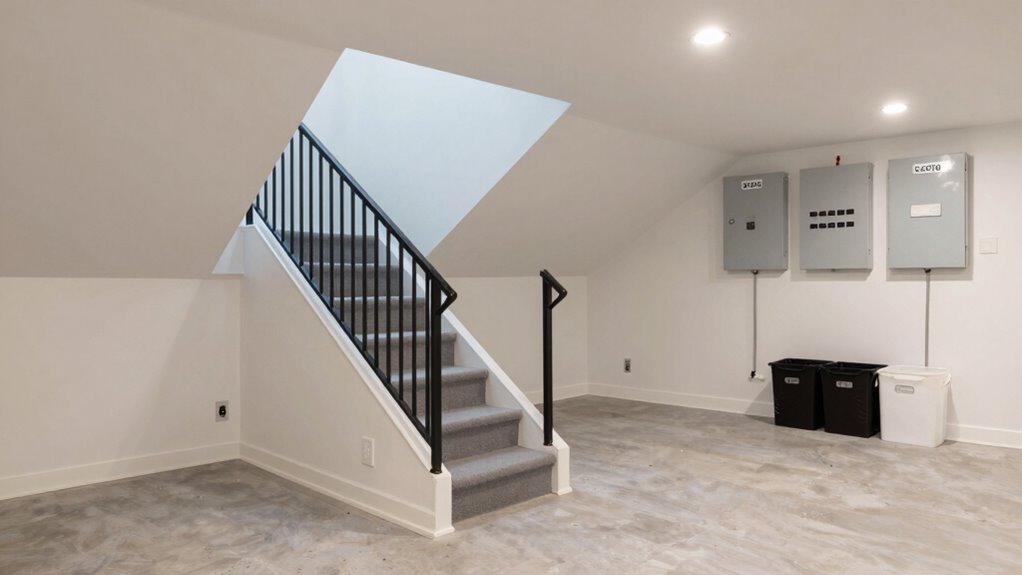
Ensuring safe access to attics, basements, and utility zones is essential for preventing accidents and making maintenance easier. When planning these access points, you need to consider both safety features and practical improvements that make regular upkeep manageable. Two critical aspects to focus on are lighting improvements and ventilation solutions, which directly impact safety and comfort during access.
Good lighting is fundamental. Without proper illumination, you risk tripping, missing hazards, or even causing accidents. You should plan for reliable, bright lighting fixtures that cover the entire access area. Installing motion-activated lights or LED strips can help ensure that the space is well-lit whenever you need to enter, reducing shadows and improving visibility. Consider adding task lighting inside the attic or basement itself, especially if you often work in these spaces. This not only minimizes accidents but also makes inspections and repairs quicker and safer.
Proper lighting is essential to prevent accidents and improve safety in attics, basements, and utility zones.
Ventilation solutions are equally vital. Poor airflow can lead to moisture buildup, mold growth, and musty odors, which compromise both safety and health. When designing access points, incorporate vents or exhaust fans to promote continuous airflow. In basements, where air tends to stagnate, installing a ventilation system helps prevent humidity issues that can weaken structural elements over time. For attics, proper ventilation reduces heat buildup during summer and moisture accumulation during winter, protecting stored items and structural integrity. Ensuring that these zones are well-ventilated also minimizes the risk of health problems caused by mold spores or airborne contaminants. Additionally, proper ventilation is crucial for maintaining a healthy indoor environment and preventing long-term damage. Incorporating appropriate ventilation systems during planning can further enhance these benefits and reduce the need for costly repairs later on. A comprehensive approach to ventilation and lighting can significantly improve overall safety and usability. Regular maintenance of these systems, including cleaning and inspections, is essential to ensure continued effectiveness and safety.
When planning your access points, think about ease of entry and exit. Use sturdy, non-slip steps or ladders, and secure them properly to prevent slipping or falling. If you’re installing a ladder, choose one that’s adjustable and easy to deploy. Make sure the entry points are wide enough to allow safe passage, especially if you need to carry tools or bulky items. Additionally, sealing gaps around access doors or hatches prevents pests, drafts, and dust from entering the living space.
Finally, consider regular maintenance of your lighting and ventilation systems. Check bulbs and fixtures periodically, and ensure vents are clear of obstructions. Incorporate safety features like handrails, anti-slip surfaces, and clear signage to guide you safely through these zones. Proper planning not only enhances safety but also makes routine inspections less stressful, saving you time and potential hazards down the line. By paying attention to lighting improvements and ventilation solutions, you create a safer, more efficient environment for accessing attics, basements, and utility zones.
As an affiliate, we earn on qualifying purchases.
Frequently Asked Questions
What Permits Are Needed for Installing Attic or Basement Access?
You’ll need to check your local building codes to determine the permit requirements for installing attic or basement access. Typically, permits are required to guarantee safety standards are met and that the work complies with regulations. Contact your city or county building department to find out what specific permits are necessary. Failing to obtain the proper permits can lead to fines or difficulties when selling your home later.
How Do I Improve Lighting in Utility Zones?
To improve lighting in utility zones, install dedicated lighting fixtures that provide bright, focused illumination. Consider adding adjustable fixtures or LED strip lights for better coverage. Make sure you also have accessible power outlets nearby to plug in portable lamps or work lights when needed. Proper lighting makes these areas safer and more functional, so plan your fixture placement carefully to eliminate shadows and dark corners.
Are There Safety Standards for Ladder or Stair Installation?
Yes, safety standards exist for ladder and stair installation. You should guarantee ladder stability by securing it properly and checking for level placement. For stairs, install sturdy handrails on both sides to provide support and prevent falls. Follow local building codes and manufacturer guidelines to meet safety requirements. Regularly inspect ladders and stairs for damage or wear, and always use the right equipment for your specific utility zone.
How Often Should Safety Inspections Be Performed?
You should perform safety inspections at least once a year to guarantee safety equipment like ladders and stairs remain secure, and emergency exits are clear and functional. Regular checks help identify wear or damage early, reducing risks during access. Keep safety equipment in good condition, and verify that emergency exits are easily accessible, especially in attics, basements, and utility zones. Consistent inspections promote a safer environment for everyone.
What Are Cost-Effective Options for Access Upgrades?
You might be surprised at how affordable upgrades can be. Consider installing lightweight, retractable ladders for easy access, or adding insulation enhancement around entry points for efficiency. Security measures, like locking covers or reinforced doors, don’t have to break the bank. These cost-effective options improve safety, convenience, and energy efficiency, all while keeping costs manageable. With the right choices, you’ll create safer, more secure zones without overspending.
Conclusion
Ensuring safe access to your attic, basement, and utility zones isn’t just about convenience—it’s about safety. By properly planning and installing secure ladders, handrails, and adequate lighting, you reduce the risk of falls and injuries. Did you know that falls from ladders are responsible for nearly 300,000 injuries annually? Taking these precautions can make a significant difference, keeping you and your family safe while accessing these important yet potentially hazardous areas.