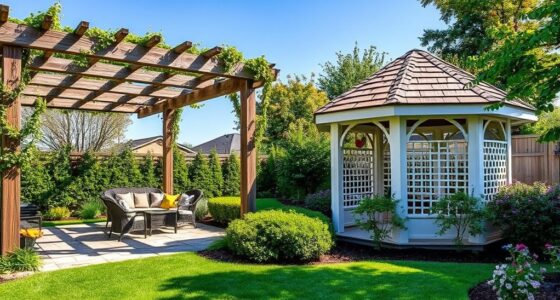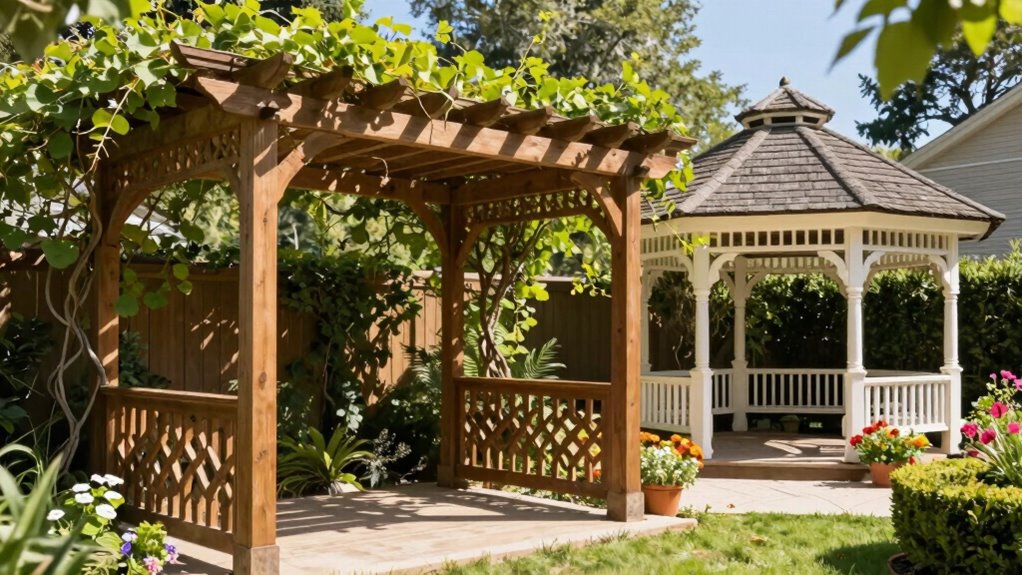
Before adding a pergola or gazebo, consider your local climate and environmental conditions to choose durable materials that withstand weather. Make certain the structure’s size and placement match your outdoor space and provide the right amount of shade or privacy. Think about plant integration, like climbing vines or potted flowers, for visual interest and sustainability. Long-term durability and low maintenance are key, so plan carefully. Keep exploring to find how to make your outdoor space truly thrive.
Key Takeaways
- Assess your outdoor space size and layout to ensure proper placement and functionality of the pergola or gazebo.
- Choose durable, weather-resistant materials that can withstand local climate conditions for long-term longevity.
- Consider plant integration, such as climbing vines or potted flowers, to enhance aesthetics and provide natural shade.
- Evaluate maintenance needs and select low-maintenance options aligned with your available time and effort.
- Ensure the structure complies with local building codes and permits for safe and legal installation.
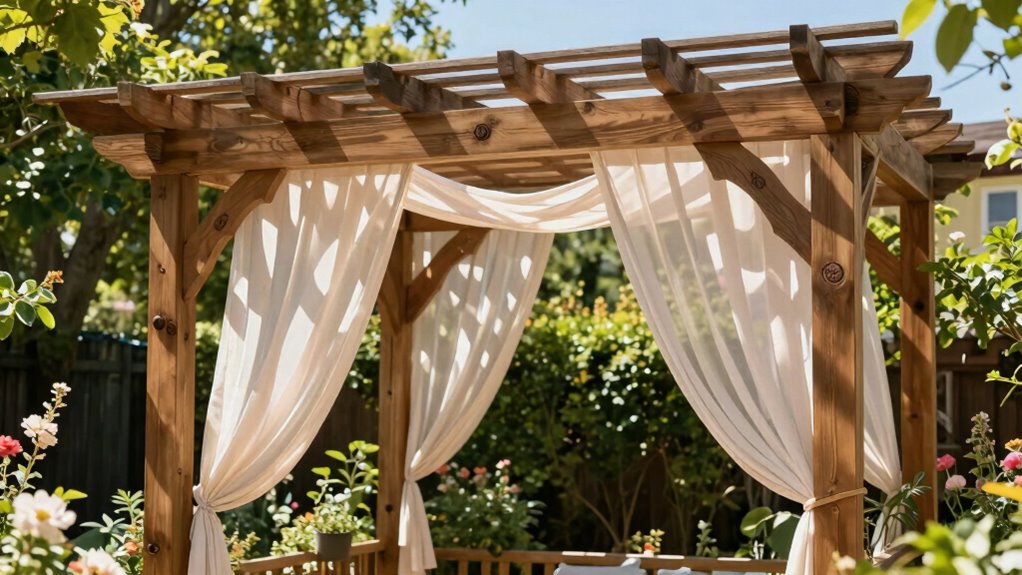
Adding a pergola or gazebo can transform your outdoor space into a welcoming retreat, but before you start, it’s important to understand what’s involved. One of the key considerations is plant selection. Choosing the right plants can enhance the beauty and functionality of your structure, providing shade, privacy, or even a splash of color. Opt for plants that thrive in your climate, require minimal maintenance, and complement your overall design. Climbing vines like jasmine or wisteria can create a lush canopy, while potted herbs or flowers add seasonal interest. Keep in mind the growth habits of your plants to prevent overcrowding, and consider their sunlight needs to ensure they flourish alongside your pergola or gazebo. Additionally, understanding material durability is essential to ensure your outdoor structure withstands the elements and remains attractive over time. Selecting native plants can also support local biodiversity and reduce the need for extra resources like water or fertilizers. Proper plant placement and selection can also reduce the need for frequent watering or pest control, making maintenance easier and more sustainable. It’s also beneficial to consider plant maintenance requirements, so you choose options that suit your available time and effort. Being aware of climate-specific plant needs can further ensure your chosen plants thrive year-round.
weather-resistant pergola materials
As an affiliate, we earn on qualifying purchases.
As an affiliate, we earn on qualifying purchases.
Frequently Asked Questions
Are Pergolas or Gazebos More Suitable for Small Yards?
For small yards, pergolas are typically more suitable because they’re less bulky and can be integrated with your existing landscaping. You can add plant integration, like climbing vines, to maximize space and aesthetics. Plus, pergolas offer versatile lighting options, creating a cozy atmosphere without overwhelming your yard. Gazebos tend to be larger and may feel crowded in tight spaces, so pergolas are often the smarter choice for smaller areas.
How Do I Maintain a Pergola or Gazebo Long-Term?
To maintain your pergola or gazebo long-term, focus on regular plant maintenance by pruning and watering your plants to keep them healthy. Protect your structure from weather damage by applying sealants or paint to prevent rot and corrosion, especially after harsh weather. Cover or move plants during storms, and check for loose or damaged parts periodically. Consistent upkeep guarantees your outdoor feature stays beautiful and functional for years.
What Materials Are Best for Durability and Aesthetics?
For durability and aesthetics, choose materials like cedar, redwood, or composite decking that combine strength with visual appeal. Incorporate decorative accents such as wrought iron, decorative tiles, or painted finishes to enhance charm. Prioritize material longevity by selecting weather-resistant options, ensuring your pergola or gazebo withstands the elements over time. With the right mix of sturdy materials and decorative touches, you’ll create a lasting, beautiful outdoor feature you’ll enjoy for years.
Can I Install a Pergola or Gazebo Myself?
Yes, you can install a pergola or gazebo yourself, but it requires careful planning. You’ll need to take into account DIY installation skills and understand structural considerations like foundation stability and weight support. Follow detailed instructions, check local building codes, and possibly consult with a professional to guarantee safety. Proper tools and patience are essential, and taking your time will help you achieve a sturdy, attractive addition to your outdoor space.
Are Permits Required for Adding These Structures?
Yes, permits are often required when adding a pergola or gazebo, so check your local regulations first. Think of it as getting the keys to your outdoor kingdom—without them, you might face roadblocks. These permits guarantee your landscaping design and privacy solutions comply with zoning laws and building codes. Skipping this step could lead to fines or having to remove your structure, so always verify permit requirements before starting your project.
climbing vines for pergolas
As an affiliate, we earn on qualifying purchases.
As an affiliate, we earn on qualifying purchases.
Conclusion
Before you add a pergola or gazebo, remember to check local building codes and consider your space’s layout. Proper planning ensures your structure is safe, functional, and adds beauty to your yard. Notably, a recent survey shows that 65% of homeowners find that adding outdoor structures increases their property value. So, take your time, choose the right design, and enjoy creating a perfect outdoor retreat that boosts your home’s charm and worth.
low maintenance outdoor gazebo
As an affiliate, we earn on qualifying purchases.
As an affiliate, we earn on qualifying purchases.
outdoor structure sealant
As an affiliate, we earn on qualifying purchases.
As an affiliate, we earn on qualifying purchases.