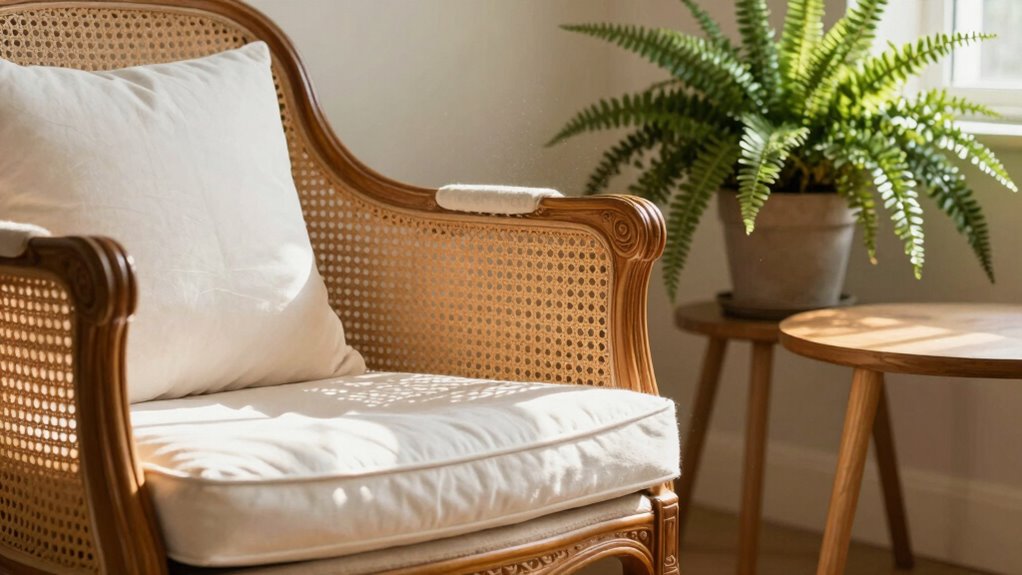
To keep your cane and rush furniture looking its best indoors, regularly dust with a soft cloth or vacuum brush attachment and avoid harsh chemicals that could weaken fibers. Inspect the weave for loose or cracked parts and repair with authentic materials to preserve strength and appearance. Occasionally, apply a light natural oil to keep fibers supple and maintain proper tension for longevity. Continuing with these tips will help you care for your furniture so it stays beautiful for years to come.
Key Takeaways
- Regularly dust and vacuum with a soft brush attachment to prevent debris buildup.
- Avoid harsh chemicals; clean with gentle, natural cleaners to protect fibers.
- Apply a light coat of natural oil periodically to keep cane and rush supple.
- Inspect for loose or cracked weaving and repair promptly to maintain structural integrity.
- Maintain stable indoor conditions to prevent damage from temperature and humidity fluctuations.

Have you ever wondered how to keep your cane and rush furniture looking its best indoors? Proper maintenance begins with understanding the basics of cane weaving techniques and rush material sourcing. When you’re caring for your furniture, knowing how the pieces are constructed helps you spot potential issues early and apply the right methods to preserve their beauty and durability. Cane weaving techniques involve interlacing strips of cane in specific patterns, such as herringbone or basket weave, which give each piece its strength and character. Over time, these woven patterns can loosen or crack, especially with frequent use or exposure to fluctuating indoor temperatures. To maintain their integrity, you should regularly inspect the weave for signs of wear and gently tighten any loose strands. When reweaving or repairing, it’s essential to use authentic cane strips, sourced carefully from reputable suppliers, guaranteeing you have the right thickness and flexibility for your furniture. Understanding the importance of cane weaving techniques can help you assess the structural integrity of your furniture and perform more effective repairs. Proper material sourcing is crucial for ensuring the longevity of rush furniture, as it directly impacts the durability and appearance of the finished piece. Rush material typically comes from natural grasses or fibers, which need to be sourced from trusted suppliers to guarantee quality. When selecting rush for repairs or refinishing, look for fibers that are supple and free from excessive brittleness or discoloration. Proper sourcing ensures you’re working with material that will hold up to indoor conditions and age gracefully. If you’re refinishing or replacing rush on a piece, soak the rush fibers in water before weaving to make them more pliable and easier to work with. This step prevents breakage and helps you recreate the original tension and tightness of the weave. Maintaining cane and rush furniture also involves gentle cleaning. Use a soft cloth or a vacuum with a brush attachment to remove dust and debris regularly. Avoid harsh chemicals that can weaken the fibers or cause discoloration. Additionally, applying a light coating of natural oil can help keep the fibers supple and prevent them from drying out over time. Incorporating regular maintenance routines can significantly extend the lifespan of your furniture and keep it looking its best. If your furniture develops cracks or loose weaves, don’t hesitate to reweave or reinforce with new cane or rush strips, always matching the original weave pattern. When doing so, ensure you work in a well-ventilated space, especially if you need to stain or finish the repairs, as some finishes can emit fumes. With consistent care, proper sourcing, and an understanding of weaving techniques, your cane and rush furniture can remain beautiful and functional for years to come, adding a classic touch to your indoor spaces.

12 Pcs Rattan Repair Kit with Cane Webbing Roll, 3/16 Inch Rattan Webbing, 2 Caning Chisel, 8 Wooden Wedges, Furniture Caning Repair Supplies for Chair, Cabinet, Basket and Home Repair
All-in-One Caning Solution: This 12-piece rattan repair kit is built for structured furniture caning work, from chair seats…
As an affiliate, we earn on qualifying purchases.
As an affiliate, we earn on qualifying purchases.
Frequently Asked Questions
Can I Use Regular Furniture Polish on Cane and Rush Furniture?
You shouldn’t use regular furniture polish on cane and rush furniture, as it can cause damage. For cane cleaning, opt for a gentle solution like a mixture of mild soap and water, then dry thoroughly. Rush restoration involves careful cleaning and avoiding harsh chemicals. Regularly dust and keep your furniture in a stable environment to preserve its look and longevity. Proper maintenance guarantees your cane and rush pieces stay beautiful for years.
How Often Should I Reapply Protective Coatings?
Think of reapplying protective coatings like changing your favorite mixtape—regularly for the best sound. For cane and rush furniture, you should reapply protective coatings every 12 to 18 months, depending on usage and environment. Regular furniture maintenance keeps your pieces looking great and prolongs their life. If you notice any cracks or wear, don’t delay—touch up the coatings promptly to keep your furniture sturdy and beautiful.
Are There Specific Cleaning Products to Avoid?
You should avoid chemical cleaners and DIY remedies that contain harsh solvents or abrasive ingredients, as they can damage cane and rush furniture. Stick to gentle, pH-neutral cleaning solutions—like mild soap and water—and soft cloths. Never use bleach, ammonia, or strong detergents. Regular dusting and occasional damp wiping will keep your furniture looking good without risking harm. Always test any cleaner on a small, hidden area first.
What’s the Best Way to Repair Minor Damages?
Think of repairing minor cane and rush damages like restoring a delicate woven tapestry. Use cane weaving techniques, such as reweaving loose strands or tightening sagging areas, to restore strength. Rush furniture history shows that small tears or looseness can be fixed with wood glue or filler, then re-woven carefully. You’ll preserve your piece’s charm, much like rescuing a treasured story, ensuring it remains both beautiful and functional for years to come.
How Do I Prevent Mold and Mildew Indoors?
To prevent mold and mildew indoors, you should improve ventilation by opening windows or using fans to circulate air. Keep humidity levels low, ideally between 30-50%, with a dehumidifier if necessary. Regularly inspect your furniture for signs of moisture, and clean any spills promptly. Proper humidity control and ventilation help create an environment where mold and mildew can’t thrive, protecting your cane and rush furniture.

Parker & Bailey Lemon Oil Polish, Natural Lemon Scented Furniture Cleaner & Wood Table Cleaner, Renews & Restores a Finish for Woods, Protects from Drying or Cracking, Leaves a Shiny Finish, 16 oz
Lemon Oil for Furniture – Dust & polish furniture & woodwork in the home. Leaves surfaces in a…
As an affiliate, we earn on qualifying purchases.
As an affiliate, we earn on qualifying purchases.
Conclusion
Maintaining your cane and rush furniture indoors keeps it looking beautiful for years. Regular dusting, avoiding excess moisture, and occasional gentle cleaning are key. Did you know that well-maintained furniture can last up to 20 years or more? By taking these simple steps, you’re not just preserving its appearance, but also its durability. Keep up with your care routine, and your furniture will continue to add charm and comfort to your home for decades to come.

3 Pcs 6 ft Chair Caning Supplies 1/8" 3/16" 1/4" Round Reed Spline Rattan Repair Kit Supplies Basket Weaving Cane for DIY Chair Cane Webbing Wicker Weaving Furniture Making
Sufficient for DIY at Will: our package comprises 3 pieces of rattan canes for basket weave chair, rich…
As an affiliate, we earn on qualifying purchases.
As an affiliate, we earn on qualifying purchases.

10 Pound Reel of Fibre Rush Size 6/32 Enough for 4 Seats, Kraft Brown Fiber Rush Ladderback Chairs Seating Material (6/32)
A 10 pound reel that is enough to weave 4 seats
As an affiliate, we earn on qualifying purchases.
As an affiliate, we earn on qualifying purchases.