To protect your dining table from heat and moisture, use quality, water-resistant tablecloths or placemats that add a barrier against spills and heat. Always wipe and dry the surface after meals, avoiding harsh chemicals, and apply protective coatings or sealants regularly. Keep your dining area well-ventilated to reduce humidity, preventing warping or stains. For more effective tips on maintaining your table’s condition, continue exploring how proper care makes a difference.

Get furniture and decor delivered free — and shop member deals
- Fast, free delivery on millions of items
- Access to Prime Big Deal Days deals on October 6–7
- Prime Video, Amazon Music and more included
Key Takeaways
- Use quality, flame-resistant, waterproof tablecloths to shield the surface from heat, spills, and condensation.
- Regularly clean and dry the table with gentle, suitable products to prevent moisture buildup and grime.
- Apply protective coatings or sealants to create a moisture and heat-resistant barrier.
- Ensure proper ventilation in the dining area to reduce humidity and prevent moisture absorption.
- Avoid placing hot items directly on the table; use trivets or heat pads for protection.
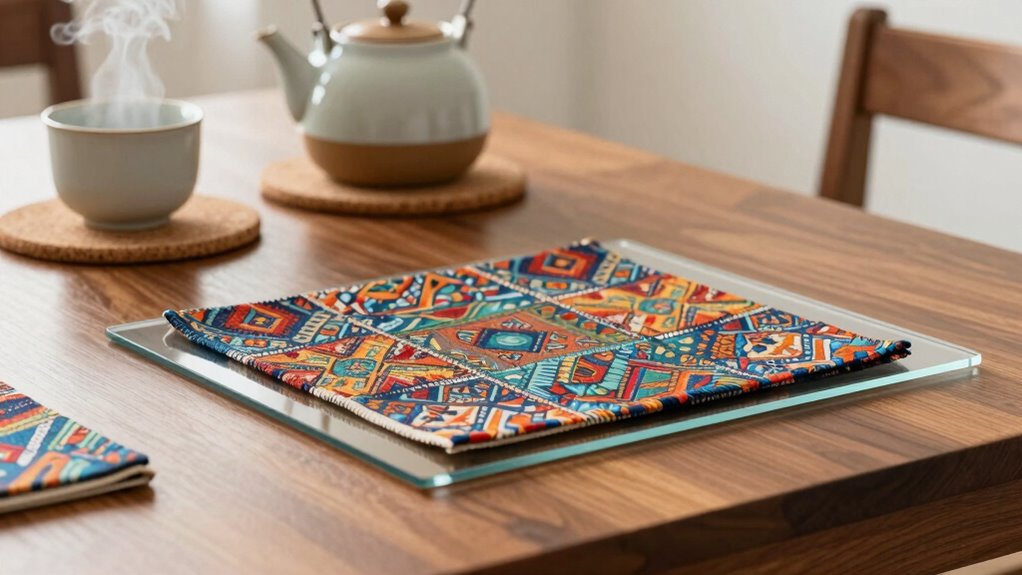
Have you ever wondered how to keep your dining table looking like new? Protecting it from heat and moisture is vital to preserve its beauty and functionality over time. One of the simplest ways to do this is through proper tablecloth maintenance. When you cover your table with a quality, flame-resistant tablecloth, you add a layer of protection that shields the surface from hot dishes, spills, and condensation. Make certain to change or wash the tablecloth regularly to prevent stains and moisture buildup, which can damage the underlying wood or material. Using a waterproof or water-resistant fabric can further reduce the risk of moisture seeping through and causing warping or staining.
In addition to using a good tablecloth, surface cleaning plays an essential role in maintaining your table’s integrity. Always wipe down the table after each meal with a soft, damp cloth to remove food particles, liquids, and fingerprints. Avoid harsh chemicals that can strip finishes or cause discoloration; instead, opt for gentle cleansers suitable for your table’s material. Regular cleaning prevents the buildup of grime that could trap moisture and lead to deterioration. When cleaning, pay special attention to the edges and corners, where dust and moisture tend to accumulate more easily. Dry the surface thoroughly afterward to make certain no residual dampness remains, especially if your table is made of wood, which can absorb moisture and warp over time. Proper surface care techniques, including using appropriate cleaning products, can significantly extend the life of your furniture. Additionally, using protective coatings can help create a barrier against moisture and heat, further safeguarding your table’s surface. Applying a sealant or finish regularly can also help maintain the surface’s resistance to damage from heat and moisture exposure. Furthermore, ensuring good ventilation in the dining area can help reduce humidity levels and prevent moisture buildup on your furniture.
waterproof tablecloth for dining table
As an affiliate, we earn on qualifying purchases.
As an affiliate, we earn on qualifying purchases.
Frequently Asked Questions
Can Specific Table Materials Withstand Higher Heat Levels?
Some table materials can withstand higher heat levels better due to their heat resistance and material durability. For instance, stone, granite, and concrete are highly heat-resistant and durable, making them ideal for withstanding hot dishes. On the other hand, wood and veneer are less heat-resistant and can easily warp or scorch. When choosing a material, consider its heat resistance and overall durability to guarantee your table stays protected from heat damage.
How Often Should Protective Coatings Be Reapplied?
You should reapply protective coatings every 1 to 3 years, depending on usage. Studies show that coating durability can decrease substantially after this period, exposing your table to damage. Regular reapplication helps maintain a strong barrier against heat and moisture. If your table sees heavy use or spills frequently, consider reapplying closer to the 1-year mark. Staying proactive ensures your table stays protected and looks great longer.
Are There Eco-Friendly Options for Table Protection?
Yes, you can choose eco-friendly finishes and sustainable coatings to protect your dining table. Look for products labeled as non-toxic, biodegradable, or made from natural oils and waxes, which are safe for the environment. These options provide a protective barrier against heat and moisture without harmful chemicals. By selecting eco-friendly finishes, you help reduce your carbon footprint while maintaining a beautiful, well-protected table for years to come.
What Are Common Mistakes to Avoid When Protecting Tables?
Watch out for common mistakes that can ruin your efforts. If you neglect to prevent scratches, your table’s surface can quickly degrade. Avoid choosing the wrong accessories, like heavy or sharp objects, which can cause damage. Don’t forget to lift items instead of dragging them. Using the right protective measures and choosing accessories wisely keeps your table pristine and extends its lifespan. Stay vigilant, and your table will thank you.
How Do Seasonal Changes Affect Table Protection Needs?
Seasonal variations considerably impact your table protection needs. During colder months, increased humidity can cause warping or swelling, so you should use moisture barriers or coasters. In hot, dry seasons, direct sunlight can fade surfaces, making protective covers or UV-resistant finishes essential. Climate impact varies with season, so adjusting your protective measures ensures your table remains in great condition year-round, preventing damage from fluctuating temperatures and moisture levels.
Conclusion
To keep your dining table looking its best, think of your protective efforts as giving it a gentle hug. By using coasters, placemats, and mindful habits, you create a cozy shield against the little mishaps of daily life. A little care goes a long way in preserving its beauty and charm. So, enjoy your meals and gatherings, knowing your table is softly guarded—allowing you to cherish every moment without worry.
Fall Picks
fall essentials
As an affiliate, we earn on qualifying purchases.