To define zones in your open-plan layout without walls, focus on strategic furniture arrangement to create visual boundaries, like using sofas or shelving units. Incorporate rugs and flooring changes to distinguish different areas. Use lighting and color contrasts to enhance separation, and consider flexible room dividers or partitions that can be adjusted or removed. With thoughtful design, you can balance open flow and clearly defined spaces. Keep exploring to learn more effective strategies for your home.
Key Takeaways
- Use furniture arrangements to create distinct conversational or activity zones within the open space.
- Incorporate rugs, different flooring materials, or color contrasts to visually delineate separate areas.
- Employ lighting layers—ambient, task, and accent—to define and highlight specific zones.
- Utilize shelving units, open-backed cabinets, or artwork as subtle visual boundaries without walls.
- Incorporate natural elements like plants or water features to enhance separation and create a harmonious space.
sectional sofa for open-plan living room
As an affiliate, we earn on qualifying purchases.
As an affiliate, we earn on qualifying purchases.
Why Defining Zones in Open-Plan Spaces Helps Your Home
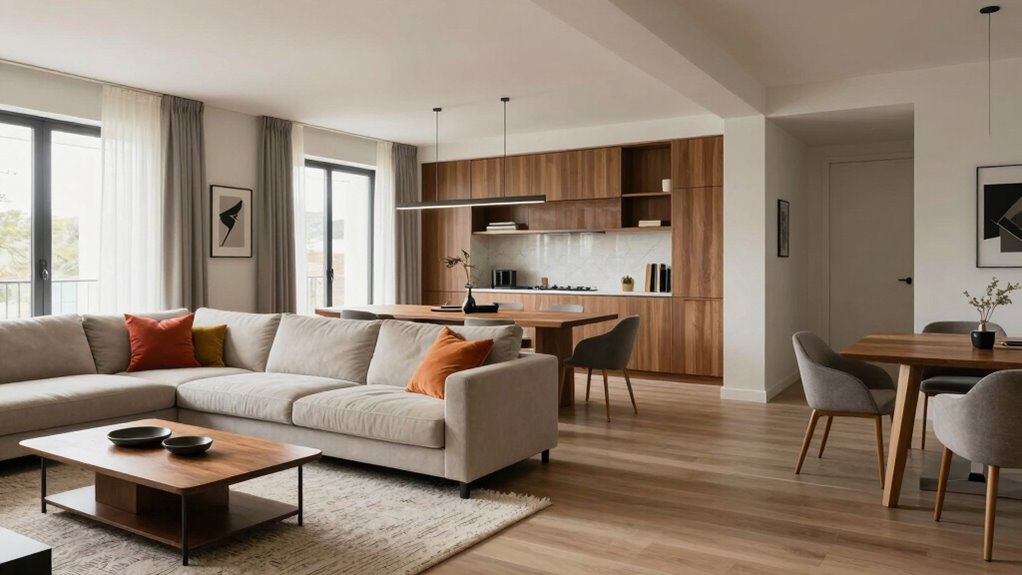
Creating distinct zones in an open-plan space can considerably improve your home’s functionality and comfort. When you define areas, you address privacy concerns, giving each activity its own space without feeling exposed. This separation helps reduce distractions and creates a sense of personal space, making your home more inviting. Acoustic management also plays a crucial role; by establishing zones, you can better control sound flow, minimizing noise transfer between areas. Using rugs, curtains, or strategic furniture placement helps absorb sound and dampen echoes, improving overall acoustics. These techniques allow you to enjoy conversations, work, or relaxation without interference. Additionally, soundproofing techniques can further enhance privacy and reduce noise leakage between zones. Being mindful of spatial organization ensures that each zone functions optimally without compromising the open feel. Incorporating sound-absorbing materials strategically can further enhance the acoustic quality within each zone. Furthermore, understanding acoustic principles enables you to design more effective sound management strategies. In short, defining zones enhances privacy and sound control, making your open-plan layout more practical and cozy.
Create Visual Boundaries With Furniture and Layouts
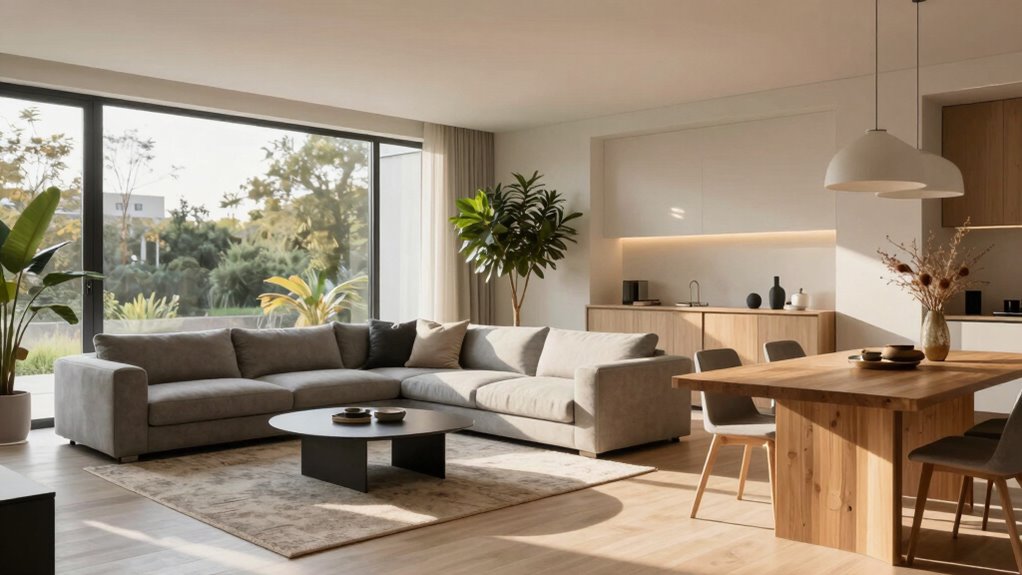
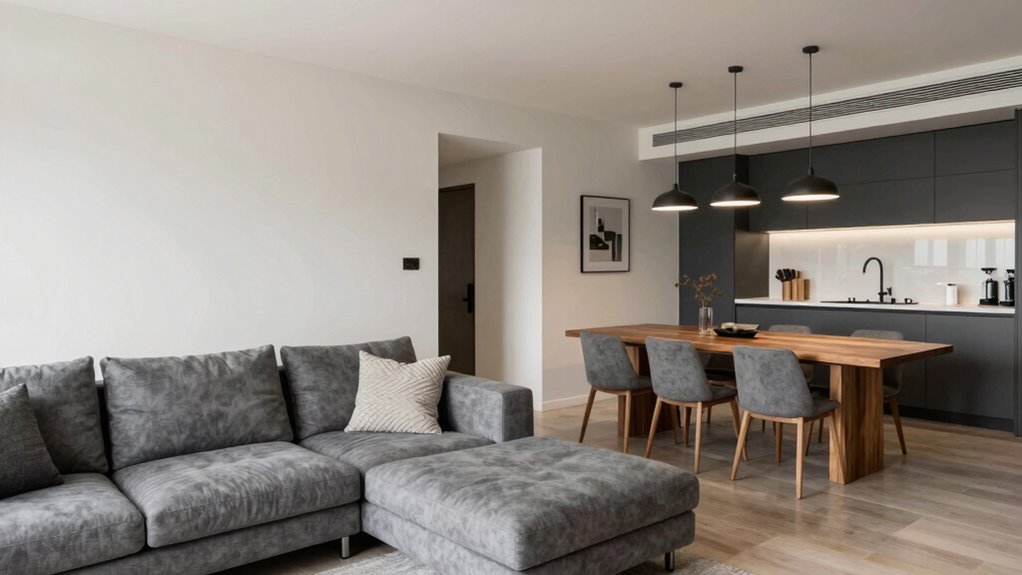
Strategically arranging furniture and using specific layout techniques can effectively create visual boundaries within an open-plan space. Thoughtful furniture placement helps define different zones without walls, guiding the eye naturally and establishing distinct areas. For example, positioning sofas and chairs to form conversational nooks or placing shelving units as dividers can delineate living and dining spaces. Layout planning involves considering flow and functionality, ensuring each zone feels separate yet connected. You can also use open-backed cabinets or bookcases to create subtle barriers that define areas without blocking sightlines. By carefully selecting and positioning furniture, you reinforce boundaries visually, making your space feel organized and intentional. Incorporating space planning principles can further optimize your layout for both aesthetic appeal and functionality. These principles include understanding how to balance openness with designated zones, which is crucial in maintaining an open-plan layout that feels cohesive. This approach maintains an open feel while providing clear distinctions between functional zones.
Use Rugs and Flooring Changes to Separate Areas
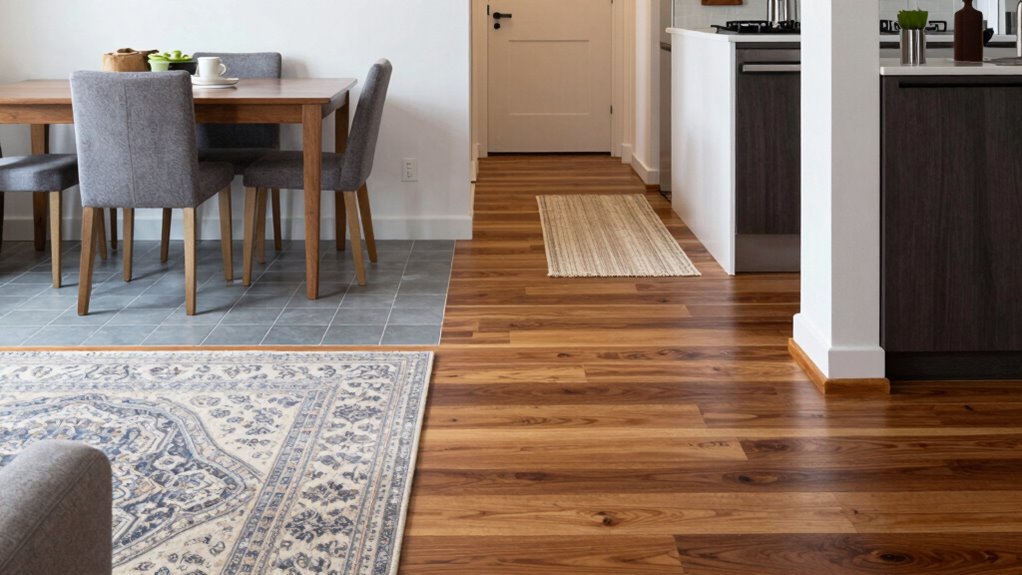
Have you considered how rugs and flooring changes can define different zones in your open-plan space? Area rugs are a simple, effective way to visually separate areas like the dining or living space. Placing a rug under your sofa or dining table creates a clear boundary without walls. Flooring transitions also work well—using different materials or colors to distinguish zones. For example, hardwood flooring in the living area can transition to tile in the kitchen, signaling a change in function. These subtle shifts help your space feel more organized and intentional. Incorporating design principles such as color contrast and material variation further enhances the separation. Additionally, choosing appropriate flooring materials can improve acoustics and help dampen noise between zones. Sound-absorbing finishes also contribute to better acoustic separation, creating a more peaceful environment. Selecting sound-absorbing finishes can further enhance acoustic separation and comfort. Rugs and flooring changes not only add visual interest but also improve acoustics and comfort. Using sound-absorbing materials strategically can help reduce noise transfer across zones, making your space more relaxing. By strategically choosing these elements, you create distinct, functional zones that enhance your open-plan layout.
Use Lighting and Color to Separate Spaces
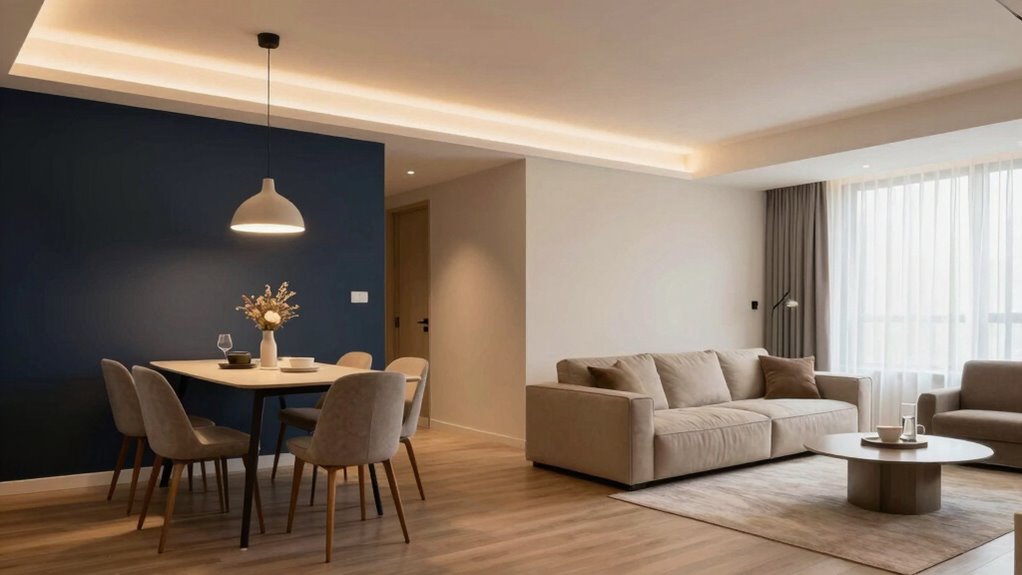
Using contrasting colors and layered lighting can effectively define different areas in your open-plan space. Warm and cool tones help create visual separation without walls, making each zone feel distinct. By thoughtfully applying these techniques, you can transform your layout into a cohesive yet segmented environment. Incorporating lighting control systems allows for customizable ambiance, further enhancing the separation of zones. Additionally, implementing spatial planning strategies can optimize flow and functionality within your open layout. Paying attention to visual cues, such as textures and patterns, can also reinforce the separation of spaces without physical barriers. Incorporating color psychology can further influence the mood and perception of each zone, making your space more inviting and functional. Understanding how environmental cues influence perception can help you design zones that feel naturally separate.
Use Contrasting Colors
Ever wondered how to clearly define different areas in an open-plan layout? Using contrasting colors is a simple yet effective strategy. You can achieve this through color blocking—painting large sections of walls in distinct shades to visually separate zones. For example, a bold accent wall in the dining area immediately signals its purpose, contrasting with softer hues in the living space. This approach guides your eye naturally, creating a sense of distinctness without physical barriers. Stick to colors that complement each other but still stand out enough to differentiate spaces. By thoughtfully selecting contrasting hues and incorporating accent walls, you give each zone a unique identity while maintaining an open, cohesive feel. This technique highlights boundaries without closing off areas, keeping your space lively and functional. Incorporating visual cues such as lighting and color can further enhance the clarity of each zone and support your overall home layout. Additionally, using color psychology can influence the mood of each area and reinforce their individual purposes. Selecting appropriate color schemes can also help align each zone with its intended use and atmosphere. Incorporating consistent design principles can further unify the space while clearly defining its different zones. Moreover, understanding the impact of color contrast can help you choose the most effective combinations for your specific layout.
Incorporate Layered Lighting
In an open-plan layout, incorporating layered lighting helps define and differentiate spaces effectively. You can achieve this by combining ambient lighting with task and accent lights. Ambient lighting provides a soft, overall glow that unifies the area, making it feel warm and inviting. Add task lighting in specific zones, like over the kitchen island or dining table, to create functional separation. Accent lighting highlights architectural features or artwork, drawing visual boundaries without walls. This layered approach allows you to control the mood and focus within each zone, making the space feel organized yet open. By thoughtfully using layered lighting, you emphasize different areas, guiding movement and activity while maintaining a cohesive, airy feel throughout your open-plan layout.
Apply Warm and Cool Tones
Applying warm and cool tones through lighting and color is a powerful way to visually distinguish different zones in your open-plan space. You can use color blocking with paint or accessories to create subtle boundaries, making each area feel intentional. Incorporate warm tones—like soft yellows or rich reds—in areas where you want coziness and social interaction. Cool tones—such as blues or greens—are ideal for relaxing or work zones, providing a calming effect. Adjust furniture placement to enhance these color zones, ensuring pieces complement the tone of each space. Proper lighting, like warm fixtures in social zones and cooler LEDs in work areas, reinforces the separation. This strategic use of tones guides movement and defines purpose without the need for walls or partitions. Incorporating natural elements, such as Free Floating plants or water features, can further enhance the sense of separation and harmony between zones.
Add Room Dividers and Partitions Without Walls
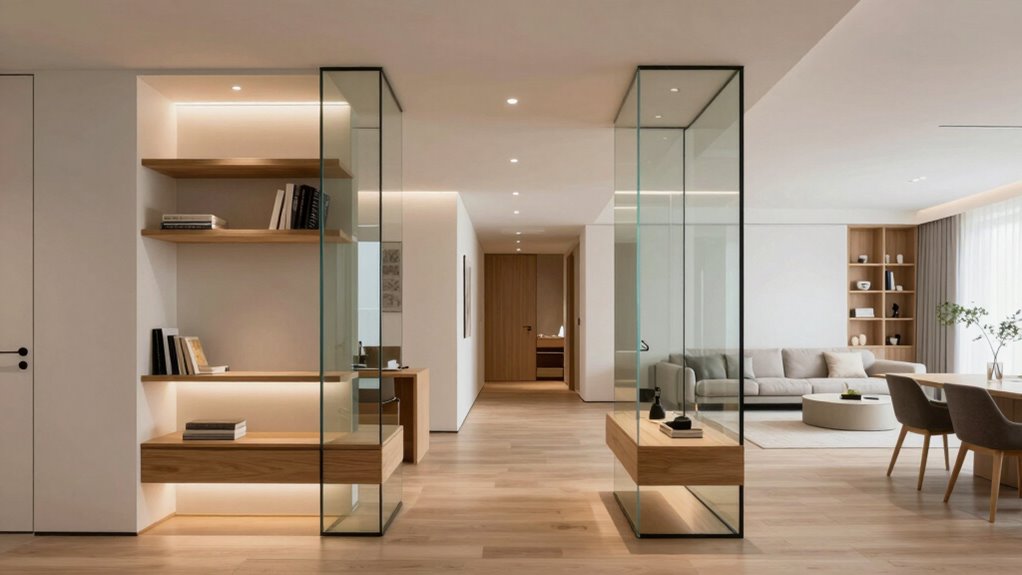
Looking for ways to create distinct zones in your open-plan space without building walls? Room dividers and partitions can do the trick. Folding screens are portable, stylish, and easy to reposition, letting you instantly define areas for work, relaxation, or dining. Decorative curtains add softness and elegance, allowing you to separate spaces while maintaining an open feel. You can choose bold patterns or subtle textures to match your style. These solutions foster privacy and visual separation without sacrificing light or flow. Incorporating versatile design elements can enhance both function and aesthetics in your space. Utilizing air purification strategies with portable air purifiers can also improve air quality in each zone, creating a healthier environment. Incorporating connected fitness technology and smart equipment can further customize zones for specific activities like exercise or meditation, making your space more adaptable. Using simple organizing strategies like these helps turn complex layouts into calm, organized environments.
Keep Your Open-Plan Zones Flexible for Future Changes
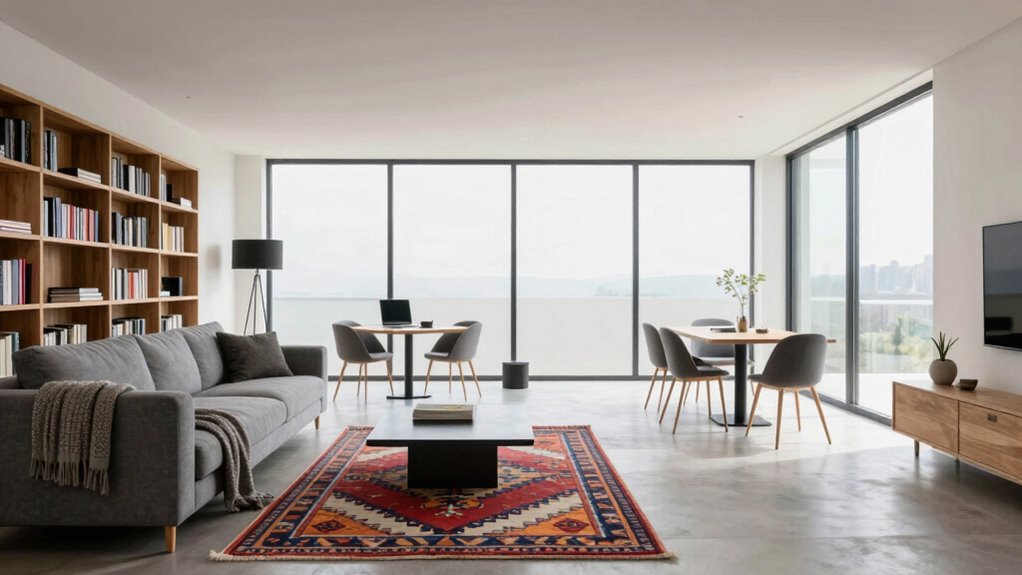
To keep your open-plan spaces adaptable as your needs evolve, focus on designing zones that can easily shift or reconfigure. Incorporate flexible furniture like fold-away desks, movable screens, and multipurpose pieces that can be rearranged effortlessly. These adaptable layouts enable you to transform a workspace into a dining area or a relaxation zone without major changes. Avoid fixed furniture or permanent fixtures that limit future modifications. Instead, prioritize modular elements that can be expanded or reduced as needed. Keep pathways clear and create designated zones that feel natural yet flexible. This approach ensures your space remains functional and can evolve with your lifestyle, whether you need more collaborative areas or private retreats. Flexibility is key to maintaining a versatile, open-plan environment.
Frequently Asked Questions
How Can I Maximize Natural Light in Open-Plan Zones?
You can maximize natural light in open-plan zones by strategically placing windows where they catch the most sunlight throughout the day. Use large, unobstructed window placements to let in more natural light and consider adding skylights or glass doors to enhance brightness. Keep window areas clear of heavy drapes or furniture, and use light-colored walls and reflective surfaces to bounce light around the space, creating an airy, well-lit environment.
What Are Cost-Effective Methods to Define Zones Without Walls?
Think of your space like a puzzle—area rugs and decorative screens are the pieces that define zones without walls. You can place colorful rugs to create visual boundaries and add decorative screens for privacy and style. These options are budget-friendly and flexible, allowing you to reconfigure your space easily. By using these elements thoughtfully, you can carve out distinct areas without the need for costly walls or major renovations.
How Do I Choose the Right Furniture for Zone Separation?
You should choose furniture that naturally creates separation, like area rugs to define specific zones visually. Multi-functional furniture, such as storage ottomans or foldable desks, helps maximize space and flexibility. Consider the size and style of each piece to guarantee it complements the area while providing clear boundaries. Prioritize pieces that are proportionate to your space and serve dual purposes, making your zones functional and inviting without overwhelming the open layout.
Can These Techniques Work in Small or Studio Apartments?
Like fitting puzzle pieces together, these techniques work well in small or studio apartments. You can use space-saving furniture and flexible partitioning to create distinct zones without sacrificing space. Fold-away desks, multi-functional furniture, and portable screens help you define areas while maintaining an open feel. These solutions make your apartment feel more organized and functional, ensuring every inch works for you without making the space feel cramped.
How Do I Maintain Privacy in Open-Plan Living Areas?
You can maintain privacy in open-plan living areas by using soundproofing solutions like mats, rugs, or acoustic panels to reduce noise transfer. Privacy screens or movable dividers also create visual separation without walls, giving you control over your space. Position furniture strategically to block sightlines and designate specific zones. These simple solutions help you enjoy openness while preserving your privacy whenever needed.
Conclusion
So there you have it—your foolproof guide to turning that chaotic open-plan mess into a stylish, functional space. Who needs walls when you’ve got clever furniture, rugs, lighting, and partitions? Just imagine all the money you’ll save on construction and the endless fun of rearranging your zones whenever the mood strikes. So go on, embrace your inner interior designer—because why settle for a boring, wall-less wasteland when you can have a beautifully defined chaos?