To pack light without regret using the 3-category method, start by dividing your items into essentials, comfort, and extras. Focus on versatile clothing, necessary documents, and compact gear for essentials. Leave behind non-essential items like excess accessories or bulky gadgets. Organize efficiently with rolling and compartmentalization, and tailor your packing to your trip’s length and activities. Stick to these principles, and you’ll travel stress-free—exploring more strategies that can make your packing effortless await just beyond.
Key Takeaways
- Categorize items into essentials, clothing, and extras to prioritize necessity and avoid overpacking.
- Use a detailed checklist to verify all essentials are packed and prevent omissions.
- Focus on versatile, multi-purpose clothing in neutral colors to maximize outfit options with fewer items.
- Implement space-saving techniques like rolling clothes and using compartments for efficient packing.
- Regularly review and rotate your wardrobe to tailor packing to trip length and activities, reducing regret.
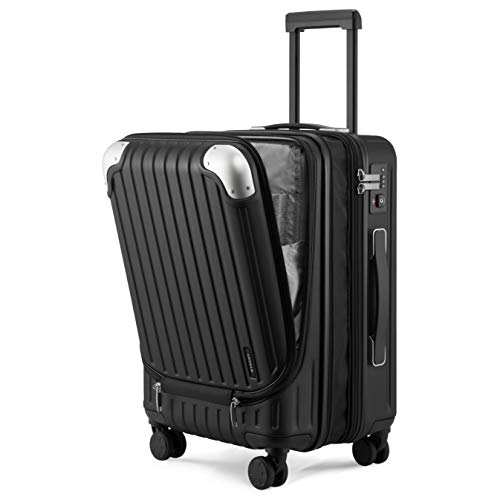
LEVEL8 Grace Hard Shell Carry on Luggage with Front Compartment, 20 Inch Expandable Suitcases with Wheels, Lightweight Carry-on Suitcase for Airplane, Tsa Lock, Black
Expandable Design: The Grace Expandable (6576 Series) suitcase is thoughtfully engineered to provide extra packing space whenever you…
As an affiliate, we earn on qualifying purchases.
As an affiliate, we earn on qualifying purchases.
Why Packing Light Leads to Stress-Free Travel

Packing light can considerably reduce the stress of travel by making your journey smoother and more manageable. When you carry fewer belongings, you’re less likely to worry about lost luggage or maneuvering through crowded airports. It also simplifies security checks and reduces the risk of forgetting important items. Additionally, traveling with just a manageable bag allows you to move quickly and comfortably through busy areas. Don’t forget to carry essential documents like your travel insurance info and local currency in an accessible spot. Having these essentials on hand makes your trip less stressful and ensures you’re prepared for unexpected situations. Being aware of your projector setup options can also help you streamline your packing process and avoid bringing unnecessary equipment. Incorporating daily habits that promote organization can further enhance your packing efficiency and reduce last-minute stresses. Adopting a mindful packing routine can help you identify what’s truly necessary, saving time and avoiding overpacking. To optimize your packing strategy, understanding sustainable packing practices can also contribute to more eco-friendly travel. Developing a packing checklist tailored to your trip can serve as a helpful reminder to include all essentials and prevent overpacking.

MIYCOO Backpack – Ultra Lightweight Packable Backpack for Travel Camping, Hiking Back Pack Waterproof Foldable Daypack for Men Women Grey
Lightweight: The lightweight packable backpack is about half the weight of a mobile phone, being folded into its…
As an affiliate, we earn on qualifying purchases.
As an affiliate, we earn on qualifying purchases.
What Is the 3-Category Packing Method and How Does It Help?
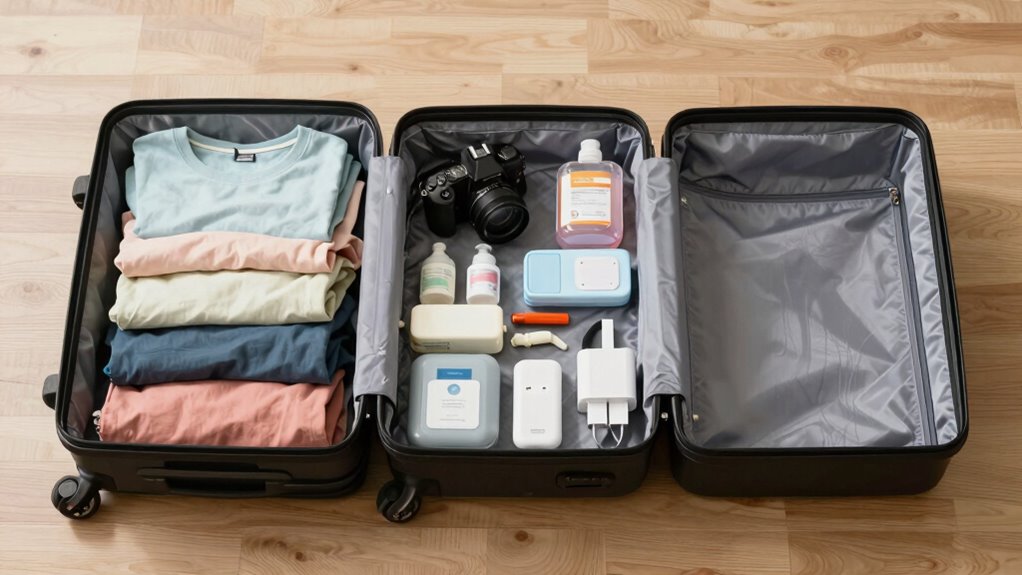
The 3-Category Packing Method simplifies your packing process by dividing items into three groups: essentials, clothing, and extras. This system helps you stay organized and guarantees you don’t forget key travel accessories. Start with your packing checklist, listing must-have essentials like passport, chargers, and medications. Next, pack clothing suited for your destination, keeping it minimal but versatile. Finally, include extras—things like souvenirs, books, or optional items—without overpacking. This method makes it easy to evaluate what you truly need, preventing unnecessary baggage. It also streamlines unpacking and re-packing, saving time and reducing stress. By categorizing your items, you gain clarity, avoid overpacking, and travel lighter without regret. Additionally, understanding the importance of sound healing science can inspire you to incorporate calming music into your travel routine for enhanced relaxation. Recognizing artistic influences can also broaden your appreciation for creative expressions encountered during your journeys. Incorporating minimalist principles into your packing approach aligns with the overall goal of traveling light and stress-free, while also supporting creative expression and mental well-being during your travels.

Veken 9/11 Set Compression Packing Cubes for Travel Essentials,Compressible Expandable Large Luggage Suitcase Organizer Bags for Clothing,Durable Space Saver Storage Bags with Toiletry Bags(Beige)
All-in-One Organization for Your Travel Needs – This 9-piece set includes four compression cubes (S/M/L/XL) for systematic packing:…
As an affiliate, we earn on qualifying purchases.
As an affiliate, we earn on qualifying purchases.
How to Categorize Your Items: Essentials, Comfort, and Extras
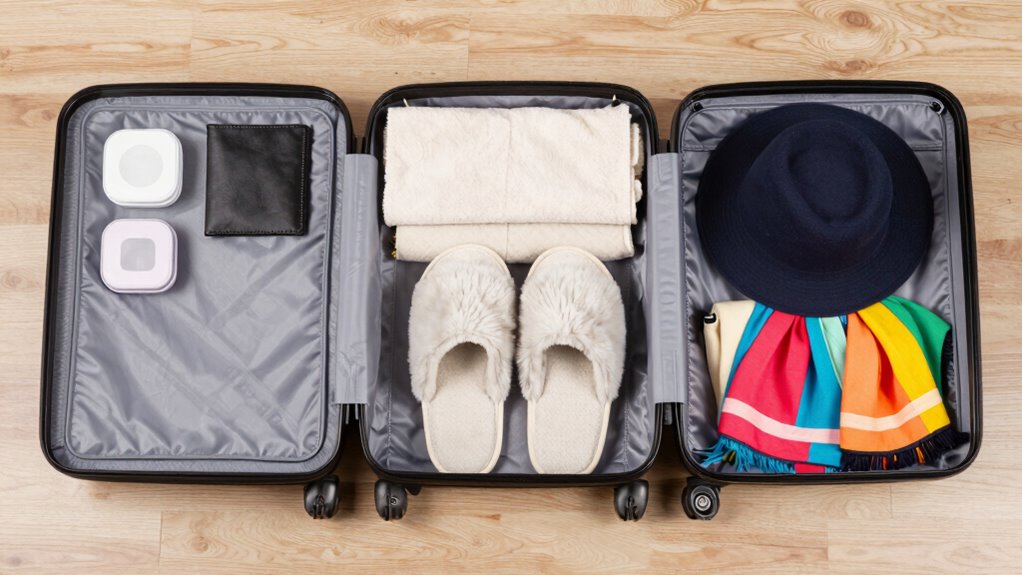
To effectively categorize your items, start by identifying the essentials you can’t travel without, such as your passport, travel documents, and chargers. These essentials form the core of your packing checklist and belong in the “Essentials” category. Next, consider comfort items like travel accessories—neck pillows, earplugs, and snacks—that make your trip more enjoyable but aren’t strictly necessary. Finally, gather your extras: souvenirs, non-urgent gadgets, or decorative items. Use the 3-category method to separate these groups, helping you prioritize what truly matters. This clear division prevents overpacking and ensures you don’t forget critical items. Keeping your categories focused simplifies decision-making and streamlines your packing process, making it easier to stay light and organized for your trip. Incorporating step-by-step guidance can further optimize your packing strategy and reduce stress.

TOPBAG Passport Holder Family, Women Rfid Blocking Passport Wallet, Travel Document Organizer for Premium Wallets, Waterproof Passport Holders Bag for Women & Men Traveling, Credit Cards Case
【High Quality travel passport holder】This passport wallet and passport book holder is made of super strong and durable…
As an affiliate, we earn on qualifying purchases.
As an affiliate, we earn on qualifying purchases.
How to Decide What to Pack Based on Trip Duration and Activities

When planning what to pack, consider how long your trip lasts and the activities you have scheduled, as these factors directly influence your clothing and gear needs. Trip duration considerations help determine the quantity of items you’ll need, preventing overpacking or underpacking. For shorter trips, focus on versatile pieces that can be mixed and matched, while longer trips may require additional outfits or laundry options. Activity specific packing is essential—if you’re hiking, pack appropriate footwear and moisture-wicking clothes; for business trips, include professional attire. Think about the nature of your activities and select items that serve multiple purposes. Additionally, understanding how packing strategies can optimize your packing process through smart organization tools can further streamline your preparation. Employing effective packing techniques inspired by fundamental kitchen organization principles can help you keep your belongings accessible and well-arranged. For example, choosing the right electric bike conversion kit can make commuting during your trip more convenient and eco-friendly. This approach ensures you’re prepared without carrying unnecessary weight, keeping your packing light and efficient.
What Items Belong in the Essential Category?
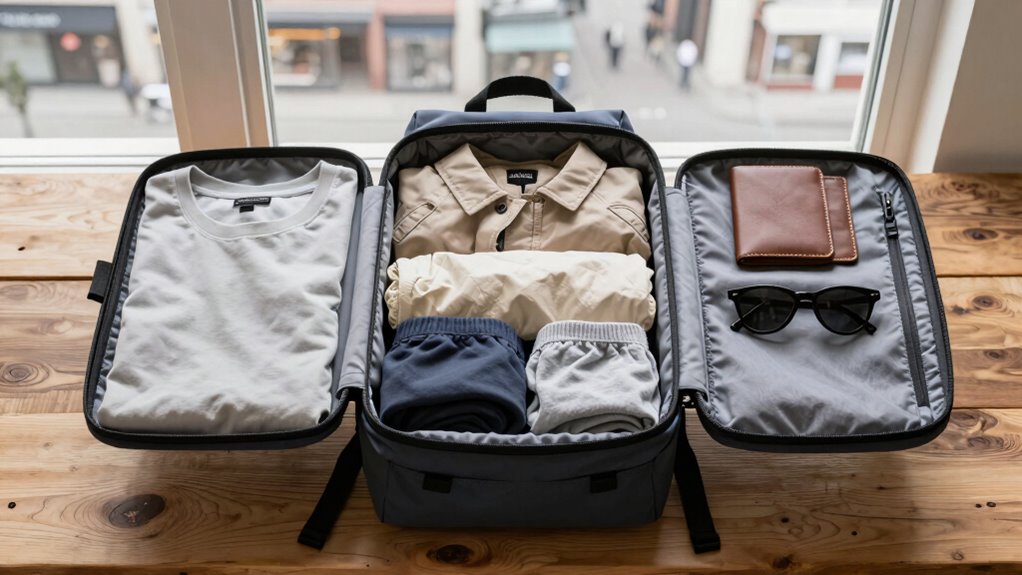
When packing light, focus on must-have clothing that suits your trip’s climate and activities. Don’t forget essential personal items like toiletries and identification to stay prepared. Prioritizing these basics guarantees you’ll have what you need without overpacking. Additionally, consider reliable backup power options if you’ll be in areas with limited electricity, ensuring your essentials stay charged and connected. Incorporating smart home devices can also help manage your environment remotely and enhance convenience during your trip. Choosing versatile multi-surface vacuums can also help keep your space clean with minimal gear. To optimize your packing efficiency, understanding organization strategies can make a significant difference in managing your luggage effectively. Being aware of lifecycle assessments can guide you toward eco-friendly choices for your essential gear, reducing your environmental impact during travel.
Must-Have Clothing Items
What clothing items truly belong in your packing list to keep things simple and versatile? Focus on pieces that maximize clothing versatility and work well together through color coordination. These essentials form the core of your wardrobe, making outfit decisions easier and faster.
- A neutral-colored t-shirt that pairs with everything
- A versatile pair of jeans or pants
- A lightweight, neutral sweater or cardigan
- A simple, wrinkle-resistant dress or skirt
These items can be mixed and matched, saving space and reducing decision fatigue. Stick to a cohesive color palette so you can create multiple looks with fewer pieces. Prioritizing versatile, neutral items ensures you stay stylish without overpacking.
Essential Personal Items
To stay prepared and comfortable during your trip, focus on packing essential personal items that you use daily and can’t do without. Create a personal item checklist that covers your basic needs, such as your wallet, phone, chargers, and travel documents. These items are critical for staying connected, finding your way, and managing your itinerary. Your travel essentials list should also include personal care items like toothbrush, toothpaste, medications, and any necessary skincare products. Keep these items lightweight and organized in a small bag or pouch for quick access. Remember, these essentials form the foundation of your packing, so prioritize practicality and necessity over excess. Additionally, understanding professional email etiquette can help you communicate more effectively while traveling or working remotely. Being aware of water safety guidelines can also be beneficial, especially if you plan to enjoy water-related activities during your trip. By thoughtfully selecting your personal items, you’ll ensure comfort without adding unnecessary bulk.
Which Comfort Items Make Your Trip Better?

Ever wonder which comfort items can make your trip truly enjoyable? Including a few personal touches can boost your travel comfort without adding bulk. These packing essentials help you relax and feel at home, making your journey more pleasant. Think about items that provide familiarity and ease during travel. For example, a cozy neck pillow can improve your rest on long flights, while noise-canceling headphones block out background noise. A small, familiar blanket adds comfort during chilly evenings, and a favorite snack or beverage can lift your mood. Additionally, selecting lightweight comfort items that serve multiple purposes can maximize your packing efficiency. Opting for versatile and multi-use items ensures you pack smartly without sacrificing comfort. Incorporating comfortable travel accessories can significantly enhance your overall experience. These simple comfort items ensure you arrive refreshed and ready to enjoy your trip. Prioritize what makes you feel relaxed, and pack smartly to enhance your travel comfort without sacrificing lightness. For example, choosing herbal infusion tools that double as portable aromatherapy can provide a calming atmosphere during transit, adding an extra layer of relaxation.
What Non-Essential Items Can You Leave Behind?
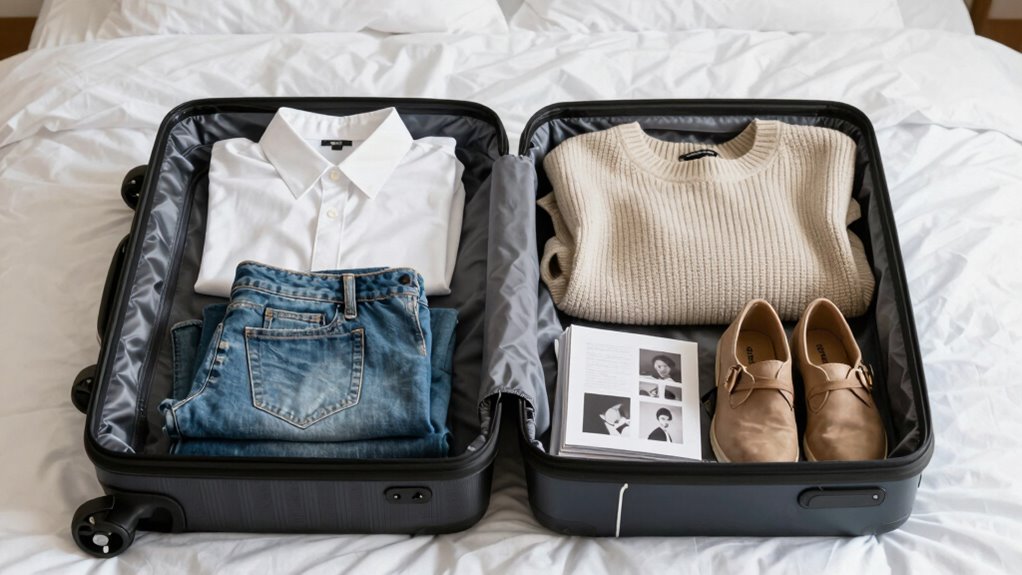
While packing comfort items can enhance your travel experience, it’s just as important to recognize which non-essential items you can leave behind. Non-essential gadgets, like extra chargers or multiple devices, often take up space and add weight without significant benefit. Decorative accessories, such as bulky jewelry or decorative scarves, may seem nice but aren’t necessary for practical packing. Consider whether these items truly improve your trip or if they’re just clutter. Opt for versatile, lightweight options instead. By leaving behind non-essential gadgets and decorative accessories, you free up space and reduce your load, making your journey more comfortable and stress-free. Focus on packing only what genuinely adds value to your travel experience, and leave the rest behind.
Tips for Efficiently Sorting and Packing Your Items
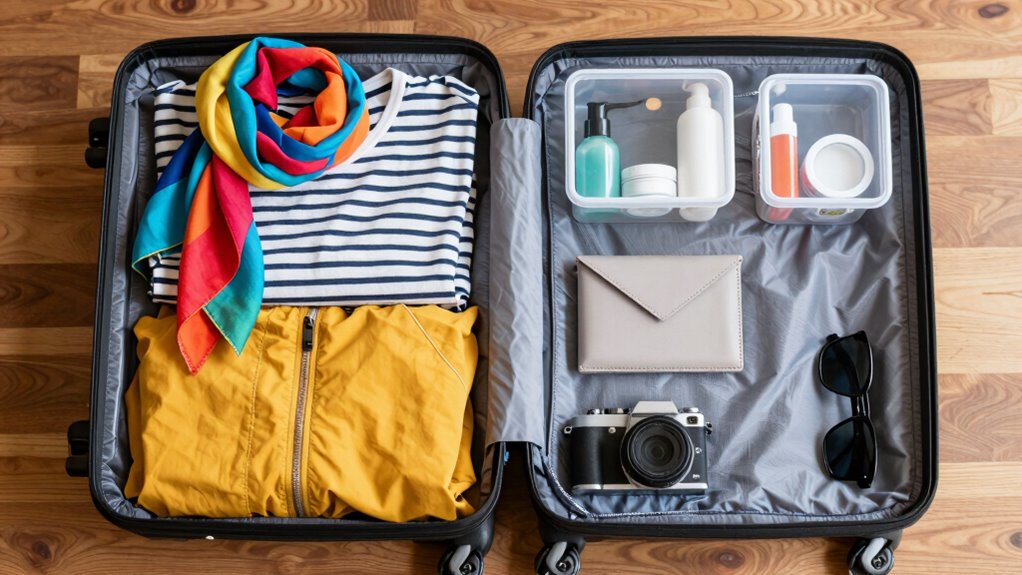
Start by categorizing your items to see what belongs together, making it easier to organize and access them later. Focus on prioritizing your essential gear to guarantee you pack only what’s necessary. Use efficient packing techniques, like rolling clothes and utilizing compartments, to maximize space and keep everything tidy.
Categorize Items Strategically
To pack efficiently, you need to categorize your items strategically, which helps you stay organized and conserve space. Sorting items into clear groups prevents last-minute rummaging and keeps your packing checklist manageable. Group similar items like travel accessories, clothing, and toiletries together to streamline your packing process. Use categories such as essentials, clothing, and extras to ensure nothing gets lost or forgotten. This approach makes it easier to identify what you need and prioritize items. Keep your travel accessories in one section, so they’re easy to find when you need them. A well-thought-out categorization system reduces clutter and helps you stay focused on packing light without regret. Remember, smart sorting is key to a smooth, stress-free trip.
Prioritize Essential Gear
Prioritizing essential gear is crucial for packing efficiently and ensuring you have everything you need without carrying excess. Focus on what truly matters by selecting versatile, lightweight items. Use compact luggage to maximize space and keep your belongings organized. Choose minimalist accessories that serve multiple purposes, reducing clutter. For example, opt for a multi-functional scarf or a slim wallet. Make a checklist to identify must-have items and eliminate non-essentials. Remember, packing light doesn’t mean sacrificing comfort or convenience—just smarter choices. Prioritizing your essentials allows you to enjoy a hassle-free trip, easier mobility, and less stress. Keep your gear streamlined, and you’ll find packing becomes faster, more efficient, and less overwhelming. The goal is to carry only what truly enhances your journey.
Optimize Packing Techniques
Efficient packing begins with sorting your items into clear categories, such as clothing, toiletries, and electronics. This makes it easier to use space saving techniques and guarantees nothing gets overlooked. Create a packing checklist to verify you’ve included everything essential. To maximize space, roll clothes instead of folding—this reduces bulk and saves room. Use compression bags for bulky items like sweaters, and fill shoes with socks or small accessories to utilize every inch. Place heavier items at the bottom of your bag for stability. Keep fragile items wrapped carefully to prevent damage. By organizing thoughtfully, you streamline packing and unpacking, making your trip smoother. Remember, a well-structured approach helps you pack light without regret, leaving space for souvenirs or extra essentials.
Common Mistakes to Avoid When Using the 3-Category Method
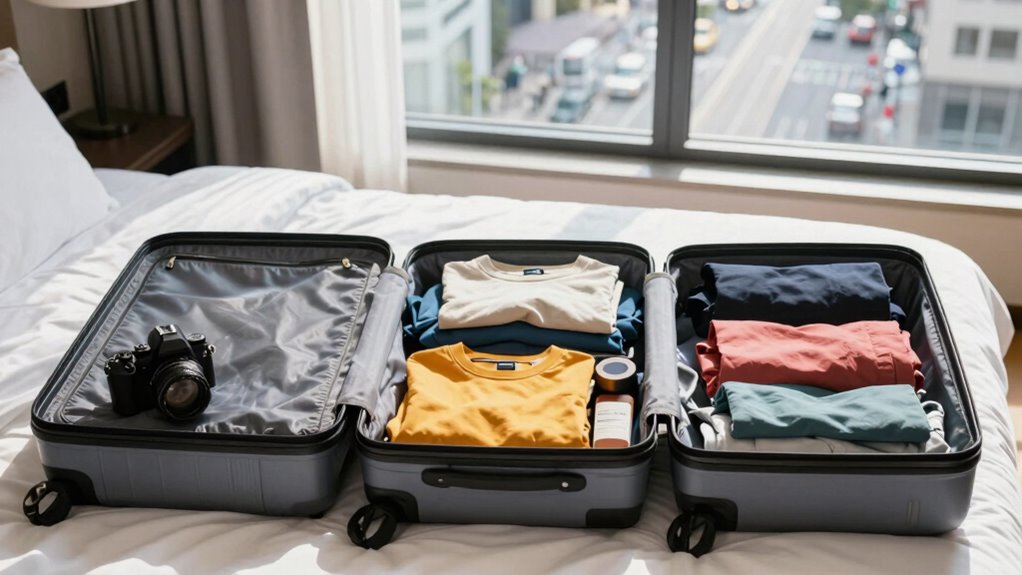
One common mistake when using the 3-Category Method is misclassifying items, which can lead to clutter or missing essentials. Misclassification errors often cause overpacking pitfalls, making your bag heavier and harder to manage. To avoid this, carefully categorize each item:
| Category | Examples | Common Mistakes |
|---|---|---|
| Essential | Passport, meds, chargers | Overlooking small but crucial items |
| Clothing | Shirts, socks, jacket | Packing too many or too few |
| Extras | Books, souvenirs | Including unnecessary items |
Stay mindful of these errors to keep your packing streamlined and efficient. Proper classification minimizes overpacking pitfalls and ensures you only bring what’s necessary, helping you travel light without regret.
How to Maintain Light Packing Habits for Future Trips

To stay consistent with your light packing habits, start by planning a versatile wardrobe that works for multiple trips. Make packing a routine so it becomes second nature, and always review your essentials before each journey. Keeping these practices in mind will help you maintain efficient habits and travel light every time.
Smart Wardrobe Planning
By planning your wardrobe carefully before each trip, you can maintain light packing habits that make travel more enjoyable and less stressful. Focus on creating a capsule wardrobe with versatile pieces that mix and match easily. This approach guarantees you pack fewer items while still having enough options for different occasions. To stay consistent, consider the following:
- Choose clothing pieces that serve multiple purposes
- Stick to a neutral color palette for easy pairing
- Limit yourself to a set number of versatile items
- Regularly review and rotate your capsule wardrobe to adapt to your travel needs
Smart wardrobe planning helps you prioritize quality over quantity and keeps your packing light, no matter the destination. This way, you’ll always have a lightweight, functional wardrobe ready for any trip.
Consistent Packing Habit
Establishing a consistent packing routine is essential for maintaining light habits on all your trips. To do this, keep a dedicated travel journal where you note what works and what doesn’t, helping you refine your packing checklist over time. Before each trip, review and update your checklist to ensure it reflects your current needs and preferences. Developing habits like packing the same items first or packing the night before can streamline your process and reduce last-minute stress. Consistency also means sticking to your packing categories, such as essentials, clothing, and toiletries, to avoid overpacking. Over time, these routines become second nature, making light packing effortless and enjoyable for every trip.
Frequently Asked Questions
How Can I Adapt This Method for Business and Leisure Trips?
To adapt this method for business and leisure trips, focus on packing only essential business essentials like documents, chargers, and a versatile outfit for meetings. For leisure gear, include casual clothing, a swimsuit, or hiking shoes, depending on your plans. Use the 3-category system to prioritize, ensuring you pack smartly without overloading, so you stay prepared for work and relaxation while keeping your luggage light and manageable.
What Are Some Common Packing Mistakes to Avoid?
To avoid overpacking pitfalls, don’t bring too many clothes or accessories you won’t use. Make sure you don’t forget essentials like chargers, toiletries, or necessary documents. Plan your outfits ahead of time to keep your bag light and organized. Remember, packing too much leads to hassle, while forgetting essentials causes inconvenience. Stay mindful of your trip’s needs, and stick to your packing plan to travel confidently and comfortably.
How Do I Handle Packing for Unpredictable Weather?
Think of packing for unpredictable weather like preparing for a surprise storm—you want to be ready without overloading. Use layering essentials like a lightweight waterproof jacket, versatile shirts, and thermal pieces. Weather proofing tips include packing a compact umbrella and quick-drying clothes. This way, you stay comfortable no matter what, just like a seasoned sailor adjusting sails to the wind—prepared but not burdened.
Can This Method Be Used for Long-Term Travel or Only Short Trips?
You can definitely use this method for long-term packing, as it promotes travel adaptability. It helps you prioritize essential items and easily adjust your wardrobe as your needs change over time. Instead of overpacking, focus on versatile pieces that fit into the three categories. This way, you stay organized and flexible, making long-term travel more manageable without regrets about carrying unnecessary stuff.
What Tools or Accessories Can Help Streamline Packing and Categorizing?
Did you know that packing cubes and travel organizers can cut packing time by up to 30%? These tools help you efficiently categorize your belongings, making it easier to find items without unpacking everything. Packing cubes are great for clothing, while smaller organizers suit accessories and toiletries. Using these accessories facilitates your packing process, keeps your luggage tidy, and ensures you won’t forget essentials, making your trip smoother and more enjoyable.
Conclusion
Think of your packing journey as tending a garden. By carefully choosing your essentials, comfort, and extras, you nurture a stress-free trip that blooms with ease. When you let go of unnecessary clutter, you make space for adventure and discovery. Embrace the 3-category method as your gardening tool, shaping your travel experience into a vibrant, effortless oasis. With each trip, your light pack becomes a symbol of freedom and exploration.