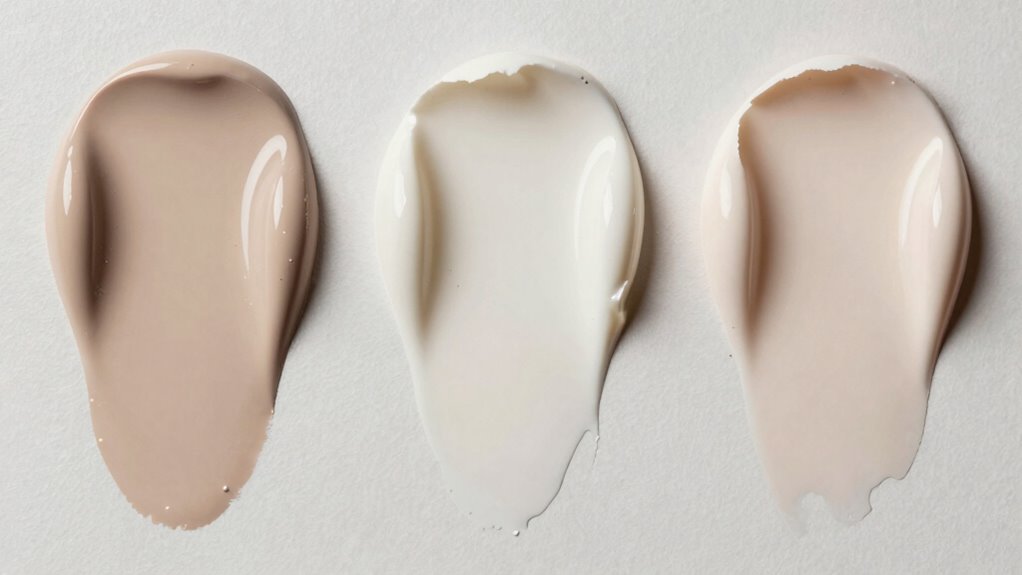

Choosing between matte, eggshell, and satin depends on your space’s needs. Matte offers a soft, non-reflective look ideal for low-traffic areas and hiding imperfections. Eggshell adds a subtle sheen, making it perfect for moderate-traffic zones with a warm, inviting feel. Satin shines more, making it great for high-traffic spots like kitchens or bathrooms since it’s durable and easy to clean. Keep exploring to find the best finish for your project.
Key Takeaways
- Satin offers high durability and easy cleaning, ideal for high-traffic areas like kitchens and hallways.
- Eggshell provides a softer, warmer look with moderate stain resistance, suitable for living rooms and bedrooms.
- Matte has a non-reflective finish that minimizes imperfections, best for decorative or low-traffic spaces.
- Consider room lighting and usage: satin and eggshell reflect more light for vibrancy, while matte absorbs light for a cozy feel.
- Choose based on maintenance needs: satin is easiest to clean, eggshell balances durability with hiding flaws, matte requires gentle cleaning.
Understanding Matte, Eggshell, and Satin: What’s the Difference?
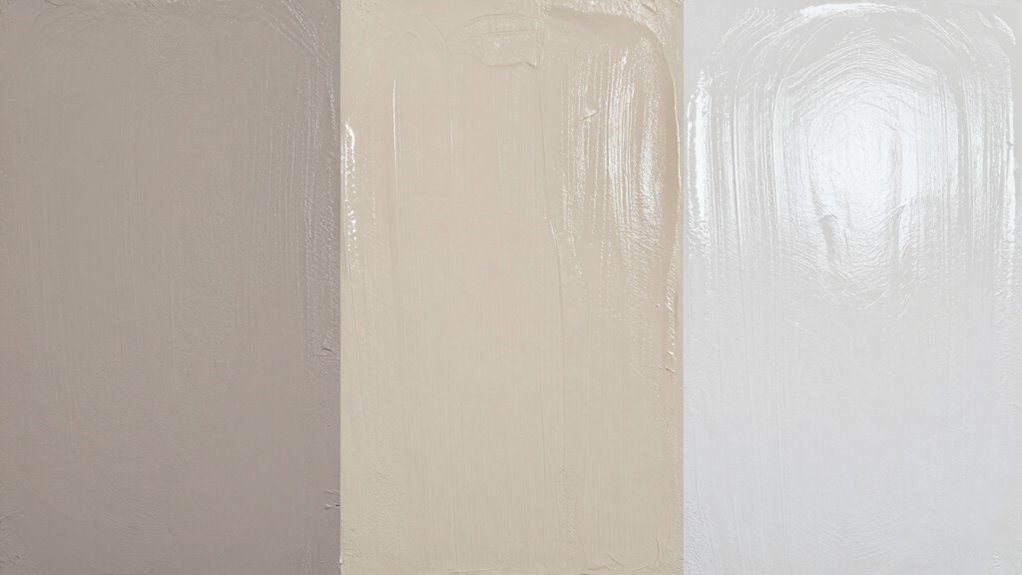
When choosing paint finishes, understanding the differences between matte, eggshell, and satin is essential because each offers unique looks and durability. Matte finishes have a smooth, non-reflective surface that hides imperfections and creates a soft, velvety appearance. Eggshell offers a slight sheen, making it more durable and easier to clean, ideal for moderate-traffic areas. Satin has a subtle shine that adds depth and enhances textured finishes, giving walls a rich, sophisticated look. Color compatibility is also key; matte finishes tend to absorb light, making colors appear warmer or muted, while eggshell and satin reflect more light, making colors pop. Additionally, contrast ratio plays a significant role in how vivid and detailed the projected images appear, influencing your overall viewing experience. Understanding paint finish characteristics helps you select the right finish to achieve your desired aesthetic and long-lasting results.
Which Paint Finish Is Best for High-Traffic or Busy Areas?
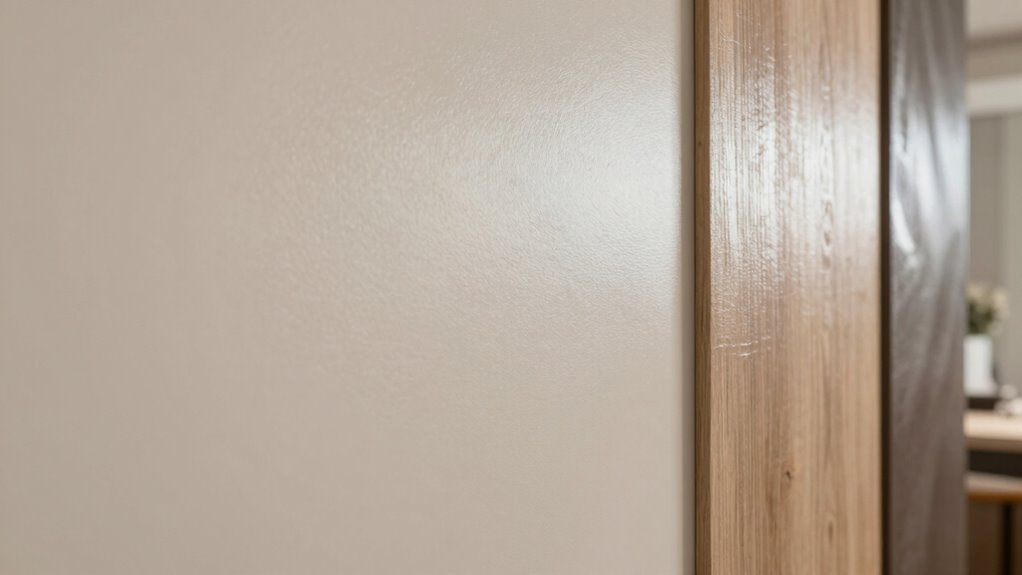
In high-traffic or busy areas, choosing the right paint finish is essential for durability and ease of maintenance. Satin finishes are ideal because they stand up well to frequent cleaning and resist scuffs, making them perfect for hallways, kitchens, or children’s rooms. The slight sheen of satin enhances lighting effects, helping to brighten spaces and hide minor imperfections. When considering color matching, satin’s reflective surface can make colors appear richer and more vibrant, giving your room a lively feel. Eggshell finishes are also a good option, offering a softer appearance with some washability, but they’re less durable than satin for heavy traffic. Matte finishes, while attractive, tend to trap dirt and are harder to clean, so they’re best reserved for low-traffic areas.
How Sheen Choices Impact Your Wall’s Appearance
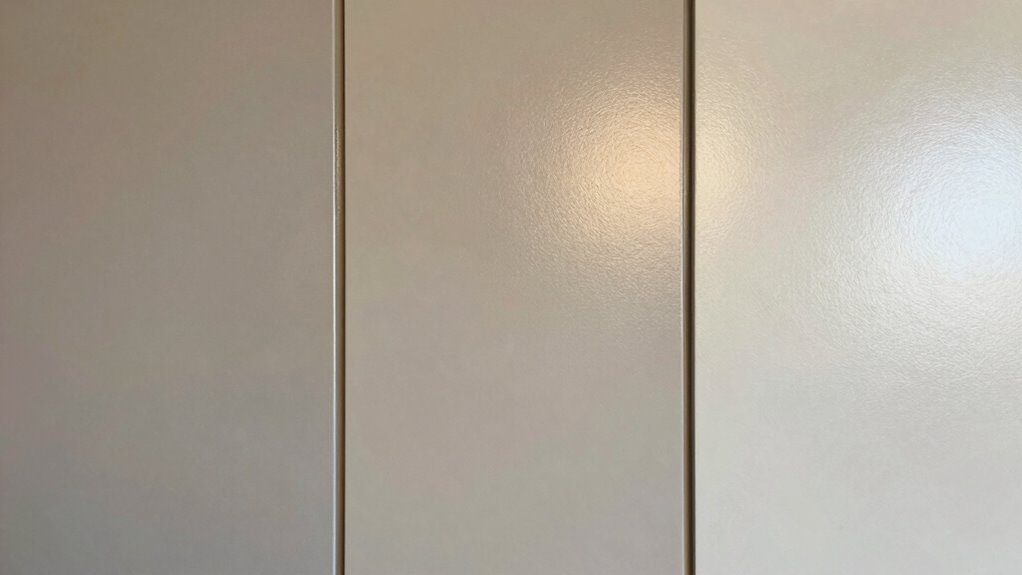
The sheen level of your paint considerably influences how your walls look and feel. It affects the way light reflects, highlighting or softening textures and imperfections. For example, a satin finish offers a subtle glow that enhances smoothness and depth, making color coordination easier and more vibrant. Eggshell provides a softer, more muted sheen that can hide minor flaws while adding warmth to a space. Matte finishes absorb light, minimizing imperfections but offering less reflectivity. Your choice of sheen impacts the overall ambiance and can emphasize or de-emphasize texture options in your walls. Selecting the right sheen helps you achieve the desired aesthetic, whether you want walls that look sleek and polished or soft and understated.
How Durable and Easy to Clean Are Matte, Eggshell, and Satin Finishes?
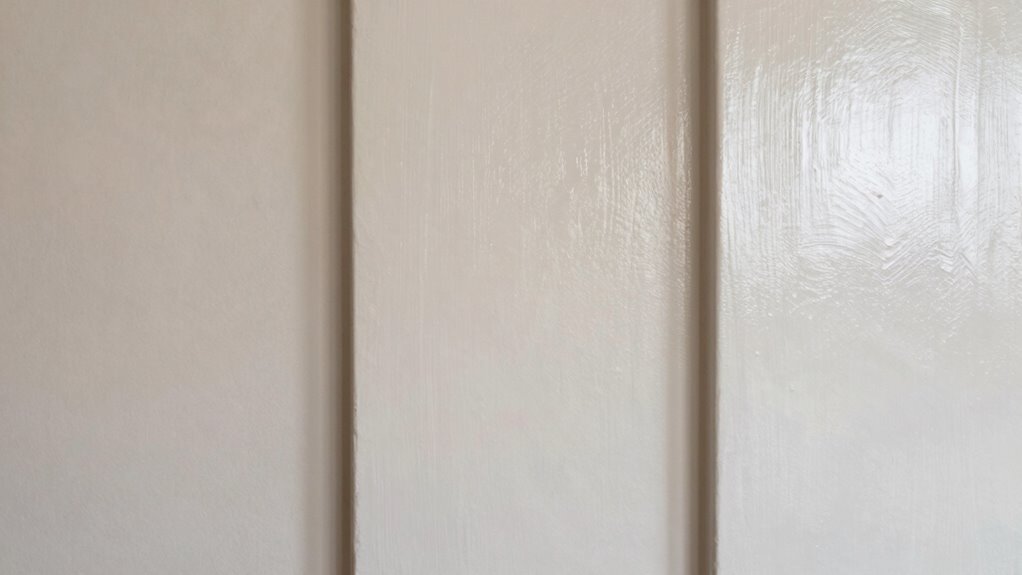
When choosing a finish, you’ll want to think about how well it resists stains and scratches, especially in busy areas. Matte, eggshell, and satin each handle cleaning differently, affecting how easy it is to maintain their appearance over time. Understanding these differences helps you pick the best option for durability and low-maintenance upkeep. For those seeking professional guidance, consulting comprehensive architectural services can ensure the right finish is selected for your space. Additionally, considering the finish’s resistance to wear can help in choosing a surface that maintains its look longer in high-traffic environments. Recognizing the material properties of each sheen can further influence your choice, especially when durability is a top priority. Knowing the cleanability of each finish can make a significant difference in maintenance routines and long-term appearance.
Resistance to Stains and Scratches
While all three finishes—matte, eggshell, and satin—offer some level of resistance to stains and scratches, their durability varies considerably. Matte finishes typically have lower stain resistance, making them more prone to showing marks and spills, and their scratch durability is also limited. Eggshell finishes provide a moderate balance, offering better stain resistance and scratch durability than matte, but still require careful handling. Satin finishes excel in both areas, with superior stain resistance that helps hide marks and spills, along with higher scratch durability that withstands everyday wear. If you want a surface that’s easier to keep clean and resists damage from stains and scratches, satin is your best choice, while matte and eggshell require more cautious use.
Maintenance and Cleaning Ease
Satin finishes are generally the easiest to clean and maintain, thanks to their smooth, slightly glossy surface that resists dirt and stains more effectively than matte or eggshell options. This makes them ideal for high-traffic areas or spaces prone to splashes and smudges. Their durability means less frequent cleaning and less risk of damage, preserving decorative effects over time. Additionally, satin paints often have a lower environmental impact due to fewer VOCs and easier maintenance, reducing the need for harsh cleaning products. Matte finishes, while great for hiding imperfections, can be harder to clean and may show dirt more readily. Eggshell finishes strike a balance but still require more gentle cleaning to maintain their appearance. Overall, satin offers superior ease of maintenance with minimal effort.
How to Pick the Right Sheen Based on Room Use and Function
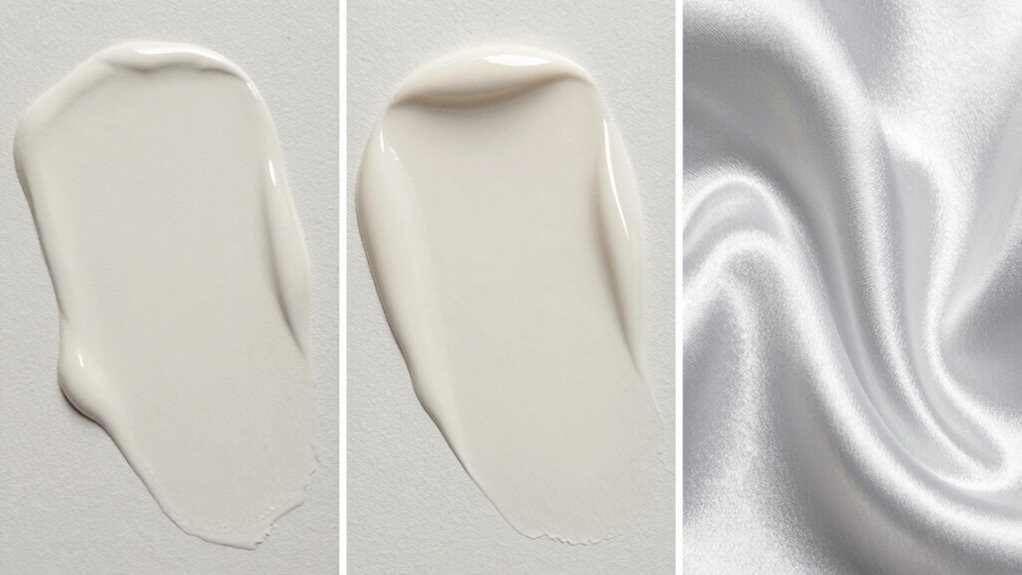
Choosing the right sheen for your room depends largely on how you use the space and its specific needs. For high-traffic areas or kitchens, eggshell or satin finishes are ideal because they’re durable and easy to clean. If you want a soft, muted look that complements traditional decorating styles, matte is a good choice, especially in bedrooms or living rooms. Consider these factors:
- Room Function: Use satin or eggshell for busy areas, matte for calm spaces.
- Lighting: Satin reflects more light, enhancing brightness, which suits small or darker rooms.
- Color Coordination: Lighter sheens blend seamlessly with various color palettes, while matte adds depth.
- Decorating Style: Modern spaces often favor satin, while matte fits classic or rustic decor.
Matching sheen to room use ensures both style and practicality.
What Does It Cost? Budgeting for Different Wall Paint Finishes
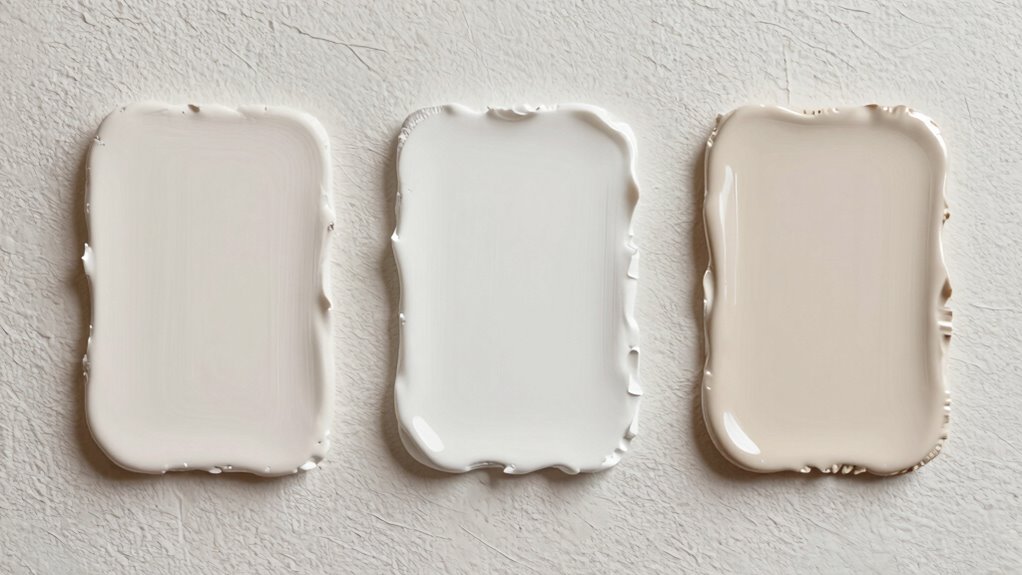
When budgeting for paint, you’ll want to compare material costs between matte, eggshell, and satin finishes, as prices can vary. Keep in mind that while some finishes might cost more upfront, they could offer better long-term value through durability and ease of maintenance. Balancing initial expenses with long-term benefits helps you make smarter choices for your space. Additionally, considering AI-driven design tools can assist in selecting the most suitable finish for your specific needs.
Material Costs Comparison
Understanding the material costs of different paint finishes is essential for effective budgeting. The type of sheen you choose impacts not only the look but also the overall expense. Here’s what to contemplate:
- Paint quality and coverage – higher-quality paints with better coverage can cost more upfront but may save you money over time.
- Finish-specific formulas – matte finishes often require fewer coats, reducing total material costs, while satin or eggshell might need additional layers.
- Color selection – complex or custom colors can increase costs, especially if environmental impact considerations lead you to eco-friendly options.
- Environmental impact – low-VOC or eco-friendly paints tend to be more expensive but contribute to healthier indoor air quality and sustainability.
- Paint application techniques can also influence material costs, as proper methods may reduce waste and the need for touch-ups.
Balancing these factors helps you stay within your budget while making informed paint choices.
Long-Term Investment Value
Ever wonder which wall finish offers the best value over time? When considering long-term investment, factors like color longevity and paint fading matter. Matte finishes tend to hide imperfections but may show more dirt and require more frequent touch-ups, affecting their overall durability. Eggshell finishes offer a good balance, resisting paint fading and maintaining color vibrancy longer. Satin finishes are highly durable, making them ideal for high-traffic areas, and they hold their color well over years. While initial costs vary, think about how often you’ll need to repaint or refresh your walls. Choosing a finish with better color longevity can save you money in the long run by reducing maintenance and repainting frequency, making it a smarter investment for your home.
Tips for Applying Matte, Eggshell, or Satin Paint Smoothly
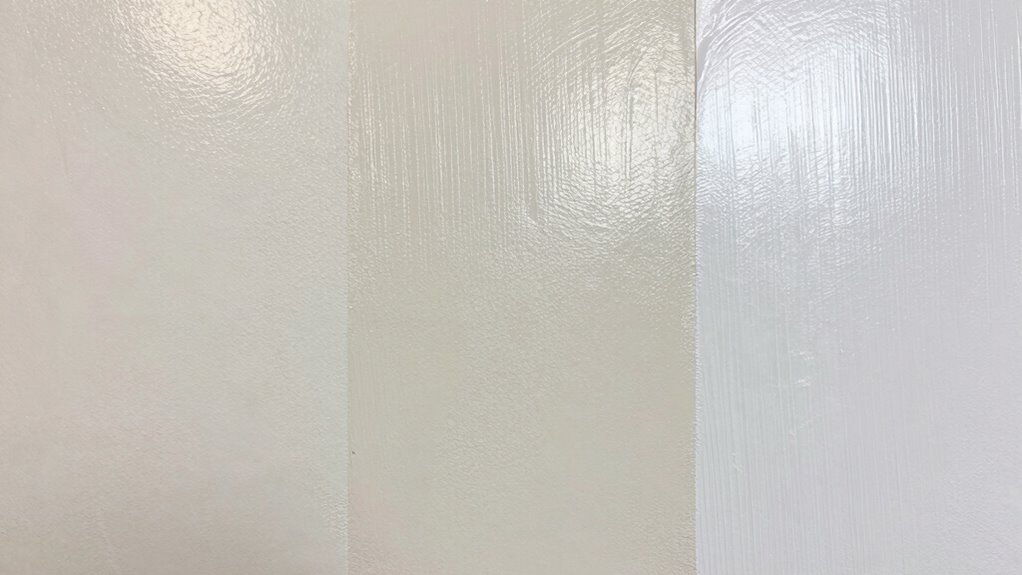
Applying matte, eggshell, or satin paint smoothly requires careful preparation and technique. Start by ensuring your surface is clean and primed according to primer requirements; this creates a better bond and smooth finish. Use proper brush techniques, such as applying gentle, even strokes, to avoid streaks and brush marks. Keep your brush or roller loaded with the right amount of paint—not too much or too little. Work in manageable sections, blending edges seamlessly. Maintain a consistent speed and pressure to ensure uniform coverage. Remember, patience is key; avoid rushing through the process. Additionally, understanding paint sheen properties can help you select the best finish for your space and achieve optimal results. By following these tips, you’ll achieve a professional-looking finish that highlights the beauty of your chosen sheen.
Common Mistakes When Choosing a Sheen: And How to Avoid Them
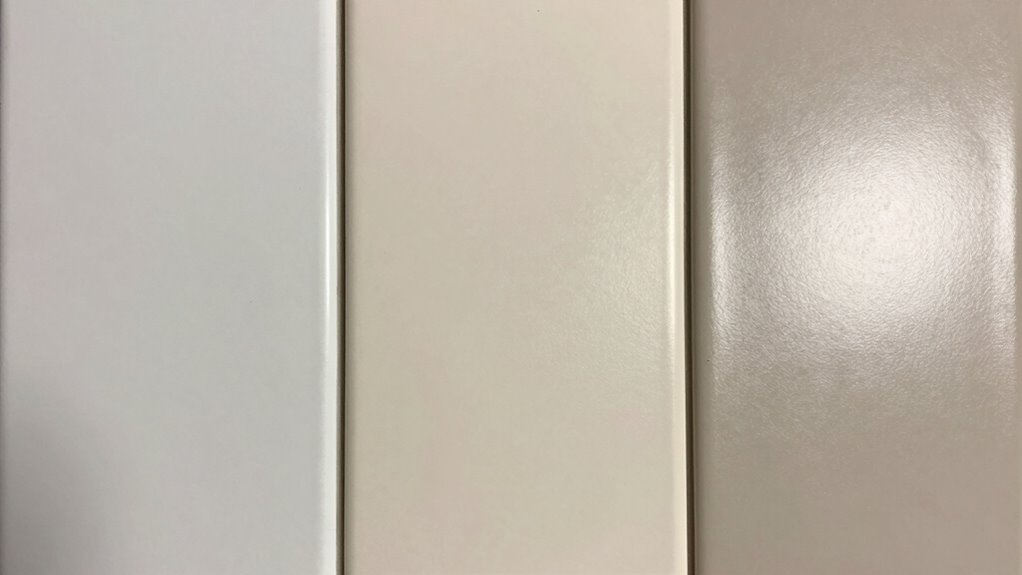
Choosing the wrong sheen can lead to disappointing results and the need for costly rework. One common mistake is ignoring paint color coordination; certain sheens can alter how colors appear, causing mismatched or dull results. Another error is selecting non-eco friendly finishes without considering their durability or environmental impact. To avoid these pitfalls, consider the specific room’s lighting and function. Use this guide:
| Sheen Type | Best For | Eco Friendly Option | Note |
|---|---|---|---|
| Matte | Low-traffic areas | Yes | Hides imperfections |
| Eggshell | Living rooms | Yes | Slight sheen, versatile |
| Satin | Kitchens, bathrooms | Yes | Easy to clean |
| Semi-gloss | Trim, doors | Yes | Reflects light |
| High-gloss | Cabinets, furniture | Yes | Bright, durable |
Choosing the appropriate paint sheen based on room use and environmental considerations ensures both aesthetic appeal and sustainability. Additionally, understanding how sheen affects light reflection can help you select a finish that enhances your space’s ambiance. Recognizing the importance of eco friendly options can also contribute to a healthier indoor environment and reduce your ecological footprint. It’s also helpful to recognize how light conditions influence sheen appearance to make the most of your chosen finish. Being aware of application techniques can further improve the final look and durability of your paint.
How to Decide Which Sheen Is Perfect for Your Space
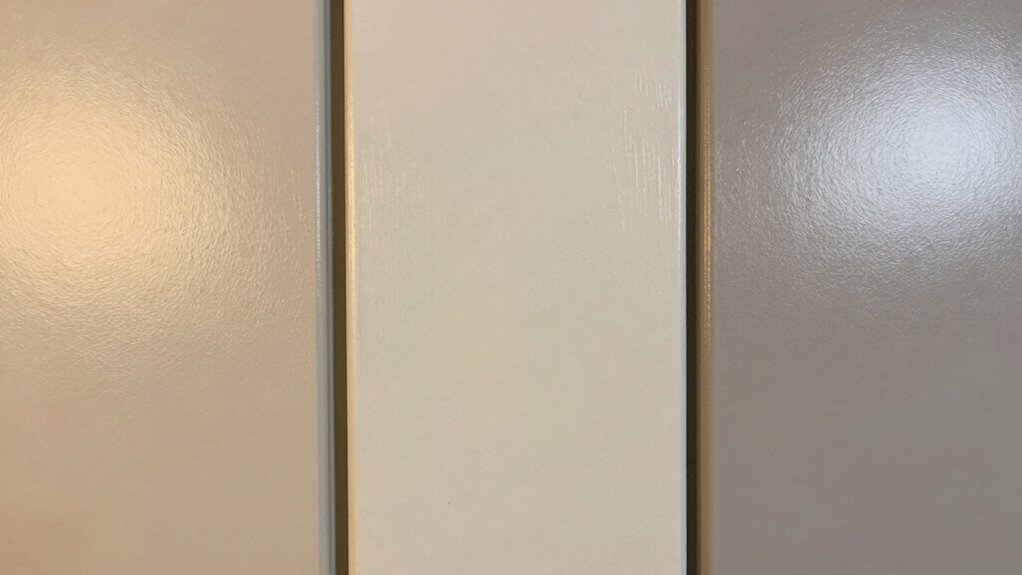
Selecting the right sheen for your space depends on understanding how different finishes interact with your room’s lighting, function, and your aesthetic preferences. To decide, consider these factors:
- Finish durability: Choose higher durability sheens like satin for high-traffic areas, ensuring they withstand cleaning and wear. Proper surface preparation can also extend the lifespan of the finish.
- Lighting: Matte finishes hide imperfections but can look dull in well-lit rooms, while eggshell and satin reflect light, brightening the space.
- Color coordination: Lighter sheens often enhance subtle color nuances, helping you achieve a cohesive look.
- Room function: For kitchens or bathrooms, opt for satin or eggshell for moisture resistance; for bedrooms or living rooms, matte may add a softer touch.
- Maintenance and cleaning: Ease of cleaning varies with sheen, with satin and eggshell generally easier to wipe down than matte finishes, making them better suited for areas prone to dirt and splashes.
Frequently Asked Questions
Can You Mix Different Sheens in One Room?
You can mix different sheens in one room, but you should consider sheen consistency to guarantee a smooth, professional look. Use the same or similar sheen levels on adjacent walls to avoid noticeable shifts. Also, keep color matching in mind, as different sheens may reflect light differently, affecting how the color appears. Carefully blending these elements helps create a cohesive, polished finish without abrupt changes.
How Does Lighting Affect the Appearance of Different Sheens?
Lighting effects notably influence how different sheens appear in your space. Bright, direct light makes sheen visibility more prominent, emphasizing texture and glossiness, especially in satin finishes. In contrast, softer, diffused lighting minimizes sheen visibility, making matte finishes look smoother and more subtle. To achieve your desired look, consider how your room’s lighting interacts with each sheen, and adjust lighting fixtures or placement accordingly for ideal results.
Are There Eco-Friendly or Low-Voc Options for Matte, Eggshell, and Satin?
You can find eco-friendly paints and low VOC finishes for matte, eggshell, and satin sheens. These options decrease harmful emissions and are better for the environment and your indoor air quality. Look for brands that prioritize sustainable ingredients and label their products as low VOC or eco-friendly. Using these finishes guarantees a beautiful, durable finish without compromising health or environmental standards.
How Long Does Each Finish Typically Last Before Needing Repainting?
Did you know that satin finishes tend to last 7-10 years, while matte and eggshell last about 4-8 years? Regarding durability comparison, satin is more resilient against cleaning and moisture, so you’ll need less frequent maintenance. Matte finishes may show wear sooner, requiring repainting every 4-6 years, whereas eggshell can last around 5-8 years with moderate maintenance. Choose based on how often you’re willing to touch up your space.
Is There a Significant Difference in Odor During and After Painting?
You’ll notice some odor variation during and after painting, with matte finishes often having a stronger smell due to higher VOC levels. Eggshell and satin sheens tend to emit less odor and have quicker smell persistence, making them more comfortable for indoor spaces. To minimize odor, guarantee proper ventilation and choose low-VOC paints. Your experience with smell will depend on the paint’s formulation, so check labels for reduced odor options.
Conclusion
Choosing the right paint sheen is like finding your perfect harmony in a symphony—you want balance, durability, and style. Whether you lean towards matte’s understated elegance, eggshell’s versatile charm, or satin’s subtle shine, your choice sets the tone for your space. Trust your instincts, consider your needs, and remember, as in art, the right finish transforms your walls into a masterpiece—crafted just for you.