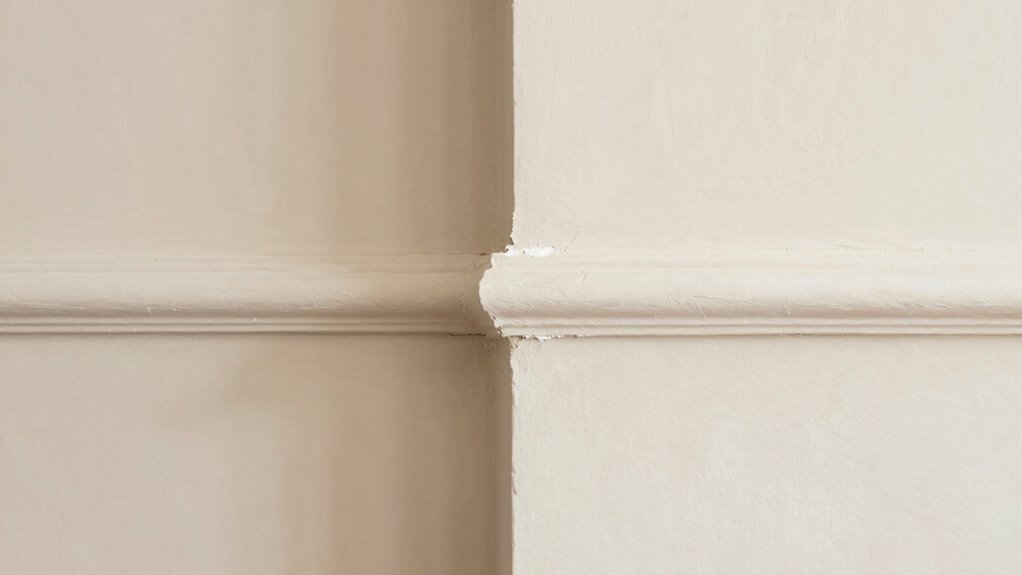

Choosing the wrong trim color can make your walls look off by creating visual imbalance or clashing with wall shades. Common mistakes include picking shades without testing different lighting and finishes, or ignoring how lighting changes the color’s warmth or coolness. Avoid mismatched color pairings and overly contrasting schemes that disrupt harmony. To get a cohesive look, consider contrast, lighting, and mood—keep exploring for tips to perfect your room’s style.
Key Takeaways
- Choosing trim colors that clash with wall tones or other decor elements creates visual discord.
- Failing to test trim shades in different lighting conditions can cause color mismatches.
- Selecting trim colors without considering color harmony principles may make walls appear unbalanced.
- Using overly bright or neon trim colors next to muted walls can disrupt the room’s visual flow.
- Ignoring the impact of finish and gloss level on trim can alter perceived color accuracy and harmony.
interior trim paint color samples
As an affiliate, we earn on qualifying purchases.
As an affiliate, we earn on qualifying purchases.
What Are Common Mistakes When Choosing Trim Colors?
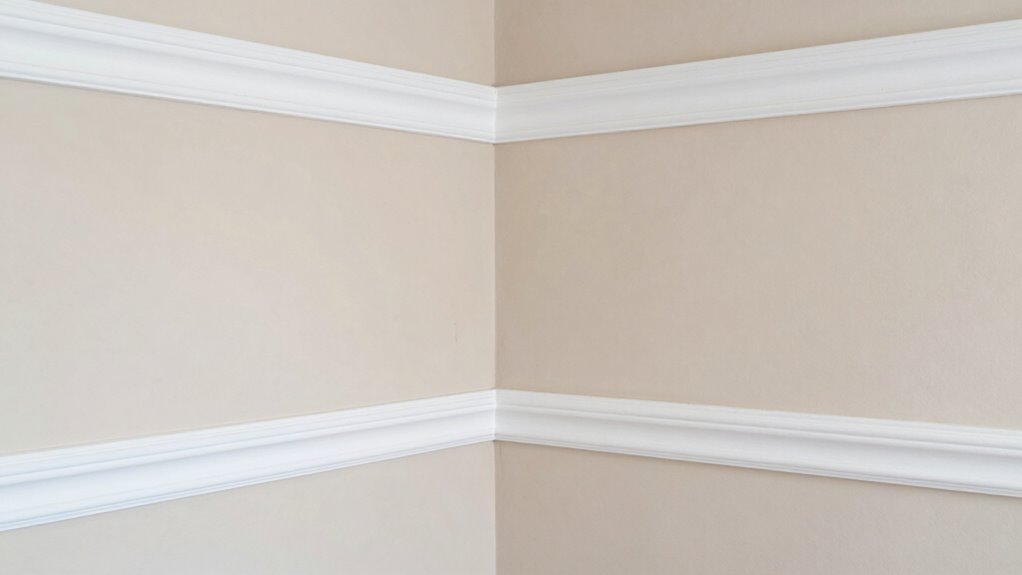
Have you ever chosen a trim color that clashed with your walls or made the room feel disjointed? One common mistake is poor color coordination. You might pick a shade from a paint swatch that doesn’t complement your wall color, resulting in a jarring look. It’s easy to grab a paint swatch without considering how the trim color interacts with your overall palette. Instead, you should test multiple shades against your walls before committing. Don’t rely solely on small paint swatches; hold them next to your walls to see how they look in different lighting. Incorporating color harmony principles can further ensure your trim enhances the overall aesthetic of your space, helping you avoid visual imbalance and achieve a more cohesive look. Additionally, understanding color psychology can guide you in selecting shades that evoke the right mood for your room. Choosing a trim color that harmonizes with your wall color creates a cohesive, polished appearance and prevents your room from feeling off or mismatched. Being aware of color contrast can also help you select trim shades that subtly stand out without overwhelming the space. Furthermore, considering lighting conditions can significantly influence how your chosen colors appear throughout the day.
How Do Lighting and Finish Affect Your Trim Color Choices?
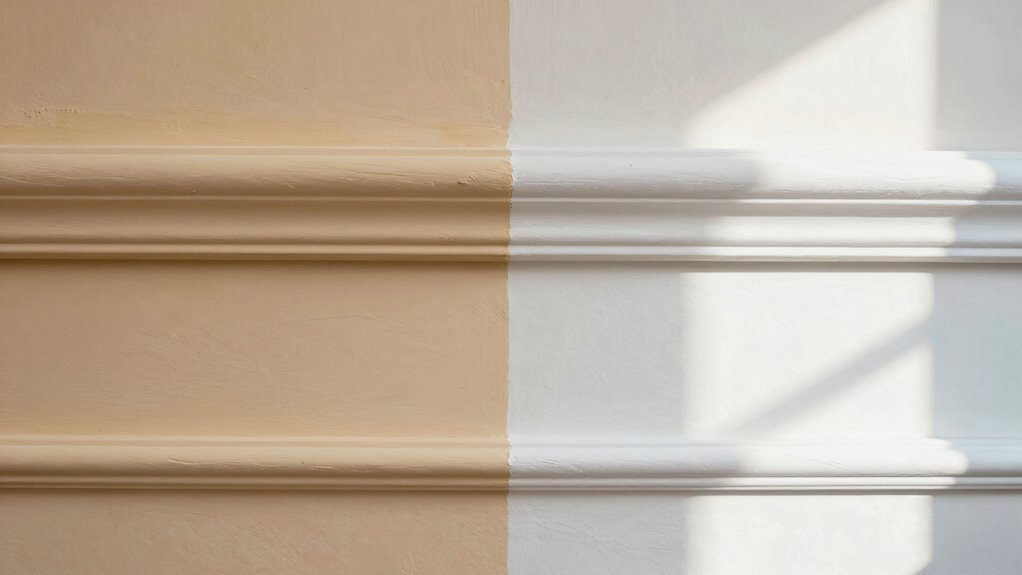
Lighting and finish play crucial roles in how your trim color appears in a room. Lighting effects can dramatically change the perception of your trim, making it look warmer or cooler depending on the light source. Finish textures also influence how the color is seen, with glossy finishes reflecting more light and matte finishes absorbing it. Imagine:
- Soft, warm lighting highlighting a satin finish, giving your trim a cozy glow.
- Bright, natural sunlight emphasizing the subtle undertones in a semi-gloss finish.
- Dim, ambient lighting making a matte finish appear darker and subdued.
- Spotlights creating reflections on a high-gloss trim, adding drama and depth.
Being aware of lighting conditions helps ensure your trim color remains consistent and appealing in different settings. Additionally, understanding finish textures can prevent unexpected color shifts caused by reflectivity or absorption. Recognizing how lighting and finish interact with color undertones allows you to choose trims that look cohesive across various lighting scenarios. For example, considering paint sheen during the planning stage can help you anticipate how the final appearance will change under different lighting conditions. Moreover, lighting quality can influence how accurately your chosen color is perceived, making it essential to evaluate your options in different lighting environments before finalizing your choice.
What Color Pairings Should You Avoid for a Cohesive Look?

Choosing the right trim color isn’t just about what looks good in theory—it’s also about avoiding mismatched pairings that can disrupt the harmony of your space. One common mistake is pairing colors that create a color clash, which draws attention away from the overall aesthetic. Bright reds with cool blues or neon shades with pastel tones often compete instead of complementing each other. Such combinations break aesthetic harmony, making your walls and trim feel disconnected. You should steer clear of high-contrast pairings that don’t blend well or seem jarring. Instead, opt for colors that naturally complement each other, creating a seamless flow. Being aware of color harmony principles can help prevent these mismatched pairings. Avoiding these mismatched pairings helps your space look more balanced, polished, and visually appealing.
How to Select a Trim Color That Complements Your Walls and Creates Balance
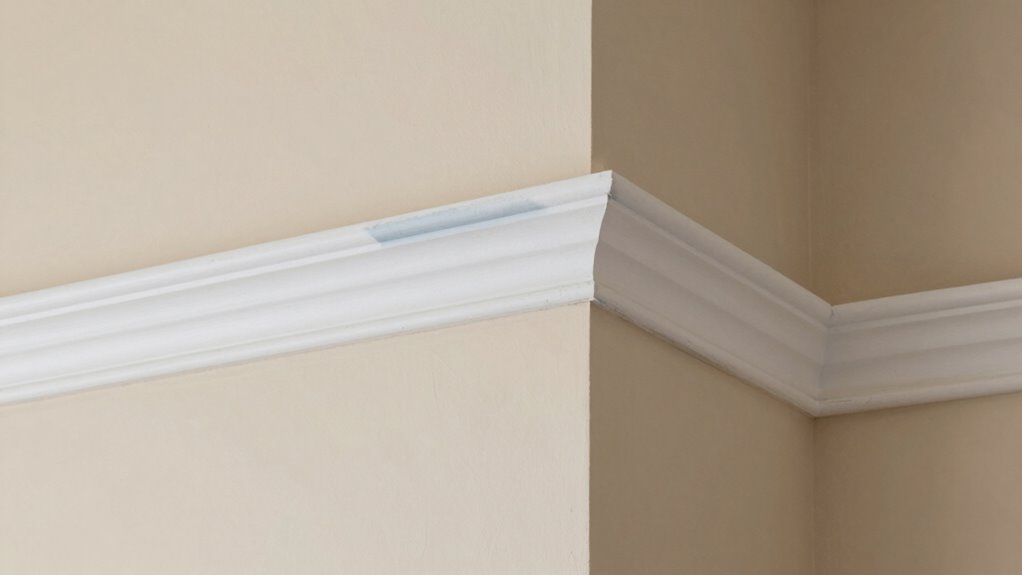
Selecting a trim color that complements your walls begins with understanding the overall mood and style you want to achieve. To create balance, consider contrast techniques that highlight architectural details. Start by visualizing:
- A crisp white trim against deep navy walls, making the trim pop.
- Warm beige trim with soft taupe walls for a subtle, cohesive look.
- Dark charcoal trim paired with light pastel walls for modern contrast.
- Bold accent wall colors, like emerald green, complemented by neutral trim for drama.
In addition, using color harmony principles can help you choose trim shades that naturally blend or stand out, ensuring a harmonious design. Choosing the right contrast techniques helps your trim stand out without overwhelming the room. When selecting your trim color, think about how it will work with accent wall colors and the overall vibe you want to create. Incorporating smart home automation can even help you visualize different color schemes using virtual tools or lighting controls to see how colors interact under different lighting conditions. Being aware of lighting influences can further refine your choice, as different lighting can dramatically change how colors appear in your space. Additionally, understanding color psychology can guide you in selecting hues that evoke the desired emotional response in your room. Considering visualization techniques can also assist you in imagining the final look before committing to a color choice.
Tips for Picking the Perfect Trim Color to Enhance Your Room’s Style
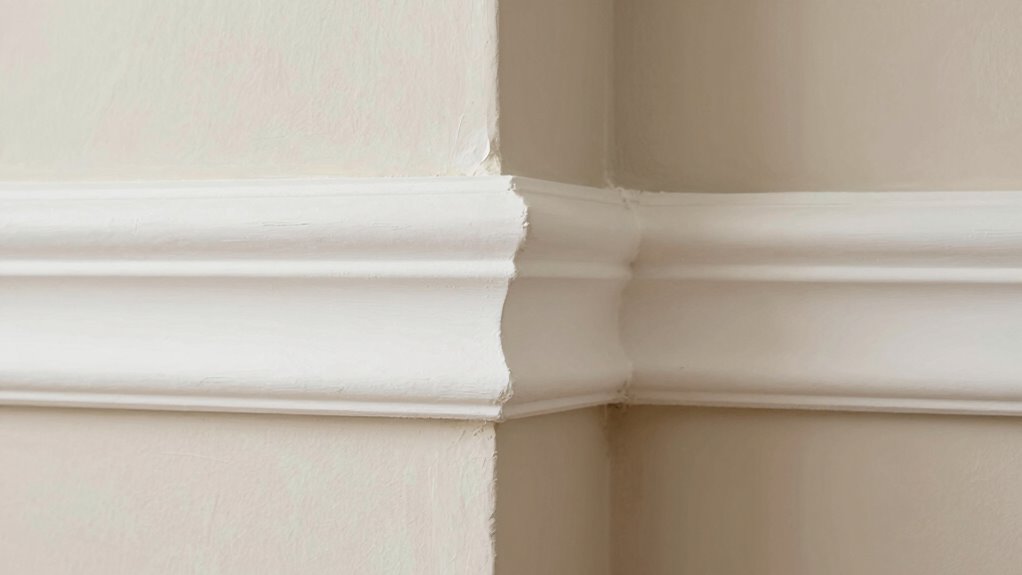
Picking the right trim color can truly elevate your room’s style and bring your design vision to life. To do this, consider how your window treatments and furniture coordination influence your choices. If your furniture features warm tones, opt for a trim color that complements those hues, creating a cohesive look. For rooms with bold window treatments, choose a trim shade that balances without overpowering. Light or neutral trim colors work well to enhance a classic or minimalist style, while darker trims add drama and depth. Always test your chosen colors in different lighting conditions to see how they interact with your walls and furnishings. Additionally, understanding how color choices can influence the overall ambiance of your space will help you select the most harmonious trim shade. Considering Free Floating elements in your design can also help create a balanced and harmonious aesthetic. Ultimately, selecting a trim color that harmonizes with your room’s elements will make your space look polished and thoughtfully designed.
Frequently Asked Questions
Can Using Too Many Different Trim Colors Disrupt Room Harmony?
Using too many different trim colors can disrupt room harmony, making the space feel chaotic and less cohesive. When you focus on trim color coordination, you create a balanced visual flow that enhances the overall look. Sticking to a limited palette ensures that your walls and trim complement each other, fostering a sense of harmony. Keep it simple and consistent to achieve a polished, unified appearance in your room.
How Does Trim Color Influence the Perceived Size of a Room?
Your trim color can profoundly influence how large or small a room feels. Light-colored trims, especially when paired with high ceilings, can make the space seem more open and airy. Conversely, darker trims or thick borders can make a room feel more enclosed. Be mindful of border thickness; a thicker trim can cut the room visually, while thinner trims blend seamlessly, enhancing the perception of height and space.
Is It Better to Match Trim Color Exactly to Wall Color or Contrast?
Think of your room like a symphony—your trim acts as the conductor. Matching trim color exactly to your wall creates a seamless, harmonious flow, making your space feel unified. On the other hand, contrasting trim adds visual interest and definition, like a soloist standing out. For balanced color coordination, consider paint matching for a subtle blend or deliberate contrast to highlight architectural details. Choose based on your style and the mood you want to set.
What Common Mistakes Lead to Trim Colors Clashing With Decor?
You often clash with decor when your trim color doesn’t coordinate well or disrupts the aesthetic balance. Avoid choosing trim that’s too stark or mismatched, as it creates visual tension. Instead, opt for colors that complement your wall and furniture tones, maintaining harmony. Be mindful of how different shades interact, ensuring your trim enhances rather than distracts, resulting in a cohesive, polished look that ties your space together seamlessly.
How Can Seasonal Lighting Changes Affect Trim Color Appearance?
Seasonal lighting changes can substantially affect how your trim color appears because lighting effects vary with the season. During winter, cooler color temperatures may make your trim look dull or off, while summer’s warmer tones highlight its true hue. You should observe how different lighting effects and color temperatures throughout the year influence your trim’s appearance, and consider adjusting your trim color or lighting to maintain a consistent, appealing look year-round.
Conclusion
Choosing the right trim color can transform your space, but it’s easy to make mistakes that throw off the look. Did you know that 65% of homeowners admit to redoing their trim because of color mismatches? By avoiding common pitfalls, considering lighting, and selecting complementary shades, you can create a balanced, stylish room. Trust your instincts, and don’t be afraid to experiment until you find the perfect trim color that truly enhances your walls and style.