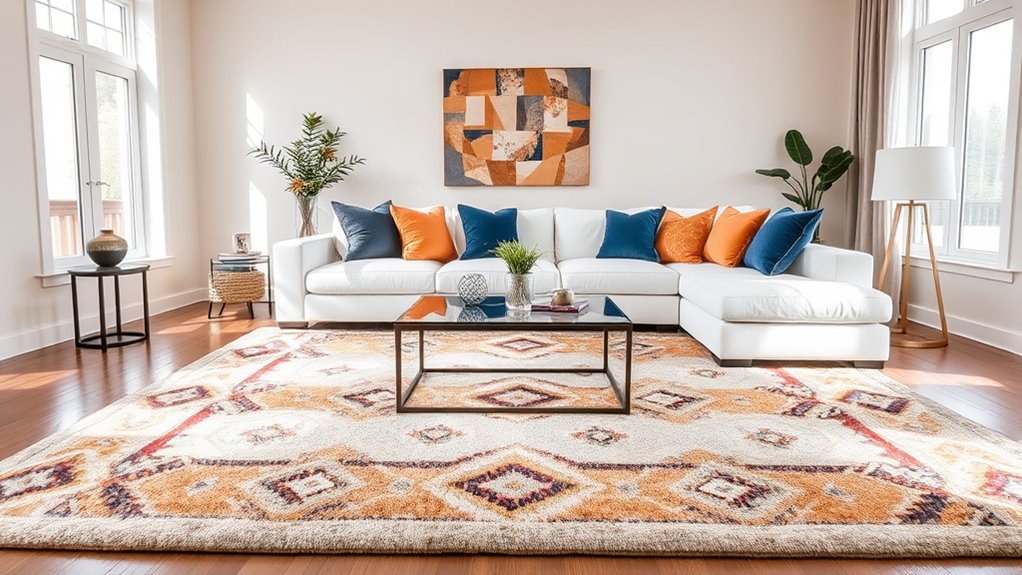
To choose the right area rug size, consider your room’s dimensions and furniture placement. Aim for a rug that either anchors your main furniture or fits the space without overwhelming it. For living rooms, select a rug that extends under the sofa and chairs to create a unified look. In dining areas, ensure it’s large enough for chairs to stay on when pulled out. Keep in mind that proper sizing enhances your decor and function—you’ll find helpful tips if you keep exploring.
Key Takeaways
- Measure your room and furniture to determine an appropriate rug size that anchors the space.
- Ensure the rug extends under major furniture pieces for a unified look or fits entryways and dining areas precisely.
- Match the rug size to the room’s dimensions, avoiding overly small or large rugs that can disrupt visual balance.
- Consider the pattern scale in relation to room size to maintain proportion and prevent visual clutter.
- Balance style with functionality by choosing a rug size that complements both decor and everyday use.
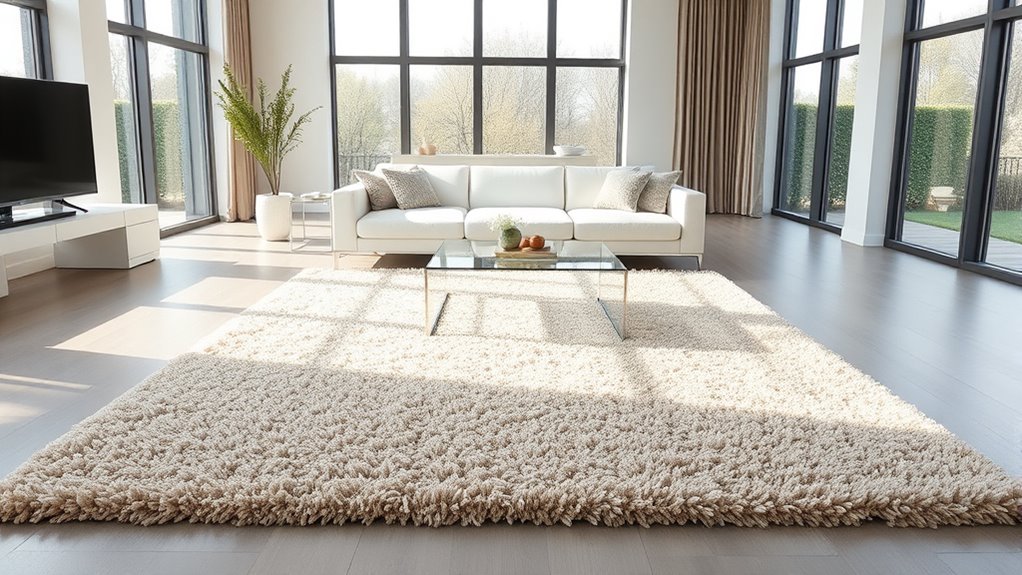
Selecting the right area rug size can markedly enhance your space’s style and functionality. When choosing a rug, one of the main considerations is how well it complements your existing furniture and decor. Pattern coordination plays a pivotal role here; you want your rug’s design to harmonize with your room’s overall aesthetic. If your furniture features bold patterns or vibrant colors, opt for a rug with a more subdued or neutral pattern to avoid visual chaos. Conversely, if your furnishings are minimalist or solid-colored, a rug with a striking pattern can serve as a focal point. The goal is to create a balanced look where the rug supports your decor rather than overwhelms it.
Choosing a rug that balances bold and neutral patterns enhances your decor without overwhelming it.
Material durability is another essential factor to take into account when selecting an area rug size. The durability of your rug depends partly on the material you choose and partly on where you place it. For high-traffic areas like entryways, living rooms, or hallways, you’ll want a rug made from tough, long-lasting materials such as wool, nylon, or polypropylene. These materials can withstand daily wear and tear while maintaining their appearance over time. If you’re placing a rug in a less-used area like a bedroom or a formal sitting room, you might opt for softer, more delicate fibers like silk or plush wool, which offer comfort but may require more maintenance. Always consider how much foot traffic your space receives, as this will influence the material durability needed for your rug.
Size is vital for achieving a cohesive and functional look, but understanding how pattern coordination and material durability influence your choice helps refine your decision. For example, in a living room, a large rug that extends under all major furniture pieces creates a unified space. It anchors the seating area and prevents the room from looking disjointed. In contrast, smaller rugs work well in dining areas or entryways, where they set a welcoming tone without overwhelming the space. When matching patterns, ensure the design scale aligns with the room’s size; large patterns can make a small room feel cramped, while tiny patterns may get lost in a large area. Additionally, considering the cleaning and maintenance requirements of different rug materials can help you select a size that is practical for your lifestyle.
Ultimately, selecting the right area rug size involves balancing your aesthetic preferences with practical considerations like pattern coordination and material durability. By paying attention to these details, you ensure your rug not only looks good but also endures daily use, transforming your space into a welcoming, stylish environment.
As an affiliate, we earn on qualifying purchases.
Frequently Asked Questions
How Do I Measure My Room Accurately for a Rug?
You measure your room accurately by using measuring tools like a tape measure or ruler, ensuring you get precise dimensions. Start by measuring the length and width of your space, then decide where you want your rug to be placed—whether it’s under furniture or in the center. Use these measurements to determine the ideal rug size, keeping in mind proper rug placement to enhance your room’s look and feel.
What Rug Size Is Best for Open-Concept Spaces?
Think of your open-concept space as a blank canvas; a large rug, like a 9×12 or 10×14, anchors the room beautifully. You should choose a size that allows your furniture to sit comfortably on the rug, creating zones. Focus on pattern coordination and texture contrast to add visual interest and depth. This approach makes your space feel cohesive and inviting, without overwhelming the room’s openness.
Should a Rug Extend Beyond Furniture in All Directions?
Yes, your rug should extend beyond furniture in all directions, creating a balanced border extension. This enhances furniture placement by anchoring your space and making it look cohesive. Ideally, the rug’s edges should reach just beyond the front legs of your furniture, ensuring a unified look. Extending the border also helps define different zones within open-concept areas, making your space feel more organized and inviting.
How Do I Choose a Rug Size for a Small Room?
To pick the right rug size for a small room, you want a rug that fits comfortably without overwhelming the space. Choose a rug with decorative patterns that add visual interest without making the room feel cluttered. Make sure to use rug padding to keep it in place and protect your floors. Aim for a size that leaves some border around furniture, creating a cozy, balanced look.
Can a Rug Be Too Large for a Space?
A rug can be too large for a space, like a wave crashing over a shoreline, overwhelming the room’s harmony. When choosing, consider the rug’s thickness and material—thinner rugs with plush fibers can balance large sizes, while thick, lush textures might overpower a small room. You want the rug to anchor the space, not drown it. Keep proportions in mind, so your rug enhances rather than engulfs your room’s natural beauty.
Conclusion
So, now you’re all set to pick the perfect rug size—because nothing says “I’ve got it together” like obsessing over those tiny details. Just remember, it’s easy to overthink it; after all, a rug is just a rug, right? But hey, if you end up with one that’s a tad too big or small, at least you’ll have a great story about your interior design adventures. Happy decorating—what could possibly go wrong?