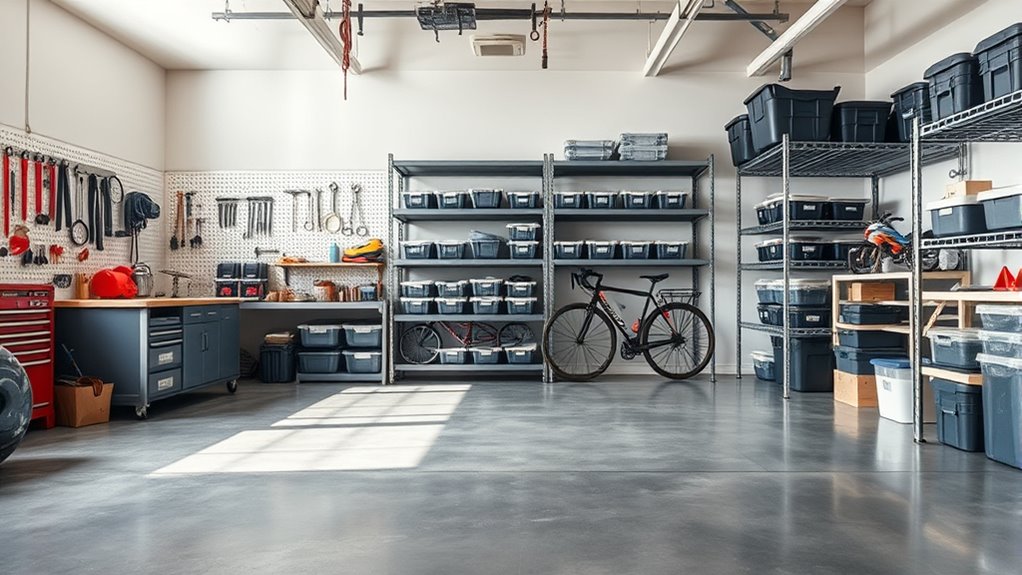

To organize your garage effectively, create dedicated zones for different categories like tools, sports gear, gardening supplies, and seasonal items. Use vertical storage solutions such as wall-mounted shelves, pegboards, and hooks to maximize space and keep items accessible. Incorporate clear bins with labels for small or frequently used items and adjust your layout over time as your needs change. Explore more tips to transform your garage into a functional, clutter-free space.

Get furniture and decor delivered free — and shop member deals
- Fast, free delivery on millions of items
- Access to Prime Big Deal Days deals on October 6–7
- Prime Video, Amazon Music and more included
Key Takeaways
- Assess frequently used items to create designated zones for easy access and organization.
- Utilize vertical storage solutions like wall-mounted shelves and pegboards to maximize space.
- Label clear storage bins and use modular units for adaptable, efficient storage of small and bulky items.
- Place commonly used tools at eye level, storing less-used items higher or in less accessible areas.
- Designate specific zones for activities such as workbenches and vehicle parking to streamline garage functionality.
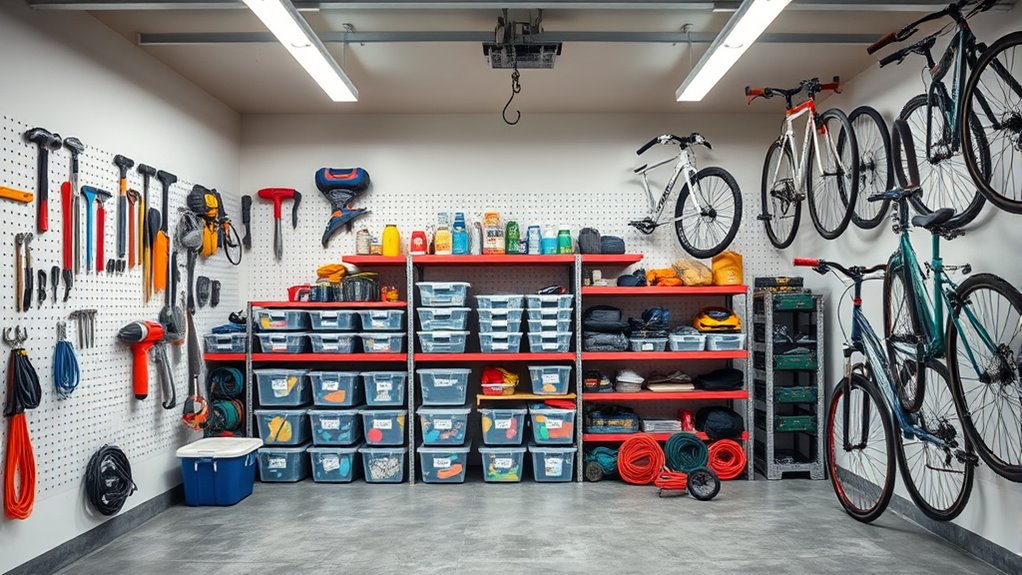
Ever wonder how to transform your cluttered garage into a tidy, functional space? The secret lies in smart storage solutions and effective zone planning. When you approach your garage organization with these strategies, you’ll create a system that’s easy to maintain and tailored to your needs. Start by evaluating what you use most often and what items are taking up unnecessary space. This initial step helps you design zones that make sense, so everything has a designated spot. For example, dedicate one area for gardening tools, another for sports equipment, and a separate space for seasonal decorations. This zoning not only keeps things organized but also reduces the time you spend searching for items.
In terms of storage solutions, think vertically. Wall-mounted shelves, pegboards, and hooks are game-changers because they free up floor space and keep items within reach. Use clear storage bins with labels to categorize and easily identify contents. This way, you know exactly where everything is without rummaging through piles. For smaller items, consider drawer systems or stackable bins. These maximize storage capacity and keep clutter at bay. When planning your zones, also consider accessibility. Place frequently used items at eye level or in easily reachable spots. Less-used items can go higher up or toward the back of shelves. This approach ensures your garage remains functional and not a maze of clutter.
Another essential element of zone planning is creating designated areas for specific activities. If you work on projects in your garage, set up a dedicated workspace with a sturdy workbench and nearby storage for tools. If you park your car inside, make sure there’s enough room to open doors comfortably while still having accessible storage around the perimeter. Incorporate storage solutions that suit the type of items stored—heavy-duty shelves for bulkier equipment, or modular units that can be reconfigured as your needs change. Remember, the goal is to make your garage a space that works for you, not against you.
As an affiliate, we earn on qualifying purchases.
Frequently Asked Questions
How Often Should I Reorganize My Garage Zones?
You should reorganize your garage zones at least twice a year, ideally during seasonal decluttering. This helps you keep everything tidy and guarantees zones stay functional. Use zone labeling to clearly define areas for tools, sports gear, and other items. Regularly reassessing your zones makes it easier to spot clutter and optimize space, so your garage remains organized and efficient throughout the year.
What Are the Best Tools for Garage Storage?
Great gear for garage storage includes sturdy garage shelving that stacks and sorts your supplies. Wall hooks help hang tools and equipment, keeping floors free and accessible. These tools transform clutter into convenience, creating a clean, coordinated space. Invest in versatile, durable options, and you’ll simplify sorting, streamline storage, and sustain your garage’s organization with ease. Your space will stay tidy, functional, and fabulous!
How Can I Prevent Pests in My Garage?
To prevent pests in your garage, you should store items in pest-proof containers to block entry points. Keep the area clean and dry to reduce attracting pests. Use natural repellents like essential oils or garlic spray around corners and entry points. Regularly inspect for signs of pests and seal cracks or gaps to prevent their entry. These steps help create an inhospitable environment for pests, keeping your garage pest-free.
What Safety Precautions Are Needed for Garage Storage?
You should prioritize fire safety by keeping flammable materials away from heat sources and ensuring your garage has working smoke detectors. When storing chemicals, use labeled, airtight containers and store them on sturdy shelves, away from children and pets. Always follow manufacturer instructions for chemical storage, and consider installing proper ventilation. Regularly check for leaks or spills, and keep an organized space to minimize hazards.
How Do I Maintain My Garage Organization Long-Term?
Keeping your garage organized is like tending a garden—you need regular care. You should schedule seasonal decluttering to remove what you no longer need and stick to your label system to keep everything visible and easy to find. Make it a habit to put things back in their designated zones after use, and periodically reassess your setup to guarantee it still meets your needs. Consistency is key to long-term organization.
Conclusion
By organizing your garage into clear zones and smart storage, you’re turning chaos into a well-orchestrated symphony. Think of your garage as a garden where each item has its perfect spot, making everything easy to find and access. With a little effort, you’ll transform clutter into clarity, creating a space that feels like a gust of fresh air every time you step inside. Your organized garage is now ready to serve as your ultimate tool shed and sanctuary.
Fall Picks
fall essentials
As an affiliate, we earn on qualifying purchases.