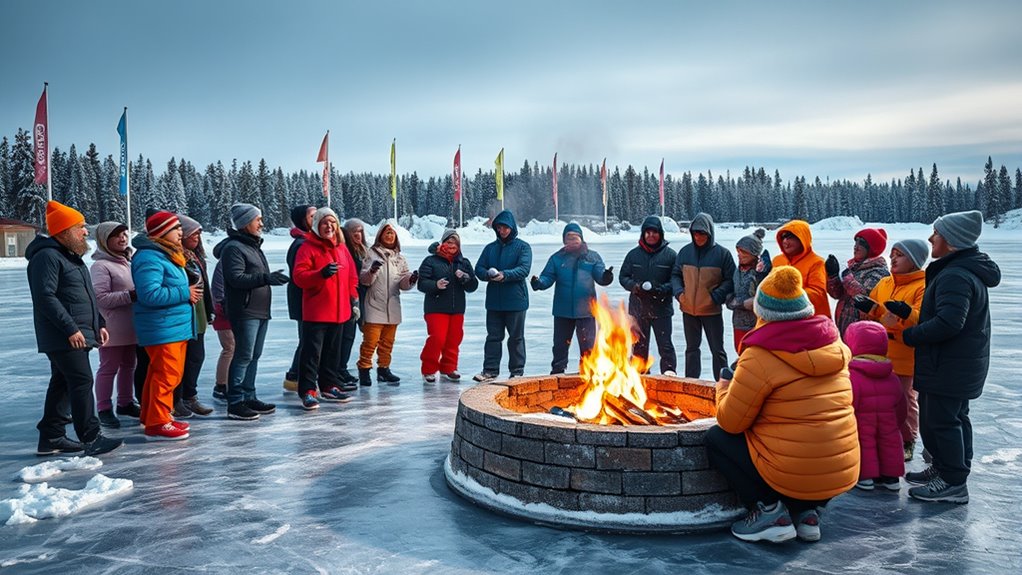

To create a successful retreat, start with fun icebreakers that ease nerves and foster connection. Incorporate team-building exercises like relay races or problem-solving tasks to promote collaboration. Use trust activities, such as trust falls or personal story sharing, to build openness and vulnerability. Mix light-hearted fun with purposeful activities to keep energy high and engagement strong. Keep activities inclusive and adaptable, and you’ll lay a solid foundation for meaningful bonding—continue exploring effective ways to energize your group.
Key Takeaways
- Use fun, casual icebreakers to ease nerves and promote initial connection among participants.
- Incorporate team-building exercises like relay races or problem-solving tasks to foster collaboration.
- Include trust-building activities such as trust falls or sharing personal stories for deeper connections.
- Balance activity types to maintain energy, combining light-hearted fun with purposeful team challenges.
- Utilize engaging tools like visual aids or technology to enhance participation and reinforce bonding.
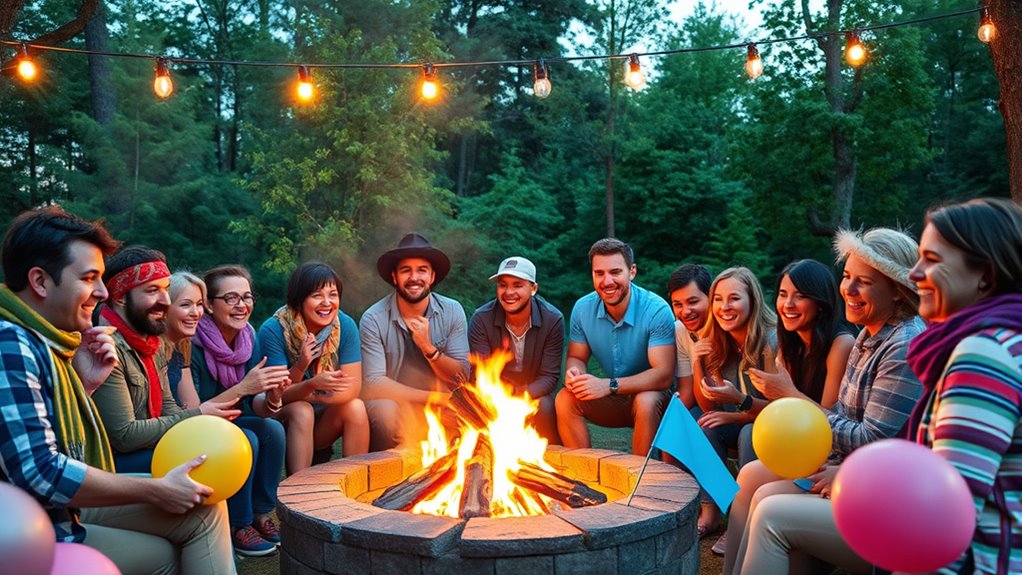
Organizing effective retreat icebreakers and group bonding activities can set the tone for a successful event. When you choose the right activities, you create an environment where participants feel comfortable, connected, and motivated to engage. One of the most impactful ways to kick off your retreat is by incorporating team building exercises that promote collaboration and communication. These activities encourage participants to work together, break down barriers, and develop a sense of unity from the outset. For example, simple problem-solving challenges or relay races can energize the group and foster a spirit of teamwork. Be sure to select exercises that are inclusive and adaptable to different personalities and physical abilities, so everyone feels involved and valued.
Effective retreat icebreakers boost connection, teamwork, and engagement from the start.
Trust building activities are equally essential in setting a foundation for open communication and vulnerability. When individuals trust each other, it becomes easier to develop genuine connections that extend beyond the retreat. Activities like trust falls, paired challenges, or sharing personal stories can be effective if executed thoughtfully. The goal is to create a safe space where participants can let their guard down and build confidence in one another. Remember, the key to successful trust building is to keep activities positive, supportive, and voluntary. If someone is uncomfortable, respect their boundaries and offer alternative ways to participate. As the group progresses through these exercises, you’ll notice a shift in energy and openness, laying the groundwork for more meaningful interactions during the rest of the retreat.
To maximize engagement, consider mixing light-hearted icebreakers with more purposeful team building exercises. Starting with fun, casual activities like quick introductions or interesting fact-sharing can warm everyone up and ease initial nerves. As trust begins to grow, shift into activities that challenge participants to rely on each other, such as problem-solving tasks or trust-building games. The key is to balance activities that foster camaraderie with those that develop essential skills like communication, empathy, and cooperation. Keep the sessions dynamic and interactive to maintain energy levels and prevent boredom. Additionally, understanding the importance of projector technology can greatly enhance the presentation and overall experience during workshop sessions, making activities more engaging and visually appealing.
Ultimately, your goal is to cultivate an atmosphere where people feel connected and motivated to participate. Well-chosen team building exercises and trust building activities not only loosen up the group but also lay a strong foundation for deeper engagement throughout the retreat. When done effectively, these activities transform a simple gathering into a meaningful experience that enhances team cohesion, boosts morale, and sets the stage for ongoing collaboration long after the event ends.
Frequently Asked Questions
How Can Icebreakers Be Adapted for Virtual Retreats?
To adapt icebreakers for virtual retreats, focus on boosting virtual engagement through interactive activities like icebreaker questions, online games, or breakout rooms. Use tech integration by leveraging video conferencing tools with features like polls or chat functions to create a lively atmosphere. Keep activities simple, inclusive, and time-efficient, encouraging everyone to participate actively. This approach helps build connections despite the physical distance, making your virtual retreat engaging and memorable.
What Activities Are Best for Large Groups?
For large groups, choose activities that accommodate big group sizes and offer variety, like trivia games, virtual scavenger hunts, or large-scale polls. These activities encourage participation and keep everyone engaged. You should also break the group into smaller teams for certain activities, then regroup to share results. This approach guarantees activity variety and maintains energy levels, making the experience fun and inclusive for all participants.
How Do You Ensure Inclusivity in Icebreaker Activities?
Think of your icebreaker as a tapestry, woven with diverse threads. To guarantee inclusivity, you actively incorporate cultural sensitivity and accessibility measures, making sure every thread is visible and valued. You choose activities that respect different backgrounds and abilities, creating a welcoming environment. By thoughtfully designing these moments, you foster genuine connection, ensuring everyone feels seen, heard, and comfortable participating in your group’s shared journey.
What Are Quick Icebreakers for Tight Schedules?
You can use quick energizers like fun, rapid-fire questions or speedy introductions to break the ice effectively. These activities take just a few minutes and help everyone feel more comfortable. Try asking everyone to share their name and one interesting fact or have them answer a quick prompt, like their favorite snack. These fast-paced icebreakers keep the energy high and guarantee your schedule stays on track without sacrificing connection.
How to Measure the Success of Bonding Activities?
You measure the success of bonding activities through participant feedback and engagement metrics. You look for honest comments, enthusiasm levels, and the willingness to connect beyond the activity. You observe increased camaraderie, improved communication, and active participation. You analyze attendance rates and post-event surveys to gauge impact. By tracking these indicators, you can determine whether your activities foster genuine connections and meet your team-building goals.
Conclusion
Incorporating engaging icebreakers and bonding activities guarantees your retreat fosters genuine connections. For example, a team that started with simple trust exercises ended the retreat with stronger collaboration and communication. You’ll find that these activities break down barriers, build trust, and create memorable experiences. When you prioritize group bonding, your team becomes more cohesive and motivated. So, don’t underestimate the power of a fun icebreaker—it could be the key to transforming your team’s dynamics.