
To create a winter container garden with lasting interest, choose hardy plants like boxwoods, holly, and dwarf spruces, combining different textures and colors for visual appeal. Use durable containers with drainage, fill them with well-draining soil, and mulch the tops for insulation. Protect your plants by grouping containers, wrapping with insulation, and placing them in sunny spots. If you keep these tips in mind, you’ll craft a resilient, beautiful winter display that continues to impress.
Key Takeaways
- Select hardy, winter-tolerant plants like boxwoods, holly, and dwarf spruce for year-round appeal.
- Use durable containers with drainage, filled with well-draining soil, and topped with mulch for insulation.
- Group containers together and wrap them with insulating materials to create a microclimate and protect from cold.
- Incorporate seasonal accents such as red berries, colorful foliage, and trailing plants for visual interest.
- Cover plants with frost cloths during harsh cold snaps and water sparingly to prevent root damage.
As winter approaches, many gardeners wonder if they can keep their container gardens thriving outdoors. The good news is, with thoughtful planning and proper care, you can create a stunning winter container garden that offers visual interest even in the coldest months. The key lies in selecting the right plant combinations and understanding container care to guarantee your plants not only survive but also look vibrant and inviting.
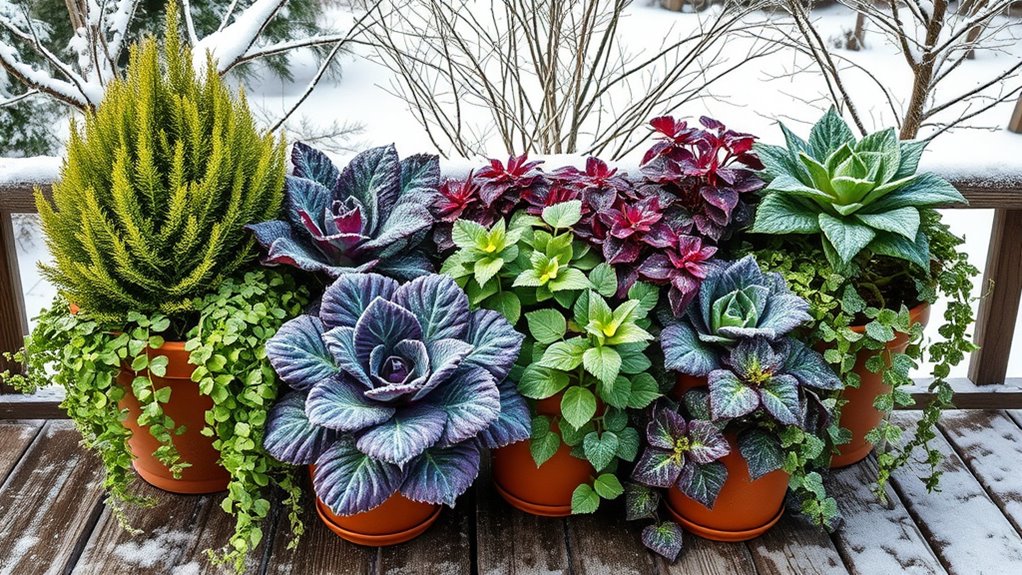
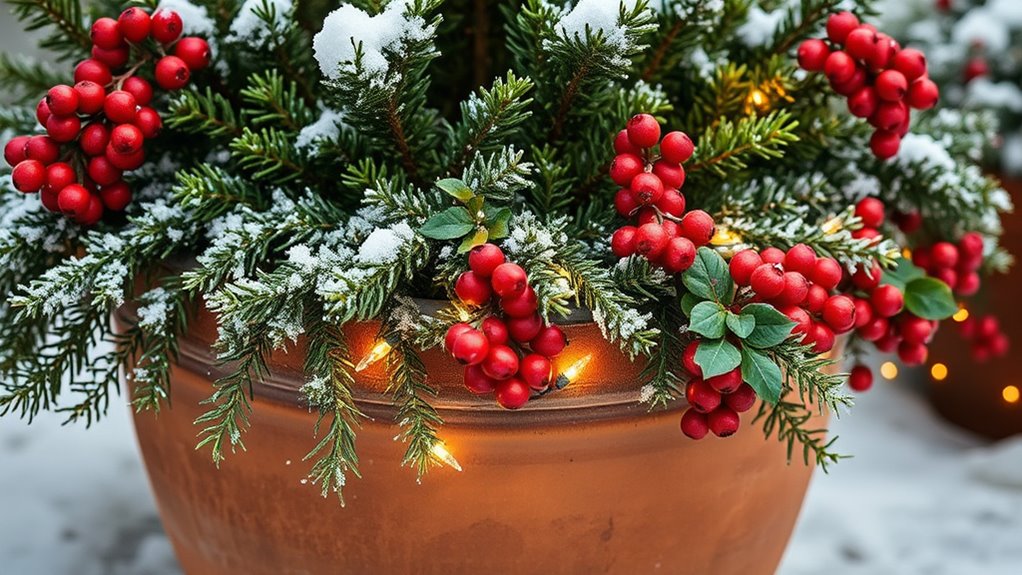
Start by choosing plants that are hardy and capable of withstanding winter temperatures in your area. Evergreens such as boxwoods, holly, and dwarf spruce provide year-round greenery and structure. Incorporate seasonal accents like red berries or colorful foliage, such as dwarf nandina or heuchera, to add pops of color. When planning your plant combinations, aim for a mix of textures, heights, and colors—this creates a layered, dynamic look that’s appealing even when plants are dormant elsewhere. Think about combining upright plants with trailing varieties or low-growing ground covers to fill your containers completely.
Choose hardy evergreens and colorful accents for a layered, vibrant winter container garden.
Container care during winter is vital. You should use containers made from materials that can withstand freezing temperatures, like stone, ceramic, or thick plastic. Avoid delicate terracotta, which can crack in cold weather. Before planting, ensure your containers have drainage holes to prevent water from pooling and freezing, which can damage roots. Fill the containers with a high-quality, well-draining soil mix designed for container gardening. Water your plants sparingly, as overwatering in winter can lead to root rot. When watering, do so early in the day to allow excess moisture to evaporate and prevent ice formation on the soil surface. Additionally, adding a layer of mulch on top of the soil can help insulate roots and preserve moisture.
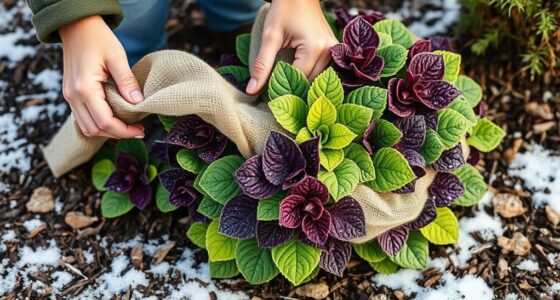
To protect your plants from harsh winter winds and frost, consider wrapping containers with insulating materials such as burlap or bubble wrap, especially if the containers are placed in exposed locations. You can also group your containers together to create a microclimate that offers some added warmth and protection. Mulching around the base of your plants with straw or bark can further insulate roots and retain moisture, helping plants endure cold spells.
Lighting is another consideration. If your containers are in a shaded area, place them where they can receive as much sunlight as possible, since sunlight helps plants produce energy and resist cold stress. During particularly cold nights, covering plants with frost cloths or blankets can provide extra protection without causing damage. Being aware of Gold IRA Rollovers and their role in retirement planning can help gardeners think about long-term investments, similar to how choosing hardy plants is a long-term strategy for winter gardening success.

Merax Modern TV Stand Set w/Adjustable Bridge, Storage Media Console & Wall Units - Minimalist Entertainment Center for Living Room, White
CUSTOMIZABLE LAYOUT: Overhead bridge mounts to cabinets or wall separately for variable heights (match any TV setup)
As an affiliate, we earn on qualifying purchases.
Frequently Asked Questions
How Often Should I Water Winter Container Plants?
You should water winter container plants when the soil moisture feels dry to the touch, typically every 7 to 10 days. Keep an eye on your watering schedule, as colder temperatures slow evaporation but plants can still dry out. Check the soil regularly and water thoroughly when needed, ensuring excess water drains away. Adjust the frequency based on weather conditions and soil moisture levels to keep your plants healthy through winter.
Can I Use Non-Traditional Containers for Winter Gardens?
Absolutely, you can use non-traditional materials for your winter container garden. Think outside the box with creative container ideas like repurposed buckets, vintage tins, or even wooden crates. Just guarantee they have proper drainage and can withstand winter conditions. Non-traditional containers add personality and charm, making your garden unique and visually appealing. With a little planning, these innovative choices will keep your plants cozy and your garden stunning all winter long.
What Pests Are Common in Winter Container Gardens?
In winter container gardens, pests like aphids, spider mites, and whiteflies can still cause trouble. To prevent pests, practice pest prevention by regularly inspecting plants and removing debris. Use natural remedies like neem oil or insecticidal soap for winter pest control, ensuring your plants stay healthy. Keep containers clean and avoid overwatering, which can attract pests. Staying vigilant helps protect your winter garden from unwanted invaders.
How Do I Protect Containers From Freezing Damage?
Ever find yourself caught off guard by a sudden cold snap? You can protect your containers by insulating them with materials like straw, bubble wrap, or burlap, which trap warmth and prevent freezing. Also, position your containers where they’re shielded from wind—like against a wall or behind a fence—to reduce cold air exposure. Combining insulation and wind protection keeps your winter garden thriving despite the chill.
Are There Specific Fertilizers Suitable for Winter Containers?
Yes, you should use suitable fertilizers for winter containers to keep your plants healthy. Look for slow-release or winter-specific fertilizers that provide essential nutrients without overfeeding during colder months. Choose winter plant varieties like evergreen shrubs or hardy annuals that thrive with these fertilizers. Regular feeding every few weeks helps maintain plant vigor and vibrant appearance, ensuring your container garden stays attractive all winter long.

Vomavex Closet System with 4 sets, 101.9" Closet Organizer Systems with 6 Drawers & 8 Hanging Rods & Adjustable Shelves, Walk in Closet Standing Closet System, Corner Closet System Set, White
【 4-in-1 Closet System, Custom/DIY as you like】- This Closet System sets includes 4 Separate closet Units: One...
As an affiliate, we earn on qualifying purchases.
Conclusion
So, now you’re all set to transform your container garden into a winter wonderland. Who knew that braving the cold could be so rewarding? Remember, while others hide indoors, you’ll be out there, proudly showcasing your frost-hardy masterpieces—because nothing says “I’ve got this” quite like a resilient, winter-proof garden. So go ahead, embrace the chill. After all, if your plants can survive the cold, maybe you can too—just don’t forget your coat!

Closet System of 3 Sets, 6-15FT Closet Organizer System Wood with 3 Drawers & 7 Shelves, Walk in Closet Organizer Shelving System with 6 Hanging Rods, Modular Closet System Kits Adjustable, White
【Flexible 6FT Closet System—Tailored Fit for Any Space】Built with convenient mobility in mind, this 3-piece custom modular closet...
As an affiliate, we earn on qualifying purchases.

Closet System with 4 Sets, 8–21 FT Closet System with 6 Drawers, 9 Shelves & 8 Hanging Rods, Max 252″ Closet Organizer System for Walk in Closets, Modular Custom Wood Closet Kit with Shoe Racks, White
【Customizable 4-in-1 Closet System】Perfectly fits spaces from 95" to 252" wide. This premium modular closet system includes four...
As an affiliate, we earn on qualifying purchases.