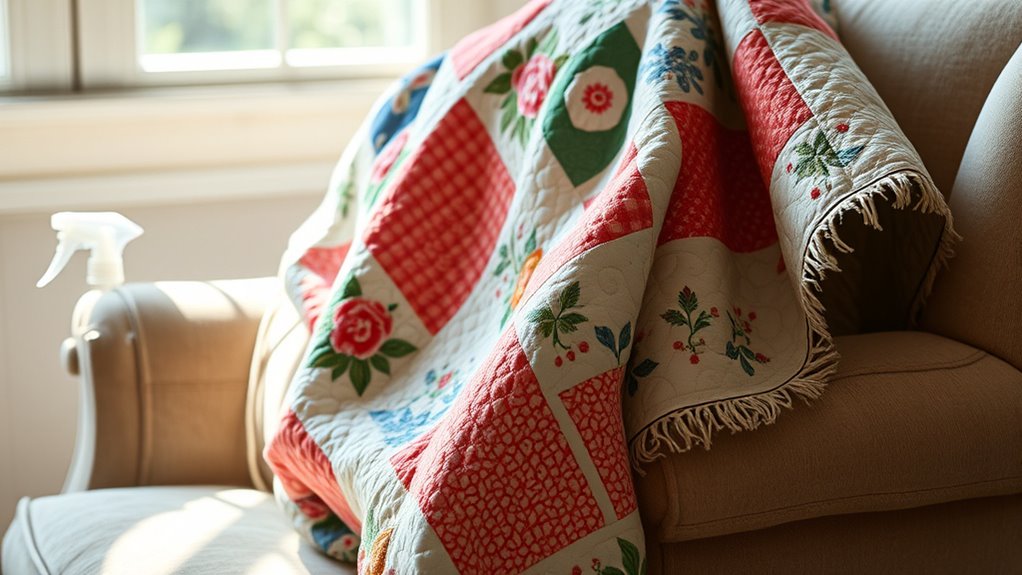

To care for your handmade quilt, store it in a cool, dry, and well-ventilated space away from direct sunlight, using breathable cotton bags or pillowcases. Avoid plastic containers that trap moisture, and consider rolling it instead of folding to prevent stress on stitches. Act quickly on stains with gentle, cold-water blotting and mild solutions, and regularly check for damage or pests. For more detailed tips, you’ll discover how proper preservation maintains your quilt’s beauty for generations.
Key Takeaways
- Store handmade quilts in a cool, dry, and well-ventilated area, preferably in breathable cotton storage bags or pillowcases.
- Handle quilts gently, avoiding sharp folds; roll instead of folding to reduce stress on fabrics and stitches.
- Regularly inspect for pests or signs of damage, and use acid-free tissue paper to prevent creases during storage.
- Act quickly to blot and treat stains with mild solutions, testing first on a small area to prevent fabric damage.
- Keep quilts away from direct sunlight and high humidity to prevent fading, mold, and fabric deterioration over time.

Taking proper care of your handmade quilts guarantees they stay beautiful and durable for years to come. One of the most important aspects of quilt maintenance is how you store them. Proper quilt storage involves choosing a cool, dry place away from direct sunlight, which can cause fading over time. Avoid plastic bags or containers that trap moisture, leading to mold and mildew. Instead, opt for breathable cotton storage bags or pillowcases. These allow air circulation, preventing mustiness and preserving the fabric’s integrity. When folding your quilt, do so gently and avoid sharp creases, as these can weaken the stitches or create permanent fold lines. If you plan to store your quilt long-term, consider rolling it instead of folding, which reduces stress on the fabric and stitches. Adding acid-free tissue paper between folds can help prevent creases and protect delicate areas. Regularly inspecting your stored quilt ensures you catch any early signs of damage or pests, like moths, before they cause significant harm.
Stain removal is another critical factor in maintaining your quilt’s beauty. When spills happen, act quickly. Blot the stain gently with a clean, white cloth or paper towel to absorb as much of the liquid as possible, avoiding rubbing, which can spread the stain or damage the fabric fibers. Use cold water for most stains, especially blood, ink, or fruit, as hot water can set them permanently. For tougher stains, apply a mild detergent or a mixture of water and white vinegar directly to the affected area, and gently dab. Always test any cleaning solution on a small, inconspicuous section first to ensure it won’t discolor or weaken the fabric. Be patient and avoid over-scrubbing, as aggressive cleaning can fray stitches or cause fabric distortion. If the stain persists or if your quilt is particularly valuable, consult a professional textile conservator. Proper stain removal not only helps restore your quilt’s original beauty but also prolongs its lifespan. Remember, gentle handling and prompt action are key. Keeping your quilt clean and correctly stored preserves the craftsmanship and delicate fabrics that make each handmade quilt unique. By respecting these care principles, you ensure your quilt remains a cherished heirloom for generations to come.
Frequently Asked Questions
How Often Should I Wash My Handmade Quilt?
You should wash your handmade quilt every 1 to 2 years, depending on use and exposure to dirt. Follow a regular quilt cleaning schedule, and spot clean as needed to keep it fresh. If you use the quilt daily, consider more frequent gentle washes. Always use delicate detergents and cold water to preserve the fabric and stitching, ensuring your quilt stays beautiful and durable for years to come.
Can I Use Bleach on Delicate Quilt Fabrics?
Using bleach on delicate quilt fabrics is like pouring acid on a fragile glass sculpture—you risk irreversible damage. Bleach safety is nonexistent with fine fabrics, as it can cause severe fabric discoloration and weaken fibers. If you want your quilt to stay vibrant and intact, avoid bleach entirely. Instead, opt for gentle, fabric-safe cleaners to preserve its beauty and integrity for years to come.
What’s the Best Way to Remove Stains From a Quilt?
To remove stains from your quilt, start with gentle stain removal techniques like blotting with a mild detergent or a mixture of water and white vinegar. Avoid harsh chemicals that could damage delicate fabrics. Use fabric-specific cleaning methods based on your quilt’s material, and always test a small, hidden area first. For stubborn stains, consider consulting a professional quilt conservator to preserve your quilt’s beauty and integrity.
How Should I Store a Quilt Long-Term?
Store your quilt securely by selecting spacious, sturdy quilt storage containers that prevent pests and preserve fabric. Slip your quilt into a protective quilt cover to shield it from dust and light, maintaining its beauty over time. Store in a cool, dry, and dark location to prevent deterioration. Remember, proper packing and protection guarantee your treasured quilt stays pristine, preserving memories and craftsmanship for generations to come.
Are There Specific Detergents Recommended for Handmade Quilts?
You should use gentle detergents for your handmade quilts to preserve their delicate fabrics and stitching. Look for eco-friendly options that are free from harsh chemicals, as they help protect both your quilt and the environment. Always opt for mild, dye-free, and biodegradable detergents, and avoid bleach or strong cleaning agents. Hand washing or using a gentle cycle in cold water will keep your quilt looking beautiful for years.
Conclusion
Caring for your handmade quilt isn’t just about preservation—it’s about honoring a craft that’s often passed down through generations. When you follow gentle cleaning and proper storage, you’re surprisingly helping your quilt last longer than you might expect, almost as if the fabric itself recognizes your care. In the end, your attention guarantees that this beautiful piece continues to tell its story, quietly connecting past and future with every careful touch.