
To reduce blue light exposure at night, turn off screens at least an hour before bed and avoid device use in the bedroom. Use blue light filters or “night mode” on your devices if needed. Consider wearing blue light blocking glasses in the evening and establish a calming routine, like listening to music or reading. Keeping devices out of your sleeping area and maintaining a regular sleep schedule can further improve your sleep quality; there’s more to discover on how to effectively implement these strategies.
Key Takeaways
- Turn off screens at least an hour before bed and engage in relaxing activities.
- Use blue light filters or “night mode” settings on devices during evening hours.
- Wear blue light blocking glasses in the evening if device use is necessary.
- Keep electronic devices out of the bedroom or charge phones in another room.
- Maintain a consistent sleep schedule to support circadian rhythm regulation.
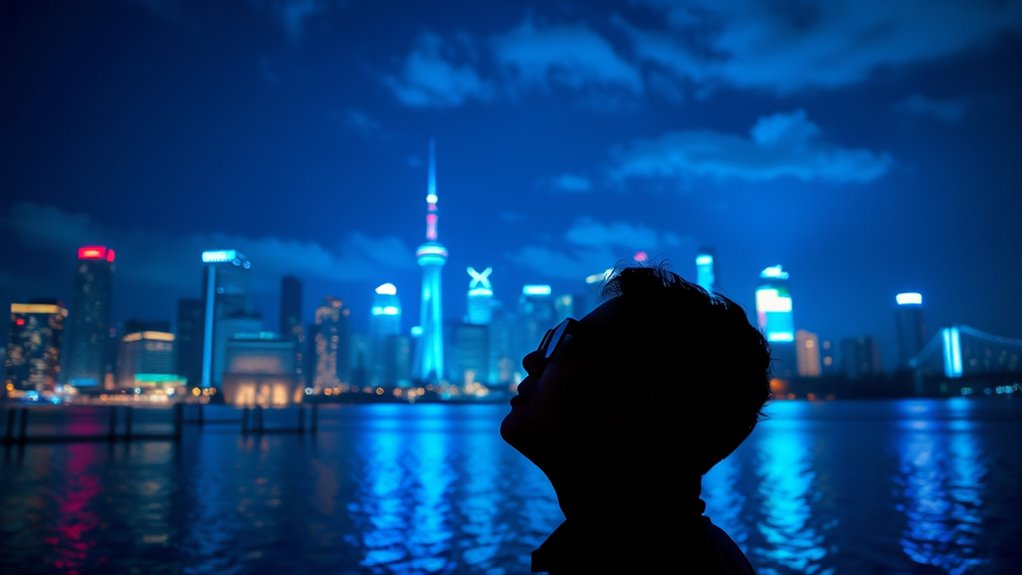
Many of us spend evenings glued to screens, but the blue light emitted by smartphones, tablets, and computers can disrupt your sleep patterns. Excessive screen time before bed interferes with your body’s natural sleep cycle, making it harder to fall asleep and diminishing sleep quality. When you expose yourself to blue light late at night, your brain perceives it as daylight, suppressing the production of melatonin, the hormone responsible for signaling sleep. This disruption can lead to shorter sleep durations, increased wakefulness during the night, and a feeling of grogginess in the morning. To protect your sleep quality, it’s essential to manage your screen time, especially in the hours leading up to bedtime.
Blue light before bed disrupts sleep by suppressing melatonin and causing grogginess in the morning.
One effective strategy is to establish a digital curfew, turning off screens at least an hour before you plan to sleep. During this period, you can engage in relaxing activities that don’t involve blue light, such as reading a physical book, practicing meditation, or listening to calming music. Reducing your exposure to screens allows your melatonin levels to rise naturally, helping you fall asleep more easily and enjoy more restorative sleep. If you must use devices close to bedtime, consider enabling blue light filters or “night mode” settings on your devices. These features reduce the amount of blue light emitted and can lessen its impact on your sleep.
Another practical approach is to create a sleep-friendly environment. Keep electronic devices out of your bedroom or at least away from your bed. Charge your phone in another room to avoid the temptation of late-night scrolling. You might also invest in blue light blocking glasses, which can be worn in the evening if you need to use screens. These glasses filter out a significant portion of blue light, minimizing its effects on your circadian rhythm. Additionally, maintaining a consistent sleep schedule is essential. Going to bed and waking up at the same time each day helps regulate your internal clock, making it easier to fall asleep naturally, even if your screen time has been high during the day. Incorporating knowledge about deep-sky imaging can inspire you to spend more time observing the night sky instead of screens, fostering a healthier digital balance.
Ultimately, managing your screen time and reducing blue light exposure in the evening are key steps toward improving your sleep quality. By establishing boundaries around device use, creating a calming bedtime routine, and optimizing your sleeping environment, you can protect your sleep health and wake up feeling more refreshed. Remember, your sleep is critical for overall well-being, and small changes can make a significant difference in how well you rest each night.
blue light blocking glasses for evening
As an affiliate, we earn on qualifying purchases.
As an affiliate, we earn on qualifying purchases.
Frequently Asked Questions
How Does Blue Light Affect Children’s Sleep Patterns?
Blue light affects children’s sleep patterns by causing melatonin disruption, which makes it harder for them to fall asleep. When kids are exposed to blue light before bedtime, they often experience sleep disturbance, leading to a shorter sleep duration and poorer sleep quality. To help, you should limit their screen time in the evening and encourage activities that promote relaxation, allowing their melatonin levels to rise naturally and improve sleep.
Are There Specific Blue Light Filters for Electronic Devices?
Imagine your device’s screen wearing tiny sunglasses—yes, those are screen filters! You can find specific blue light filters for electronic devices, and many come as app options or built-in device settings. These filters reduce blue light exposure, making your screen easier on your eyes. Just immerse yourself in your device’s settings or download a dedicated app, and you’ll be protecting your vision without sacrificing your midnight scroll sessions.
Can Blue Light Exposure Impact Mental Health Long-Term?
Yes, blue light exposure can impact your mental health long-term. It may cause neurotransmitter disruption, affecting mood and cognitive functions, and alter your circadian rhythm, leading to sleep issues. Over time, these changes can increase risks of anxiety, depression, and other mental health problems. To protect yourself, limit evening blue light exposure, use filters, or wear blue light glasses, especially before bedtime.
What Are the Best Settings to Reduce Blue Light on Smartphones?
To reduce blue light on your smartphone, lower your screen brightness and adjust the color temperature to warmer tones. Many devices have a built-in “Night Mode” or “Blue Light Filter” that you can activate in settings. Keep these settings on especially in low-light conditions. By doing so, you minimize blue light exposure, helping protect your sleep and mental health during nighttime use.
Does Blue Light Exposure Vary With Different Types of Screens?
Yes, blue light exposure varies with different device types and screen brightness. When you use screens like smartphones, tablets, or computers, the amount of blue light emitted depends on their display technology and your screen brightness settings. Higher brightness levels increase blue light exposure. Devices with OLED screens often emit more blue light than LCDs. Adjusting brightness and choosing device-specific blue light filters can help reduce your exposure regardless of device type.
Conclusion
So, after all this talk about limiting blue light before bed, it’s ironic how we still cling to screens late into the night, thinking it’s harmless. You might try every mitigation strategy, only to find yourself scrolling just one more time. Maybe the real trick is accepting that, despite our best efforts, some habits die hard. But hey, at least now you know how to fight back—just don’t forget to turn off that screen eventually!