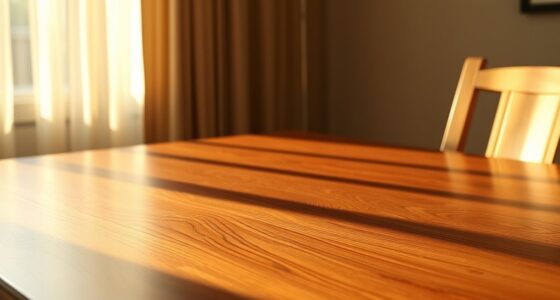
To safely remove musty smells from antique furniture, start by cleaning it gently with a mild solution and thoroughly drying it in sunlight to help neutralize odors. Use natural absorbents like activated charcoal or baking soda around the piece to guarantee absorption of the odor molecules. Make certain there is good ventilation to promote fresh air circulation. For stubborn smells, consider using commercial odor eliminators or enzyme-based products, and learn more about targeted techniques for long-lasting freshness.

Get furniture and decor delivered free — and shop member deals
- Fast, free delivery on millions of items
- Access to Prime Big Deal Days deals on October 6–7
- Prime Video, Amazon Music and more included
Key Takeaways
- Vacuum and gently clean the furniture with mild soap or wood-safe cleaner, then dry in sunlight to reduce odors and mold.
- Use activated charcoal or baking soda around and on the furniture to absorb and neutralize musty smells safely.
- Apply vinegar-water solutions cautiously on wooden surfaces, testing first to prevent damage while neutralizing odors.
- Incorporate enzyme-based or commercial odor eliminators designed for antiques, following manufacturer instructions carefully.
- Ensure proper ventilation by regularly airing out the furniture in well-ventilated spaces to prevent future mustiness.

Antique furniture can hold incredible charm, but musty odors often diminish its appeal. When you notice that lingering smell, it’s natural to feel frustrated, especially since you want to preserve the piece’s beauty and history. Luckily, there are effective restoration techniques you can use to eliminate these odors safely and restore your furniture’s original splendor. One of the most important steps is understanding odor absorption—how smells cling to porous surfaces like wood, fabric, and padding—and then applying methods to counteract this absorption.
The first step in tackling musty odors is to thoroughly clean and dry the furniture. Use a gentle vacuum or soft brush to remove dust and loose debris from all surfaces, paying close attention to joints, crevices, and underneath. Afterward, wipe down the entire piece with a solution of mild soap and water or a wood-safe cleaner, making sure not to saturate the material. Dry the furniture completely, ideally in sunlight, since sunlight helps kill mold spores and neutralizes odors. Sunlight is also a natural odor absorber and can markedly reduce mustiness without damaging the antique’s delicate finish.
Once the furniture is clean and dry, you can employ specific restoration techniques to absorb remaining odors. Activated charcoal is highly effective because it’s porous and absorbs a wide range of smells. Place small bowls or cloth sachets filled with activated charcoal around the furniture, especially in hidden or enclosed areas. Similarly, baking soda is a budget-friendly option that actively neutralizes odors. You can sprinkle baking soda directly onto fabric or upholstery, or place open boxes nearby to draw out mustiness over several days. For wooden surfaces, applying a mixture of white vinegar and water can help neutralize odors without harming the finish—just be sure to test a small, inconspicuous area first.
Additionally, odor-absorbing products like commercial odor eliminators designed for antique furniture, or even enzyme-based cleaners, can be useful. These products work by breaking down the odor-causing molecules rather than just masking the smell. When using any chemical solutions, always ensure you follow manufacturer instructions and test on a small area beforehand.
Over time, patience is key. Regularly airing the furniture in a well-ventilated space accelerates odor absorption and helps prevent future mustiness. Incorporating proper ventilation into your maintenance routine can significantly improve odor control and prolong the life of your treasured piece. Combining these restoration techniques with odor absorption methods ensures you’re safely removing the smell without risking damage to your treasured piece. With proper care and the right approach, you can restore your antique furniture’s beauty and bring back its inviting, fresh scent.
antique furniture odor eliminator
As an affiliate, we earn on qualifying purchases.
As an affiliate, we earn on qualifying purchases.
Frequently Asked Questions
Can Essential Oils Eliminate Musty Odors From Antiques?
Yes, essential oils can help with odor elimination, including musty smells from antiques. You can add a few drops of oils like lavender, eucalyptus, or tea tree to a cotton ball or cloth and place it inside the furniture or nearby. The pleasant scent will mask the musty odor and gradually replace it. Just make certain you don’t use too much to avoid damaging the antique’s finish and always test in a small, hidden area first.
How Long Does It Take to Remove Musty Smells Completely?
The timing expectations for odor elimination duration vary based on the furniture’s condition, odor strength, and treatment method. Typically, it takes anywhere from a few days to a couple of weeks to completely remove musty smells. You should check periodically, giving treatments time to work. Patience pays off, so stay persistent, and with proper airing, airing, and absorbing, you’ll notice the musty menace gradually vanish, leaving your antique smelling fresh.
Are There Any Safety Concerns With Using Vinegar on Antique Furniture?
Using vinegar on antique furniture is generally safe if you dilute it properly, but you should be cautious. Vinegar safety means avoiding excessive use, which can damage delicate finishes or wood. To protect antique preservation, always test a small, hidden area first. Use a damp cloth with diluted vinegar, and never soak the wood. Proper application helps eliminate musty odors without risking damage to your treasured piece.
Can Cleaning Products Damage Antique Finishes When Removing Odors?
Imagine your antique furniture as a delicate canvas waiting to be preserved. Cleaning chemicals can inadvertently damage the finish, causing it to crack or peel like fading paint. Overuse or harsh products accelerate finish deterioration, stripping away its original luster. You need to be gentle and selective, opting for mild solutions to remove odors without compromising the integrity of the finish, ensuring your cherished piece remains timeless.
Is It Safe to Use Ozone Generators on Antique Furniture?
Using ozone generators on antique furniture isn’t recommended due to ozone safety concerns and the risk to antique preservation. Ozone can damage delicate finishes and materials, causing irreversible harm. If you want to eliminate musty smells, consider safer methods like air circulation, sunlight, or professional restoration. Always prioritize gentle, non-invasive techniques to preserve the integrity and value of your antique furniture.
Conclusion
Now that you’ve learned how to banish those stubborn musty smells, your antique furniture can breathe again like a fresh spring breeze. Think of it as giving your cherished pieces a gentle spa day, restoring their charm and character. With patience and the right techniques, you’ll turn that stuffy scent into nothing more than a distant memory. Soon, your furniture will stand proud and fragrant, ready to tell its stories without whispering of the past’s musty secrets.
Fall Picks
fall essentials
As an affiliate, we earn on qualifying purchases.