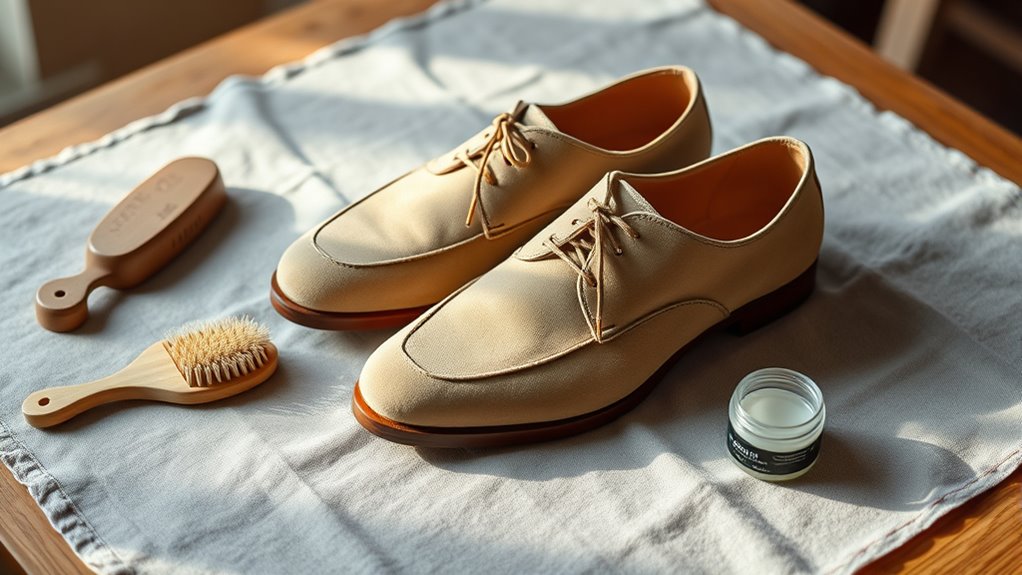

To clean suede and nubuck at home, start by gently brushing the surface with a suede or nubuck brush to remove dirt. For stains, use a clean cloth dampened with white vinegar or rubbing alcohol, and carefully dab the area. Allow the item to air dry fully, then brush again to restore the nap. Regular maintenance with protective sprays helps prevent future stains. Keep exploring to discover more expert tips for keeping your suede looking its best.
Key Takeaways
- Allow suede or nubuck to dry naturally away from heat or sunlight after getting wet.
- Brush the material gently in one direction with a suede or nubuck brush to remove dirt and restore nap.
- Use a clean cloth dampened with white vinegar or rubbing alcohol for stubborn stains, then air dry and brush again.
- Apply a protective water-resistant spray regularly to prevent future stains and water damage.
- Test cleaning products on small areas first and avoid oversaturating to prevent damage or discoloration.
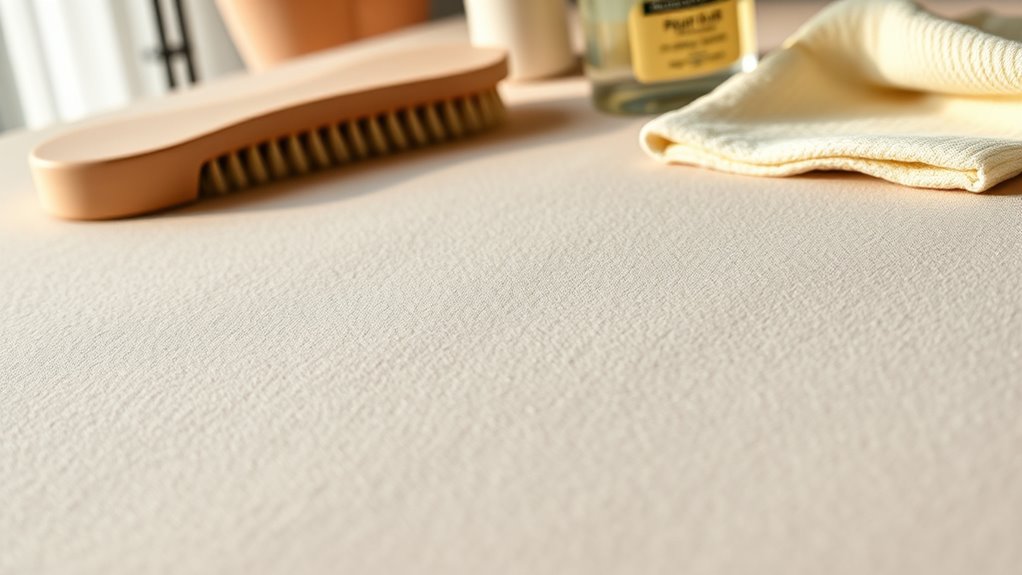
Cleaning suede and nubuck at home might seem challenging, but with the right techniques, you can keep your shoes and accessories looking fresh. These delicate materials are prone to water stains, which can quickly ruin their appearance if not addressed promptly. When you notice water spots, it’s essential to act fast. Start by letting the item dry naturally, away from direct heat or sunlight, to prevent the stain from setting deeper. Once dry, gently brush the stain with a suede or nubuck brush, moving in one direction to lift the fibers without damaging the material. If the water stain persists, you can try a simple stain removal method: dampen a clean cloth with white vinegar or rubbing alcohol. Lightly dab the stained area, avoiding oversaturation, which could cause additional water marks or damage. After applying, let the item air dry completely, then brush again to restore the nap and blend the treated area with the rest of the material.
For more stubborn stains, you might consider using a specialized suede or nubuck cleaner, following the product instructions carefully. Remember, harsh chemicals can alter the texture or color, so testing on a small, inconspicuous area first is always wise. When stain removal involves oil or dirt, avoid rubbing vigorously, as this can embed the stain further into the fibers. Instead, use a soft cloth or a suede eraser to gently lift the stain away. Consistent maintenance, like brushing regularly, helps prevent dirt from settling into the fibers and makes stain removal easier when needed.
Preventing water stains altogether is the best approach, so consider applying a protective spray designed for suede and nubuck. These sprays create a water-resistant barrier, reducing the likelihood of stains from accidental spills or rain. Keep in mind that even with protection, it’s vital to avoid wearing your suede or nubuck shoes in heavy rain or muddy conditions. If your items do get wet, dry them properly and treat any water stains immediately to maintain their appearance.
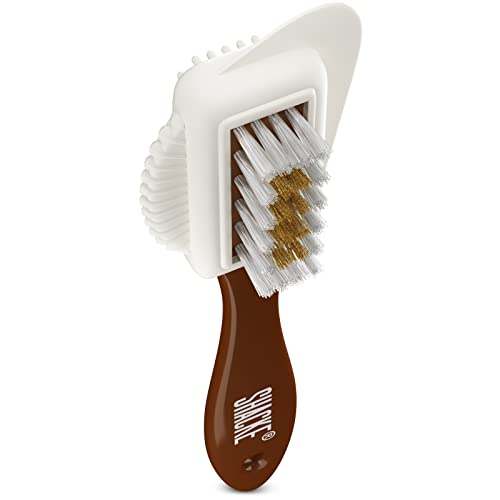
Suede & Nubuck 4-Way Leather Brush Cleaner
Classic Suede Brush & Nubuck Cleaner – Hands down the most effective suede brush on the market to…
As an affiliate, we earn on qualifying purchases.
As an affiliate, we earn on qualifying purchases.
Frequently Asked Questions
Can I Use Water to Clean Suede and Nubuck?
You shouldn’t use water directly on suede or nubuck, as it can cause staining or damage. Before cleaning, do a water testing on a hidden area to see how the material reacts. Use gentle cleaning tools like a soft brush or suede eraser instead. If you must use water, dampen a cloth lightly and avoid soaking. Always let the material air dry completely to prevent further damage.
How Often Should I Clean Suede Shoes?
You should clean your suede shoes every 1 to 3 months, depending on how often you wear them and exposure to dirt. Regular cleaning is essential for proper shoe maintenance and to keep them looking fresh. If you notice stains or dirt buildup, clean them sooner. Using a suede brush and protective spray helps maintain their texture and color, extending their lifespan and ensuring your shoes stay stylish and well-kept.
Are Homemade Cleaning Solutions Safe for Suede?
Homemade cleaning solutions can be safe for suede if you use DIY remedies carefully, but you should avoid harsh chemical cleaners. Stick to gentle, natural ingredients like white vinegar or baking soda for spot cleaning. Always test a small, hidden area first to prevent damage. Chemical cleaners often contain ingredients that can stain or ruin suede, so it’s best to opt for DIY remedies that are gentle and effective.
Can I Restore Color After Cleaning Suede?
Yes, you can restore color after cleaning suede by using suede dyeing or color restoration techniques. You simply apply a suede dye or color restorer that matches the original shade, ensuring an even and natural look. Color restoration, suede dyeing, and touch-up processes help revive faded or discolored areas, making your suede look fresh and new. Just follow the instructions carefully, and you’ll effectively restore your item’s vibrant color.
What Should I Do if I Stain My Nubuck?
If you stain your nubuck, act quickly with stain removal techniques like gently blotting with a clean, damp cloth. Avoid rubbing, which can spread the stain. Use cleaning product recommendations designed for nubuck, such as a specialized nubuck cleaner or a mixture of water and a small amount of vinegar. For stubborn stains, consider a soft brush to lift the stain carefully. Always test products on a small, hidden area first.
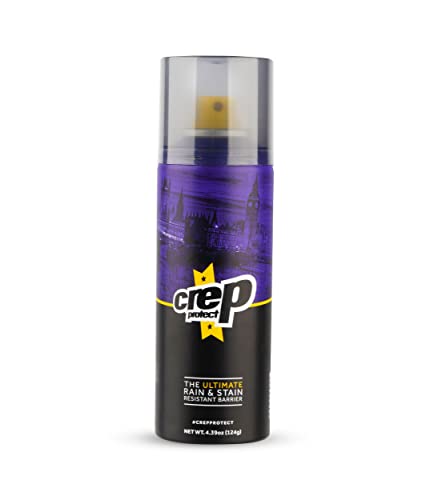
Crep Protect Shoe Protector Spray – Rain & Stain Waterproof Nano Protection for Sneaker, Leather, Nubuck, Suede & Canvas
Invisible shoe Protection – Protect your Sneakers from grime and moisture with your water repellent spray for shoes…
As an affiliate, we earn on qualifying purchases.
As an affiliate, we earn on qualifying purchases.
Conclusion
Now that you’ve learned how to gently care for your suede and nubuck, you can keep them looking fresh and inviting without much fuss. With a little patience and the right tools, you’ll preserve their soft charm and keep them shining subtly. Think of it as giving your shoes a little tender love—an effortless way to maintain their beauty at home. Soon, they’ll be ready to step out with confidence and style, effortlessly.

Angelus Suede & Nubuck Cleaner Kit – 1 Cleaning Eraser Block and 1 Nylon Bristle Brush – Eliminates Stains, Removes Spots, Restores Nap – for Leather Suede Shoe, Handbags, Jackets, Boots, Furniture
Effective Stain Removal: Effortlessly eliminates most soil and spots from suede and nubuck materials, restoring their original appearance…
As an affiliate, we earn on qualifying purchases.
As an affiliate, we earn on qualifying purchases.
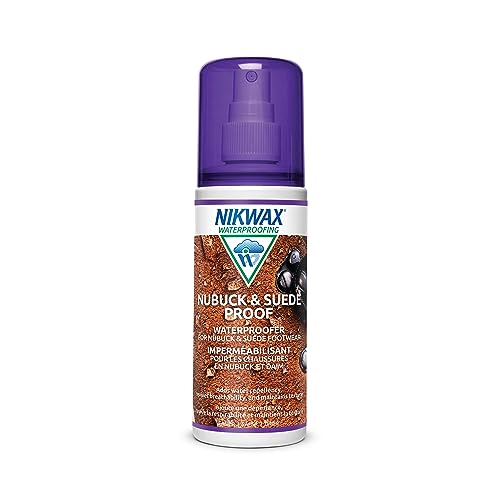
Nikwax Nubuck & Suede Proof, 125ml, Spray-On Waterproofing Restores DWR Water Repellency in Textured Leather Footwear, Shoe & Boot Care and Rain Protection
High performance waterproofer designed to maintain texture and breathability of nubuck and suede footwear.
As an affiliate, we earn on qualifying purchases.
As an affiliate, we earn on qualifying purchases.